
After eighteen months of harrowing captivity, the release of two European women—Eva Gretzmacher from Austria and Claudia Abbt from Switzerland—has raised critical questions about the covert dynamics shaping conflict resolution in the Sahel. Their return to freedom was secured not through conventional military intervention, but through a behind-the-scenes negotiation process that exposed the fragile, interconnected networks driving such outcomes in one of Africa’s most unstable regions.
The long shadow of Agadez: why two Europeans became targets in northern Niger
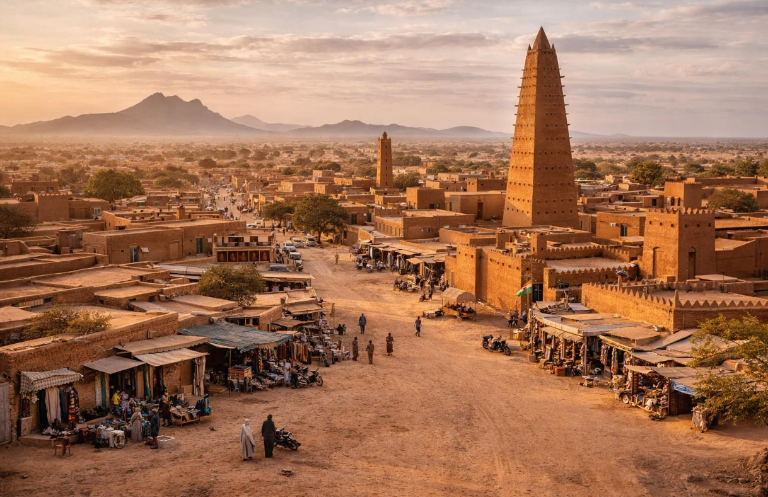
Eva Gretzmacher, an Austrian national, was abducted in January 2025 in Agadez, a desert city long considered a crossroads of trans-Saharan trade and migration. Known for its strategic position and historical role in connecting the Sahara to central Niger, Agadez had, over time, become increasingly hazardous for foreigners. Not only did Gretzmacher reside there for years, she was also aware of the growing risks tied to the fluid presence of armed groups operating in and around the region.
Her capture was followed months later, in April 2025, by the abduction of Swiss national Claudia Abbt—also in Agadez. The timing and location of these incidents were no coincidence. Both cases underscored a disturbing trend: armed groups were no longer confining their activities to remote border zones, but were increasingly active in urban centers, targeting Western civilians engaged in humanitarian, commercial, or even personal ventures.
The duration of their captivity—nearly two years—revealed the depth of logistical, political, and psychological challenges involved in resolving such crises. These challenges were amplified by the geographic complexity of the Sahel, where vast, sparsely populated deserts provide safe havens and mobility corridors for militant factions.
Libya’s rising influence in Sahel hostage negotiations
The women were ultimately freed in Benghazi, the eastern Libyan stronghold governed by Field Marshal Khalifa Haftar. Their transfer to Libyan soil was not merely symbolic—it highlighted the growing, if unspoken, role of Libyan actors in regional hostage diplomacy. While little is made public about the exact negotiations, reports point to the involvement of Haftar-aligned figures, including his son, Saddam Haftar, in brokering the deal.
This intervention did more than secure the women’s release; it signaled a strategic shift. Libyan actors, despite operating in a fragmented political landscape, have positioned themselves as key intermediaries in cross-border security matters. For them, involvement in such operations serves a dual purpose: reinforcing domestic legitimacy and projecting influence beyond Libya’s borders—particularly toward European governments increasingly desperate to repatriate their citizens.
Yet the absence of transparency raises concerns. What concessions were made? Were financial payments involved? Were regional security commitments exchanged in return? Without official disclosures, any attempt to answer these questions remains speculative. What is clear, however, is that Libya’s eastern authorities have leveraged this moment to demonstrate operational capability and forge direct lines of communication with European capitals—an asset in a region where trust is in short supply.
Niger’s persistent vulnerability amid rising insecurity
The dual abductions in Agadez were not isolated incidents. They were emblematic of a broader, alarming pattern across Niger: the entrenchment of jihadist violence in the north and along border regions, and the growing inability of state forces to guarantee safety for civilians—especially foreigners. The kidnappings struck a nerve not only with European governments but with international observers, who have repeatedly flagged Niger as one of the most dangerous places for Western travelers.
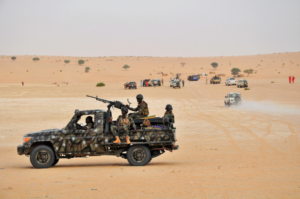
Agadez, in particular, lies at the heart of this crisis. Its remote location, vast desert hinterland, and role as a migration hub create conditions ideal for kidnapping operations. Armed groups exploit weak governance, porous borders, and limited security presence to move freely, plan ambushes, and carry out abductions—often without immediate consequence.
International travel advisories reflect this reality. As of late 2026, several Western governments maintained their highest-level warnings against travel to Niger, citing imminent risks of terrorism and kidnapping. These advisories are not mere bureaucratic measures. They reflect the persistent inability to ensure the protection of foreign nationals in high-risk zones—and the limitations of international cooperation in addressing transnational threats.
h3>What really led to their freedom? Separating fact from speculationThe release of Gretzmacher and Abbt has left more questions than answers. Who held them for eighteen months? Were they transferred between different factions? Was their captivity managed by a single group or multiple entities? The lack of official clarity only deepens the mystery.
Unofficial reports suggest that prolonged backchannel negotiations, coordinated through trusted intermediaries, gradually built the conditions for a release. Some observers speculate that a combination of financial incentives, pressure from regional allies, and assurances regarding future non-interference may have played a role. Others point to Haftar’s forces as facilitators, using their operational reach to influence armed groups on the ground.
Still, without verified information, any definitive conclusion would be premature. What remains certain is that the rescue was not a triumph of military force, but the result of delicate, protracted diplomacy—conducted largely out of public view.
A fragile peace, a continuing threat
For Eva Gretzmacher and Claudia Abbt, the nightmare is over. Their return represents a rare moment of relief in a region scarred by conflict. Yet the circumstances of their ordeal remind us of a stark truth: the Sahel remains a zone where borders offer little protection, where security is provisional, and where the price of foreign presence can be human lives.
The challenge now is twofold. First, to ensure the two women receive the psychological and medical support needed to rebuild their lives after such prolonged trauma. Second, to confront the systemic issues that allow abductions to persist: weak governance, porous borders, and the unchecked movement of armed groups across multiple countries.
Until these structural vulnerabilities are addressed, the freedom of these two women may offer hope, but it cannot mask the broader danger. In the Sahel, the next kidnapping could be just one border crossing away.