
Why Russia’s Perekop made waves in Walvis Bay
The Russian Navy’s Perekop docked in Namibia’s strategic Walvis Bay on October 20, 2026, after a seven-day voyage covering over 1,800 nautical miles. Officially, the ship was conducting a routine naval training mission for midshipmen. But a closer look reveals deeper currents—diplomatic engagement, logistical ambition, and a calculated step in Moscow’s broader African strategy.
More than a training exercise: the layered agenda of a naval visit
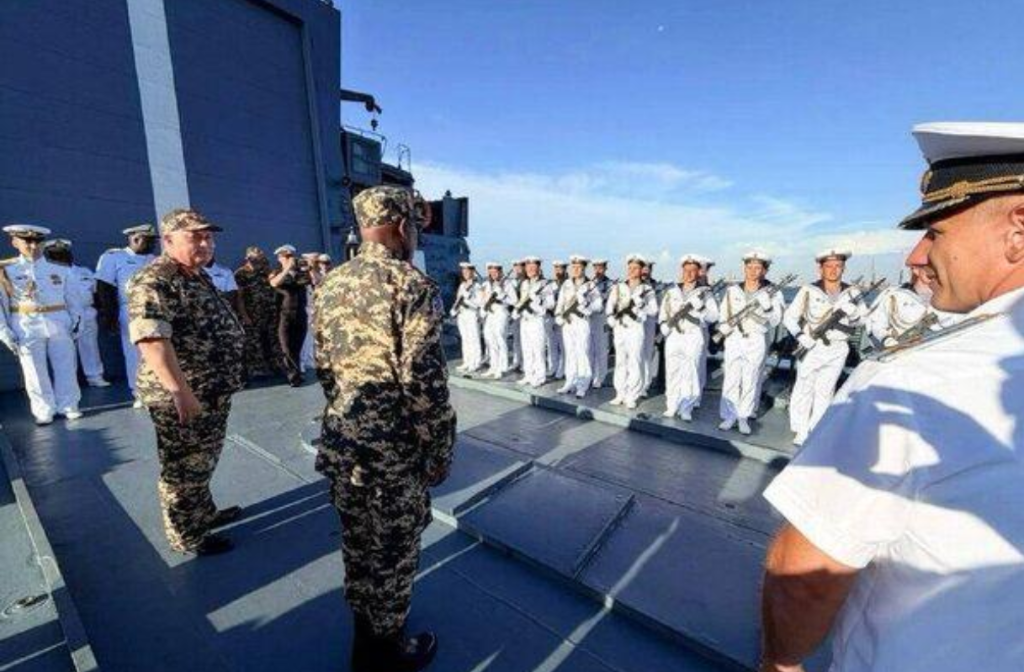
The presence of a foreign military vessel in a host country is rarely just about education. While the Perekop’s stated purpose was to train future Russian naval officers, naval training ships have long served as floating diplomatic missions. They provide a platform for meetings, protocol exchanges, and the cultivation of relationships between defense institutions—especially in regions where Russia seeks to expand its footprint.
During this stop, Russian naval officers met with Namibian military officials and representatives from the Russian embassy, signaling an intent to deepen defense cooperation. Though no formal agreements were announced, such interactions lay the groundwork for future defense ties, arms deals, or bilateral exercises. It’s a slow-burn strategy: build trust, familiarity, and obligation over time.
Walvis Bay as a geostrategic chess piece
A logistics hub with regional importance
Walvis Bay isn’t just Namibia’s only deep-water port—it’s a critical node in southern Africa’s Atlantic maritime network. Its location offers direct access to the South Atlantic, a region that has gained renewed strategic value amid global power competition. For a nation like Russia, which lacks a dense network of permanent naval bases in Africa, access to well-run ports is essential for sustaining long-term maritime presence.
Facilitating port calls, logistical support, and maintenance can shorten deployment times and reduce operational strain on ships deployed far from home. While there’s no indication that Namibia has granted Russia a permanent base access, even periodic access strengthens Moscow’s ability to project power and respond to crises in the region.
Diplomacy by ship: signaling partnerships and intent
Naval diplomacy isn’t just about hardware—it’s about visibility and influence. When a Russian naval vessel visits an African port, it sends a message: Russia is present, engaged, and a partner of choice. This is especially relevant as Western powers maintain strong defense ties with many African nations. By offering training, technical support, and symbolic engagement, Russia positions itself as an alternative security partner—one not constrained by the same political conditions often attached to Western cooperation.
For Namibia, such engagements offer an opportunity to diversify defense partnerships. Like many countries, it balances relationships with old allies and new opportunities, particularly in a multipolar world where military and economic support can come from multiple sources.
Intent vs. implication: reading between official lines
Analysts warn against conflating a single port call with a strategic shift. The Perekop’s arrival does not prove a Russian base is in the making, nor does it confirm a secret intelligence operation. Yet it does reflect a pattern: Russia increasingly uses naval diplomacy—escales, joint exercises, personnel exchanges—to build influence without the immediate cost of permanent bases.
This approach lowers barriers to entry in regions like southern Africa, where geopolitical competition is intensifying. It allows Moscow to maintain a visible presence, test relationships, and prepare the ground for deeper cooperation—without triggering the same level of international scrutiny that a permanent base would.
What comes next? Reading the signs beyond the headlines
To assess whether this visit signals a turning point, we must look at follow-up actions, not just headlines:
- Frequency of future calls: Will Russian ships return on a regular basis, or was this a one-off gesture?
- Defense cooperation agreements: Are there plans for joint exercises, training programs, or equipment transfers?
- Infrastructure or logistical support: Has Namibia agreed to host Russian maintenance or supply operations at Walvis Bay?
- Alignment in international forums: Is Namibia aligning more closely with Russia on global security issues?
Until such developments materialize, the Perekop’s visit remains a diplomatic overture—ambitious in intent, modest in immediate impact. It reflects Moscow’s long game: to remain relevant in Africa through persistent, visible, and adaptable engagement.
Echoes of a multipolar Africa
The arrival of the Perekop in Walvis Bay is not an isolated event—it’s part of a broader trend. Across the continent, middle and great powers are leveraging maritime presence to assert influence. Whether it’s China’s expanding port deals, the U.S. focus on maritime security, or Turkey’s growing naval footprint, African ports are becoming arenas of soft and hard power.
For Namibia, this means agency. The country can choose how to engage with each partner, weighing benefits, risks, and sovereignty. The presence of foreign naval vessels doesn’t automatically translate into alignment—it forces choices and invites strategic calculation.
In this context, the Perekop’s visit is less a declaration of allegiance and more a reminder: in the 21st century, power projection doesn’t always require a base. Sometimes, a ship, a port call, and a handshake are enough.