
Behind the UEMOA initiative: why Togo holds the key to Africa’s fertilizer independence
The plan spans five years and commits 1.45 trillion West African francs to a bold industrial overhaul. But what makes this UEMOA-led program different from past attempts? The answer lies in its origins: rooted in a behind-the-scenes analysis of regional supply chains, cost inefficiencies, and the untapped potential of Togo’s phosphate reserves. While many have promoted local fertilizer production before, this project stands out because it was designed not by a single nation, but by a collective vision shared across eight member states. The program’s architecture—blending public strategy with private capital—reveals a deeper insight: industrial transformation in West Africa will not succeed unless it begins with raw material ownership and ends with end-user access.
From mineral exports to industrial engines: the untold story of Togo’s phosphate
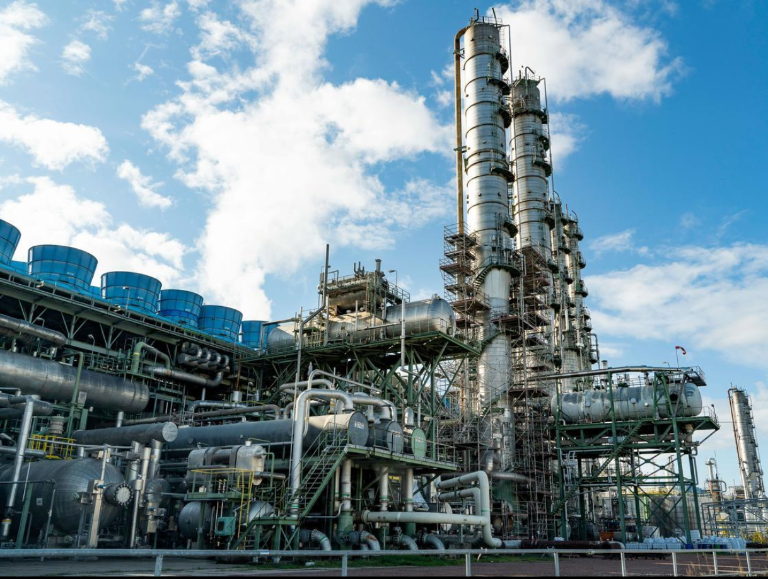
Togo has long been known for its phosphate exports—mostly sold as unprocessed rock. Yet few realize that beneath this traditional model lies a strategic asset: nearly seven decades of industrial experience in extraction and logistics. That institutional memory is now being repurposed. The new strategy isn’t simply about exporting more rock; it’s about leveraging Togo’s existing infrastructure to build a high-value chain. The plan envisions turning crude phosphate into intermediates and blended fertilizers on-site, then distributing them regionally. This shift from raw material supplier to regional processing hub reflects a deeper dynamic: the need for West Africa to stop trading its minerals for finished goods at a premium.
How the regional roadmap turns local resources into competitive advantages
The UEMOA blueprint doesn’t stop at phosphate. It integrates several critical layers:
- Soil-specific formulations: Leveraging data from UEMOA agronomic studies to produce fertilizers matched to local soil types and crop demands.
- Logistics corridors: Linking mining zones to blending plants and then to farm gates to cut transport time and costs.
- Skills transfer: Training programs co-developed with universities and vocational centers to build a local talent pool for industrial maintenance and quality control.
- Market anchoring: Long-term supply contracts with farmer cooperatives to stabilize demand and pricing.
Each layer addresses a hidden friction point in today’s fertilizer market—whether it’s the mismatch between imported blends and local soil needs or the bottleneck of moving bulky raw materials across porous borders.
The investor puzzle: who is really footing the bill, and why?
Of the 1.45 trillion West African francs earmarked for 2026–2030, the private sector is expected to shoulder the majority—1.19 trillion. Governments, by contrast, are slated to contribute only 240 billion. This split reveals a structural insight: industrialization in West Africa cannot wait for public budgets alone. The financial model mirrors a deeper truth about the project’s design—it is built to attract capital by de-risking entry points. Clear land titles, energy guarantees, and off-take agreements are being bundled into investment packages. The goal is to transform phosphate from a geological fact into a financial asset.
Togo’s role in the regional supply chain: more than a location
The country is not just a host site; it is the linchpin. Its phosphate mines already operate at scale, its port facilities are functional, and its rail network has spare capacity. By positioning Togo as the central processing node, the UEMOA plan capitalizes on existing momentum rather than starting from scratch. Yet this advantage comes with a responsibility: ensuring that the benefits stay within the country while enabling neighboring states to plug into the supply chain. The model tests a hypothesis at the heart of the initiative—whether regional solidarity can be strengthened by sharing critical infrastructure rather than just trading commodities.
From ambition to reality: the hidden roadblocks no one talks about
No transformation of this scale happens without friction. Three underdiscussed challenges could derail progress:
- Energy intermittency: Industrial plants require stable, affordable power. Togo’s grid, while improving, still struggles with peak demand.
- Cross-border harmonization: National regulations on blending ratios and safety standards differ, creating compliance hurdles for interstate distribution.
- Private sector skepticism: Some investors remain cautious after past projects stalled due to policy shifts or financing gaps.
The pathway to success will depend on how quickly these issues are addressed—not in glossy reports, but in signed contracts and commissioned facilities. The region’s fertilizer revolution will not be televised; it will be measured in tonnes of output and hectares of improved yield.
What’s at stake: reducing dependency, raising productivity, reshaping economies
The stakes are not just economic—they are geopolitical. West Africa currently imports over 60% of its fertilizers, exposing farmers to volatile global markets and currency risks. By producing regionally, the UEMOA bloc can shield its agricultural base from external shocks. More importantly, it can align fertilizer design with local agronomy, boosting yields for staples like maize, cassava, and rice. The ripple effect could include lower food prices, reduced rural poverty, and even new export niches in certified organic fertilizers.
The test for UEMOA: turning phosphate deposits into industrial legacy
The project is a litmus test for regional cooperation. If the poles are built on time, funded transparently, and operated efficiently, they could set a precedent: how shared natural assets can anchor industrial development. If they fail, the lesson will be stark—good intentions are not enough when buried under weak execution, misaligned incentives, and half-built infrastructure. For Togo, the window is narrow: either it becomes the industrial anchor of a regional fertilizer revolution, or it remains an exporter of raw materials in a market it doesn’t control.
Final takeaway: the invisible forces shaping West Africa’s fertilizer future
The UEMOA phosphate-to-fertilizer program is often described as an economic project. Beneath the surface, it is also a political one. It reveals how regional blocs can move beyond declarations by leveraging strategic assets, aligning public strategy with private capital, and turning geological endowments into engines of industrial depth. For Togo, the moment is now. The phosphate is in the ground. The demand is rising. The question is whether the will—and the execution—will match the vision.