
The human toll of Spain’s worst rail disaster in decades
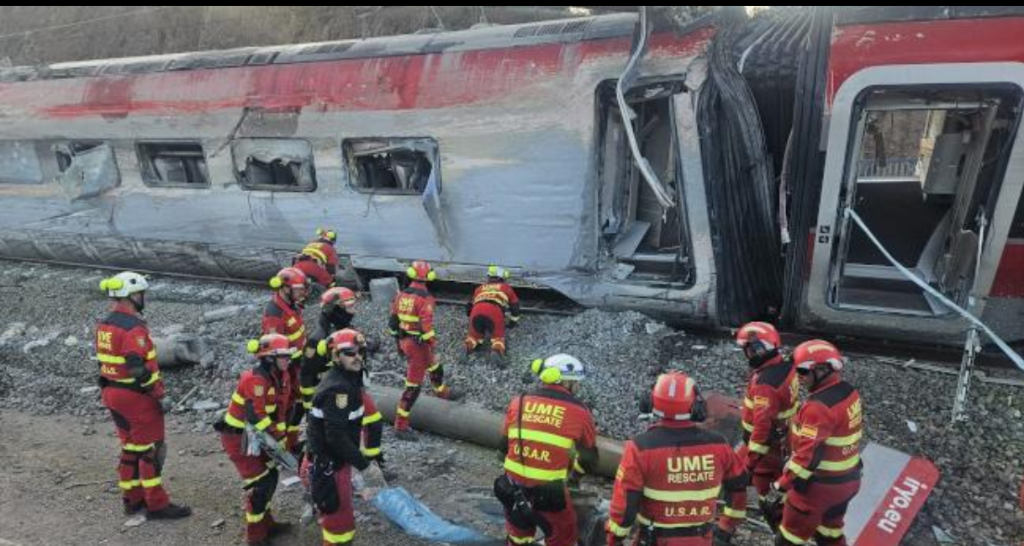
At least 46 lives were lost and 179 others injured when two high-speed trains collided near Urda in Toledo province, sending shockwaves across Spain. As emergency crews race against time to rescue survivors trapped in twisted wreckage, the full scale of the tragedy is still unfolding. Rescue workers describe scenes of chaos after impact forces multiple carriages off the tracks, leaving families grappling with uncertainty.
Why this high-speed disaster exposes systemic weaknesses in Spain’s rail network
The collision occurred on a critical Madrid–Andalusia route, where a state-run Renfe AVE train plowed into a stationary Iryo train. Investigators are examining whether a breakdown in real-time traffic coordination, signal failures, or miscommunication between drivers and control centers contributed to the disaster. Each clue points to deeper questions about Spain’s rail infrastructure and safety protocols.
Clues pointing to preventable failure
Preliminary reports suggest the stationary Iryo train was waiting for a green signal when it became the unexpected victim of the high-speed train’s momentum. The violent impact derailed both trains, complicating rescue efforts as emergency teams navigated precarious terrain. Authorities emphasize that findings remain preliminary while stressing the need for a comprehensive technical review.
Rescue operations and the fight for survival in the wreckage
Hundreds of firefighters, paramedics, and civil protection personnel descended on Urda as the scope of the disaster became clear. Injured passengers were rushed to regional hospitals, where medical teams worked through critical first hours to stabilize victims. For families awaiting news, every minute brings a mix of hope and dread.
Traffic chaos as Spain’s rail network stalls
The collision disrupted high-speed services, stranding travelers and isolating towns dependent on these key connections. With Madrid and southern destinations cut off, authorities scrambled to reroute services and restore minimal connectivity, underscoring the fragility of Spain’s rail lifelines during crises.
The investigation’s pivotal questions: signaling, human error, or technical flaw?
At the heart of the probe are critical recordings from train cabs, signal logs, and control room communications. Officials are methodically piecing together the final moments before impact to determine whether a single failure or a cascade of errors led to the tragedy. Their goal: to prevent history from repeating itself.
Could stricter protocols have saved lives?
Comparisons with past rail disasters in Spain are inevitable, raising scrutiny over maintenance standards, safety redundancies, and the effectiveness of existing traffic management systems. Yet investigators caution against rushing to conclusions before the full picture emerges.
Spain’s rail safety at a crossroads: lessons from tragedy
With Spain reeling from this latest disaster, national conversations about rail safety are intensifying. The collision near Toledo forces a reckoning: Are current safeguards enough to protect passengers on high-speed networks? For a country that prides itself on modern rail infrastructure, the answers will define its future approach to safety.
Amid the human cost, urgent questions demand answers. How could this collision happen on a modern high-speed line? What systemic failures allowed it to occur? And most critically—what changes must Spain make to ensure that no more families endure this pain?
A nation holds its breath: the road to accountability
As the death toll adjusts and the wounded recover, the true measure of this disaster lies in the accountability that follows. Families deserve closure. Authorities must deliver answers. And Spain must act to prevent another tragedy like this from ever happening again.