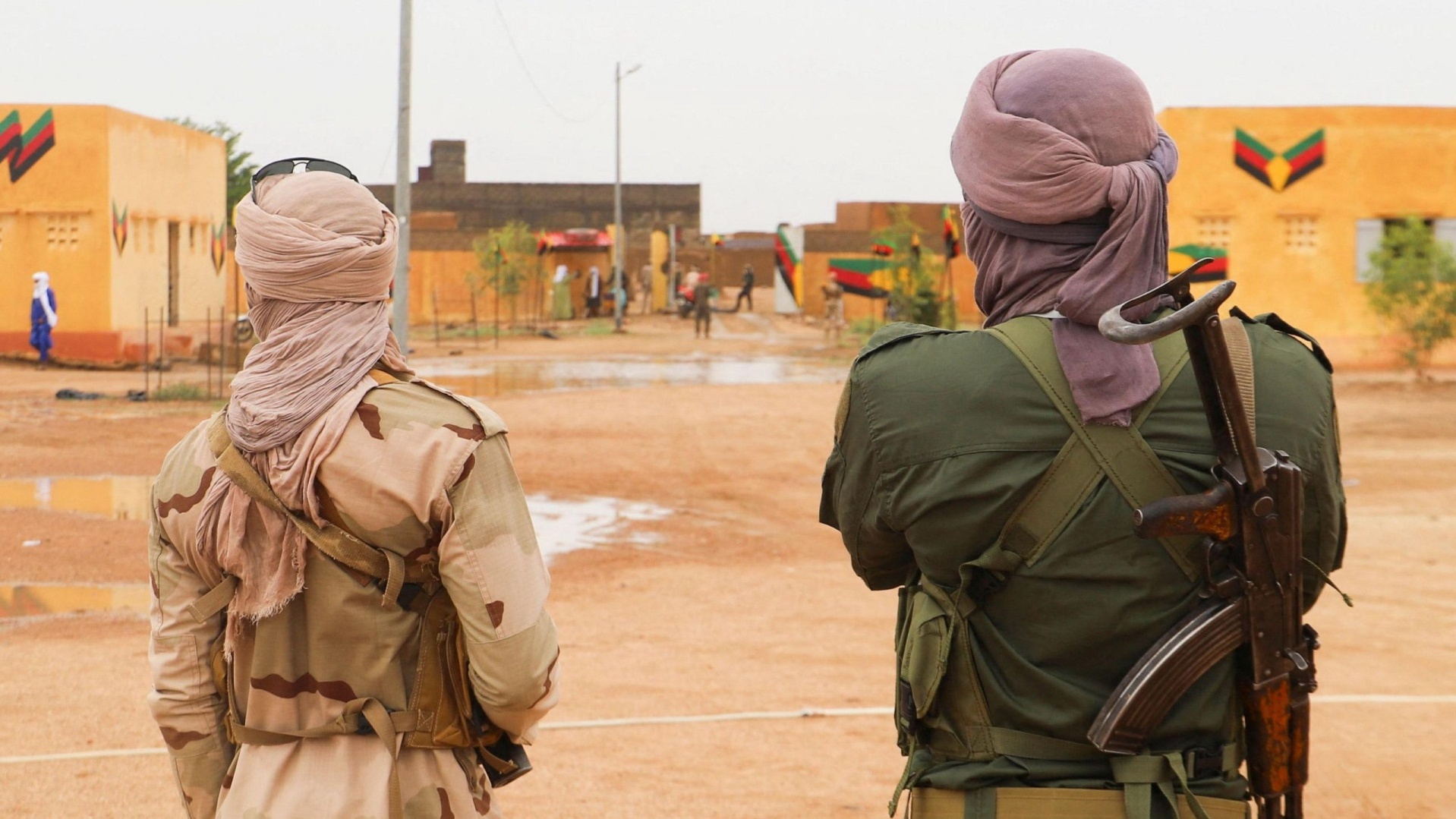

The recent surge in activity by the Jama’at Nusrat al-Islam wal Muslimin (JNIM)-Front de Libération du Azawad (FLA) coalition has reignited scrutiny over Algeria’s shadowy role in Mali’s ongoing crisis. Far from its self-proclaimed image as a neutral mediator, Algiers has emerged as a key player fueling instability across the Sahel, with Mali serving as its latest battleground.
Algeria’s calculated manipulation of Mali’s chaos
Despite portraying itself as a stabilizing force in the region, Algeria’s policies have systematically undermined Mali’s sovereignty. By maintaining a carefully calibrated state of tension—balancing support for armed groups while avoiding outright intervention—Algiers has prolonged Mali’s turmoil. This strategy not only serves Algeria’s regional ambitions but also diverts attention from internal challenges, including economic stagnation and political dissent.
Observers note that Algeria’s involvement in Mali is not incidental but part of a broader geopolitical chess game. The country’s historical rivalry with Morocco, particularly over leadership in North Africa, has spilled into the Sahel. Both nations vie for influence in Mali, where their competing interests—from resource control to military partnerships—create a volatile mix.
How Mali became the epicenter of Maghreb tensions
Mali’s strategic position at the heart of the Sahel has made it a magnet for external actors. Algeria, leveraging its intelligence networks and economic leverage, has positioned itself as a kingmaker in Bamako. Yet, its actions often contradict its diplomatic rhetoric. While Algiers publicly advocates for dialogue, it simultaneously arms non-state actors, ensuring Mali remains too fractured to challenge Algerian dominance.
This dual approach has had devastating consequences. The proliferation of armed factions, weakened governance, and a humanitarian crisis have all deepened under Algeria’s watch. Critics argue that Algiers prioritizes its own interests over Mali’s stability, leaving the country trapped in a cycle of violence and instability.
Morocco’s counter-moves in the Sahel power struggle
Morocco, Algeria’s regional rival, has responded to Algiers’ maneuvers by strengthening its own footprint in the Sahel. Through strategic partnerships with African nations, including Mali, Rabat has sought to counterbalance Algerian influence. Morocco’s approach focuses on economic cooperation, military training, and diplomatic alliances, positioning itself as a more reliable partner for stability.
In Bamako, Moroccan initiatives—such as infrastructure projects and security cooperation—have gained traction. Unlike Algeria’s covert tactics, Morocco’s engagement is more transparent, appealing to Malian authorities seeking tangible benefits. This has created a delicate balance, with both Maghreb giants pulling Mali in opposite directions.
The human cost of geopolitical games
The fallout from this rivalry extends far beyond political maneuvering. Mali’s civilian population bears the brunt of the conflict, facing displacement, food insecurity, and violence. The proliferation of armed groups, often backed by external actors, has fragmented the country, leaving communities vulnerable to exploitation and extremism.
As the Sahel grapples with these challenges, the question remains: Will Mali’s suffering finally prompt a shift in the geopolitical calculus, or will the Maghreb’s power struggle continue to dictate the region’s fate?