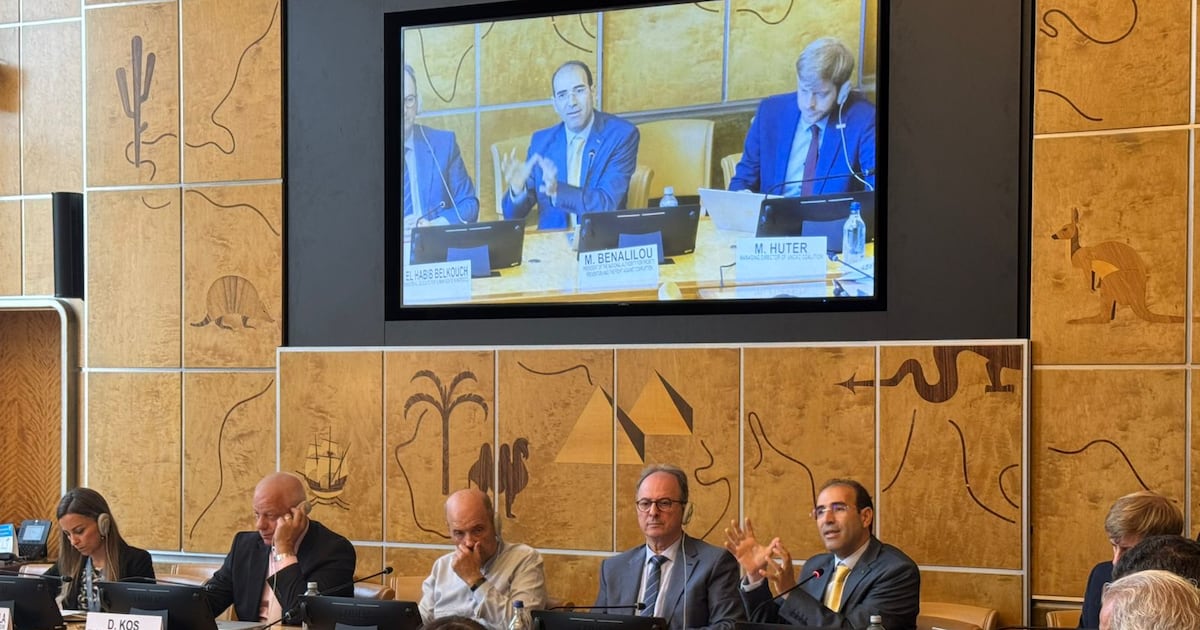

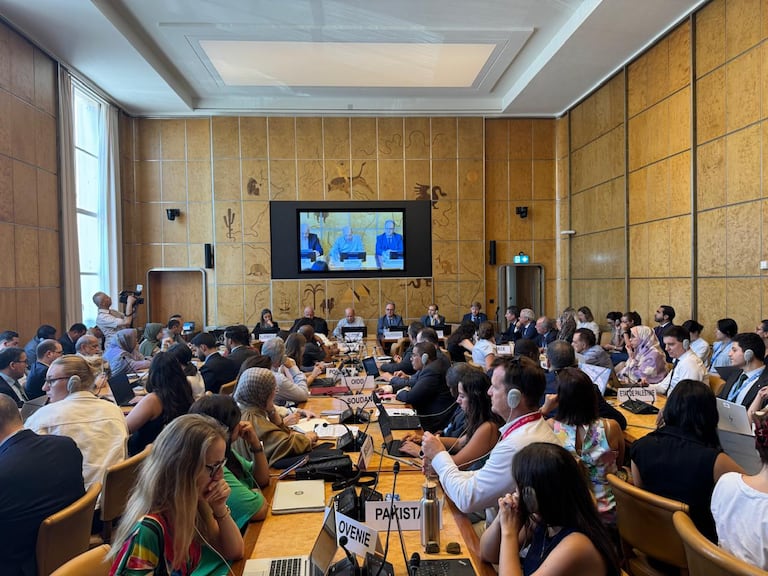
At an international gathering in Geneva, global leaders converged to examine the deepening connection between corruption and fundamental rights violations. The event unfolded against a backdrop of growing global awareness of how graft undermines justice, equity, and human dignity—an issue now central to discussions at the United Nations Human Rights Council.
a renewed focus on prevention and systemic change
The timing of the meeting follows the adoption of a landmark resolution in mid-2025, which formally recognized that combating corruption and safeguarding human rights are not separate goals, but mutually reinforcing pillars of sustainable governance. International frameworks—including the United Nations Convention against Corruption, the 2011 Marrakech Declaration, and the 2021 UNGASS political declaration—have long stressed the need for preventive action rooted in rule of law, democratic accountability, and transparent institutions.
Morocco’s integrated strategy takes center stage
Representing Morocco at the forum, Ambassador Omar Zniber emphasized the Kingdom’s proactive role in aligning national policies with global standards. Speaking as the Permanent Representative to the United Nations in Geneva, he described the initiative as “a critical step forward in multilateral cooperation.” He highlighted Morocco’s coordinated institutional mobilization and its leadership in integrating anti-corruption measures into broader human rights and governance agendas.
Central to the discussion was the testimony of El Habib Belkouch, Morocco’s interministerial delegate for human rights, who framed corruption not as a governance issue alone, but as a direct assault on people’s daily lives. “When corruption blocks access to justice, healthcare, education, or employment, it strips individuals of rights they are entitled to,” he warned. Every misappropriated dirham, he noted, is a dirham denied to a school, a clinic, or a social program—resources siphoned away from the public good.
Belkouch also drew attention to the disproportionate burden corruption places on marginalized groups, particularly women and vulnerable communities, whose access to essential services is most frequently disrupted. To counter this, he advocated for a preventive approach grounded in transparency, public access to information, citizen participation, and strict accountability—tools he described as both fundamental rights and essential bulwarks against corruption.
structural shifts: from funds lost to rights denied
Mohamed Benalilou, head of Morocco’s national authority on probity, prevention, and anti-corruption, expanded the conversation beyond financial loss. He argued that the relationship between corruption and human rights is evolving into a structural interdependence—that corruption doesn’t just steal money, it creates real victims stripped of their rights. “We are no longer speaking solely of diverted funds, but of individuals whose fundamental freedoms are systematically denied,” he stated.
Benalilou also spotlighted gendered corruption, describing it as a barrier to gender equality and calling for its integration into broader anti-corruption and rights frameworks. He framed the prevention of corruption as a positive obligation for states: not just avoiding graft, but actively protecting rights and freedoms. In this view, anti-corruption becomes a core component of human rights due diligence—an essential duty for institutions committed to integrity.
He urged the protection of civic space and the recognition of whistleblowers as human rights defenders, stressing the need for an institutional integrity model that goes beyond mere absence of corruption. Such institutions, he argued, must actively uphold rights, enforce equality, and ensure transparency in every function.
toward a rights-based governance model
On the international stage, Benalilou called for stronger alignment between global processes—those in Geneva, Vienna, and New York. He emphasized that obligations under the UN Convention against Corruption and human rights instruments are two sides of the same commitment. To bridge gaps, he proposed the creation of structural pathways between institutions and the adoption of a human rights-based preventive governance model—one that embeds accountability, participation, and transparency into every policy and program.
As the forum drew to a close, a shared urgency emerged among participants: the need to strengthen collaboration between governments, international bodies, and civil society. Education, capacity-building, citizen engagement, and digital innovation were highlighted as vital tools for promoting good governance, enhancing transparency, and preventing abuse before it occurs. The message was clear—combating corruption is not just a matter of financial rectitude; it is a fundamental act of justice and human dignity.