
Military escalates weapons seizures as elections loom over Guinea-Bissau
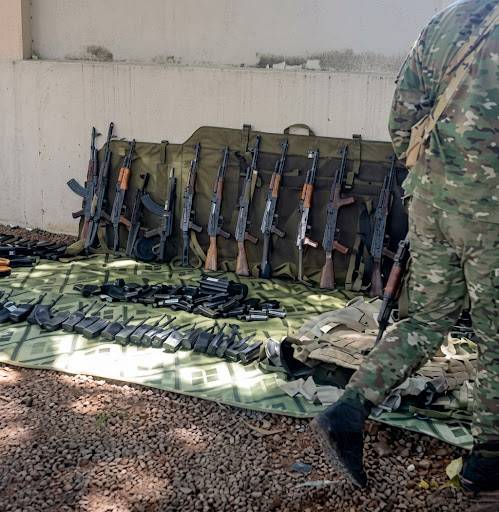
The Guinea-Bissau military junta has intensified its disarmament campaign in Bissau, uncovering hidden weapons caches in residential areas and shipping containers. This sweeping operation targets firearms believed to be linked to supporters of former President Umaro Sissoco Embaló, whose potential return threatens to disrupt the fragile transition ahead of the December 6 presidential election.
With the nation at a turning point, security forces are leaving no stone unturned in their search for unregistered weapons, aiming to curb the influence of armed factions that could destabilize the capital. The timing of this crackdown—just weeks before the polls—has raised questions about whether these measures are purely security-driven or strategically timed to reshape the political landscape.
The junta’s actions follow Embaló’s announcement of his candidacy from exile in Morocco, where he has been since a 2025 coup forced him out of office. Despite his declared intention to contest the election, military authorities have blocked his return, citing security risks. Embaló has condemned this decision, demanding an impartial judicial review of his eligibility to run.
From exile to the ballot box: Embaló’s high-stakes return bid
Umaro Sissoco Embaló’s political comeback hinges on two critical fronts: his ability to return to Guinea-Bissau and his eligibility to stand in the election. While the military justifies its travel ban as a precautionary measure, Embaló’s supporters argue it is a deliberate effort to silence him ahead of the vote.
The junta has framed its disarmament drive as a necessary step to ensure public safety, yet the focus on Embaló’s alleged allies suggests deeper political motivations. If the military’s claims hold weight, these seizures could prevent armed groups from disrupting the election. However, critics warn that the campaign risks being weaponized to tilt the scales in favor of transitional leaders.
Embaló’s defiant stance—including his pledge to return and campaign—has turned the December election into a flashpoint. His supporters accuse the junta of orchestrating a crackdown to marginalize him, while the military insists its actions are about restoring order in a country where coups and political violence have long disrupted democratic progress.
The constitutional shift complicating Guinea-Bissau’s transition
August’s controversial referendum, which approved a new constitution expanding presidential powers, has further polarized the political climate. The changes, opposed by civil society and opposition factions, have fueled tensions as Guinea-Bissau prepares to exit military rule. With the December vote approaching, the stakes couldn’t be higher: will the junta honor its commitment to civilian governance, or will it use the transition as a smokescreen for continued influence?
The military’s disarmament efforts, combined with the constitutional overhaul, paint a picture of a country at a crossroads. As soldiers raid homes and scrutinize containers, the question remains: is this about security—or about controlling the narrative before the election?
What’s at risk in Guinea-Bissau’s December showdown
- Military credibility: The junta’s ability to organize free and fair elections will be tested, with transparency in its disarmament and electoral processes under scrutiny.
- Embaló’s campaign: His blocked return raises doubts about his capacity to compete, shifting the race into uncharted territory.
- Constitutional tensions: The new charter’s expanded presidential powers could either stabilize the system or deepen divisions if perceived as a power grab.
- Public trust: Will citizens accept the results if the military’s role overshadows the process? The answer could define Guinea-Bissau’s democratic future for years to come.
The final countdown: will Guinea-Bissau break from its cycle of coups?
With two months left until the presidential vote, Guinea-Bissau stands at a decisive moment. The military’s weapons seizure campaign, Embaló’s exile-to-candidacy gamble, and the shadow of a contentious constitution have collided to create a political earthquake. Whether this marks a true turning point toward democracy—or another chapter in the country’s turbulent history—will be decided at the ballot box.