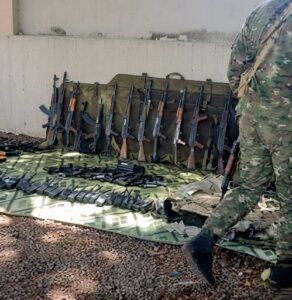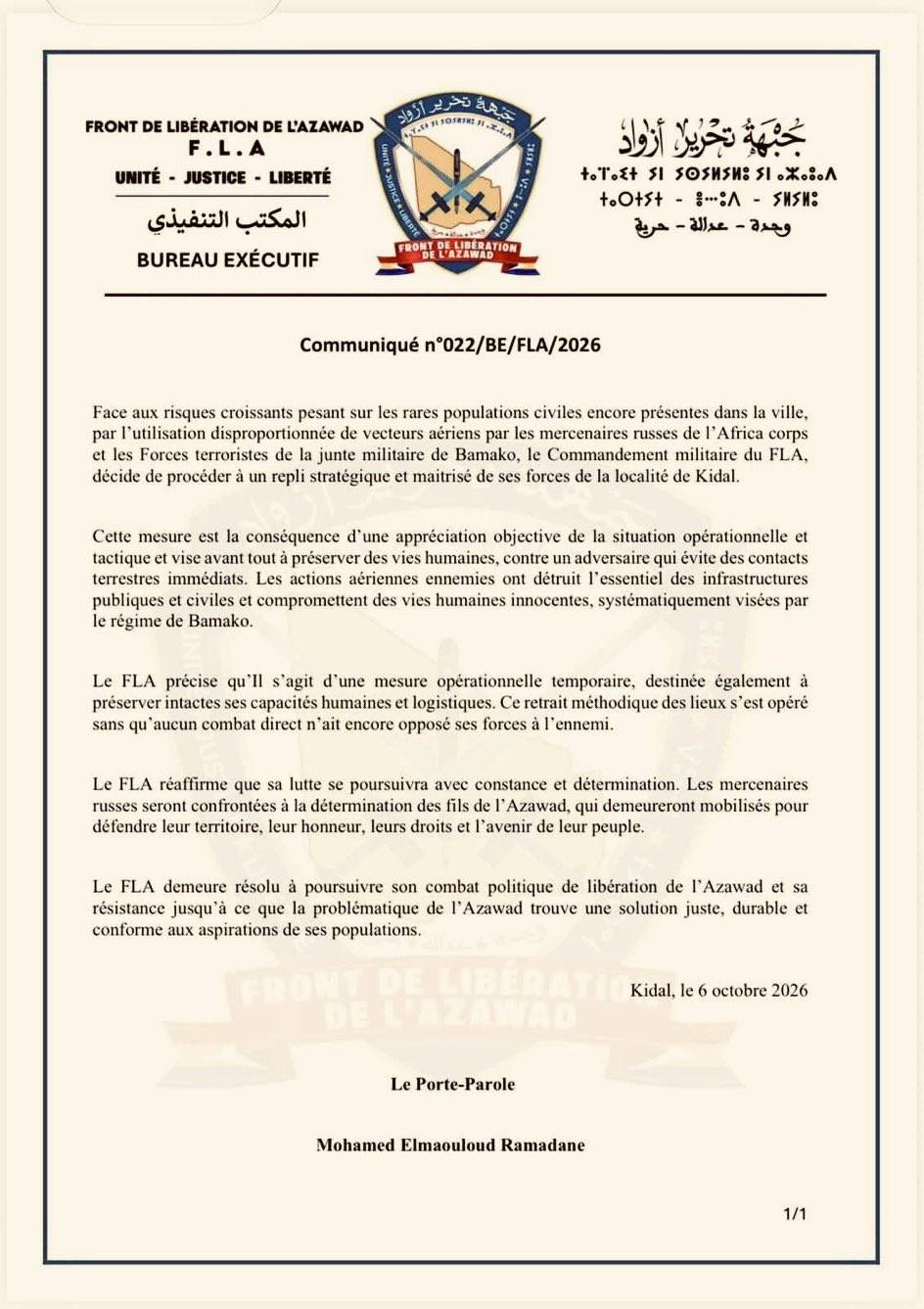

The dust hasn’t settled in northern Mali after the Front de Libération de l’Azawad (FLA) executed a sudden, high-stakes withdrawal from Kidal—a move they frame as a tactical regrouping rather than a retreat. In a conflict where control of the region has swung like a pendulum for years, this latest development isn’t just another skirmish in the Azawad war; it marks a definitive turning point. The question now: Is this a strategic pause or the calm before another storm?
Kidal: the prize that refuses to settle
More than just a battlefield, Kidal has long been the epicenter of Mali’s deepest wounds. As a bastion of Tuareg resistance since independence, its symbolic value rivals its strategic importance for both Bamako and the rebel movements. In November 2023, Malian forces—backed by then-active Russian contingents—reclaimed the city in a blitz highlighted as a triumph for national unity. Yet less than three years later, the FLA reversed that momentum with a sweeping offensive in April 2026, forcing the Africa Corps (the successor to Wagner) to abandon Kidal under fire. Satellite data suggests at least 400 Russian paramilitaries were airlifted to Tessalit amid the chaos.
A reversal of fortune or calculated retreat?
What makes the FLA’s exit so intriguing isn’t the withdrawal itself, but the rationale behind it. The movement insists the pullback is a deliberate downsizing to avoid direct confrontation and regroup for future campaigns—not a surrender. History in the Sahel suggests this logic is sound. The desert terrain favors mobility over firepower, allowing armed groups to vanish and reappear at will.
This tactic mirrors past episodes where rebels abandoned territory to preserve fighters. After Malian forces retook Kidal in 2023, the FLA cited overwhelming airstrikes and coalition pressure as reasons for withdrawing. Today, with initiatives in multiple northern zones, their withdrawal may reflect a deliberate choice to conserve strength rather than concede defeat.
The cost of conquest in the Azawad
The stakes in northern Mali are unforgiving. Take the 2014 battle for Kidal, where an 80-troop Malian offensive collapsed in disaster. While Bamako claimed 20 soldiers killed, independent tallies (including a subsequent UN report) put the death toll at 33 Malian troops and eight civilians. The numbers were obscured, but the message was clear: Kidal exacts a brutal price.
Then came Tinzaouatène in July 2024—a perfect storm of sandstorms and rebel ambushes that mauled a combined column of Malian soldiers and Wagner contractors. The CSP (the FLA’s umbrella coalition) claimed 131 Russian and Malian dead, while Bamako initially downplayed losses before admitting “significant” casualties. This clash became a pivotal setback, exposing the fragility of foreign-backed operations in the Sahara.
From Wagner to Africa Corps—same battles, new actors
The transition from Wagner’s shadow to the Africa Corps hasn’t softened the realities of war. Heavy weaponry and technical superiority often falter in the Sahel’s vastness, where local intelligence and desert mobility decide outcomes. The April 2026 retreat from Kidal—followed by a July 2026 counteroffensive that reclaimed Anéfis—proves the ground remains fluid. Control flips as quickly as the trade winds.
What comes next? Kidal’s shadow grows longer
Bamako’s triumph in 2023 framed Kidal as a victory for territorial integrity. The FLA’s April exit, however, redefines the narrative. The city is no longer just a military objective; it’s the heart of Azawad’s independence claim and the litmus test for Bamako’s reach. A temporary withdrawal by the FLA doesn’t imply the battle is over—it might signal a regrouping phase. The desert remembers past ambushes and regrouped rebels. The question now is where the FLA will strike next. Will this withdrawal precede a larger offensive, or is it the beginning of the end for Kidal’s revolving-door control?
The Sahara’s vast theatre has always favored those who know its rhythms. With Kidal in flux, the real test lies in who can outwait the storm.