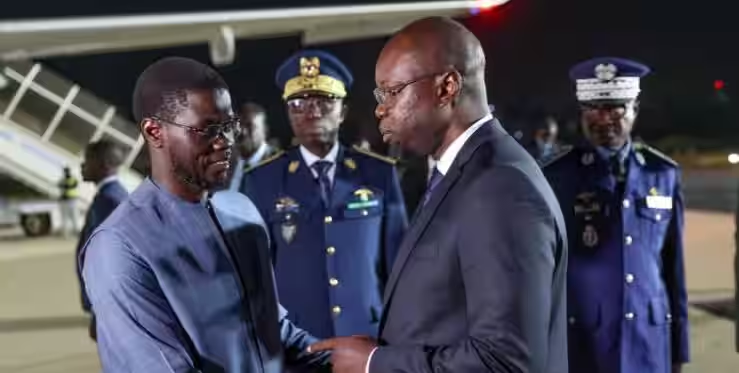
How the bond between Bassirou Diomaye Faye and Ousmane Sonko is reshaping Senegal
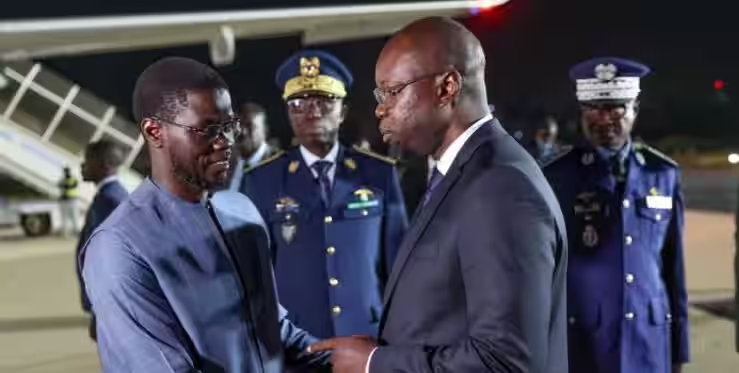
Navigating the evolving ties between Senegal’s president and his former rival
In Senegal’s fast-moving political arena, the relationship between President Bassirou Diomaye Faye and opposition figure Ousmane Sonko has become a defining factor in the nation’s trajectory. Far from a simple partnership, their dynamic reflects shifting alliances and unresolved tensions that continue to influence the country’s governance and future direction.
Observers note that what began as a rivalry has gradually evolved into a delicate balance of cooperation and contention. This transformation is not just reshaping power structures within the administration but also altering how Senegal’s political landscape is perceived both locally and internationally.
As decisions unfold in Dakar, the interplay between these two influential figures is drawing attention to broader questions about governance, accountability, and the role of opposition in a young democracy. Their evolving rapport raises critical debates about whether Senegal is moving toward greater unity or deeper division.
From confrontation to collaboration: a shifting political equation
Once viewed as adversaries, Bassirou Diomaye Faye and Ousmane Sonko now find themselves navigating a complex partnership that defies easy categorization. Their interactions, though sometimes strained, underscore a pragmatic approach to governance in a nation still finding its footing after a period of upheaval.
While public displays of unity have been staged for strategic purposes, behind the scenes, sources indicate that fundamental differences remain. However, the necessity of maintaining stability appears to have tempered outright conflict, forcing both leaders to reconsider their strategies in the national interest.
This delicate dance is being watched closely by political analysts, who see in their relationship a microcosm of Senegal’s broader challenges: reconciling ambition with responsibility, and vision with pragmatism. The outcome of their collaboration—or lack thereof—could determine whether Senegal forges ahead with cohesion or risks further fragmentation.
What’s at stake for Senegal’s political future
The decisions made in their ongoing negotiations extend beyond personal rapport. They carry implications for policy implementation, social cohesion, and Senegal’s standing on the global stage. With key reforms pending and public expectations high, the manner in which Faye and Sonko manage their relationship will shape the country’s trajectory for years to come.
Some analysts argue that their cooperation, however fragile, presents an opportunity to bridge divides and build a more inclusive governance model. Others caution that unresolved tensions could undermine progress and deepen societal fractures, especially in a climate where trust in institutions remains fragile.
One thing is clear: the way forward for Senegal will be written in the spaces between unity and division, power and opposition, confidence and caution. How these two leaders choose to navigate that space will define not just their political careers, but the nation’s future.