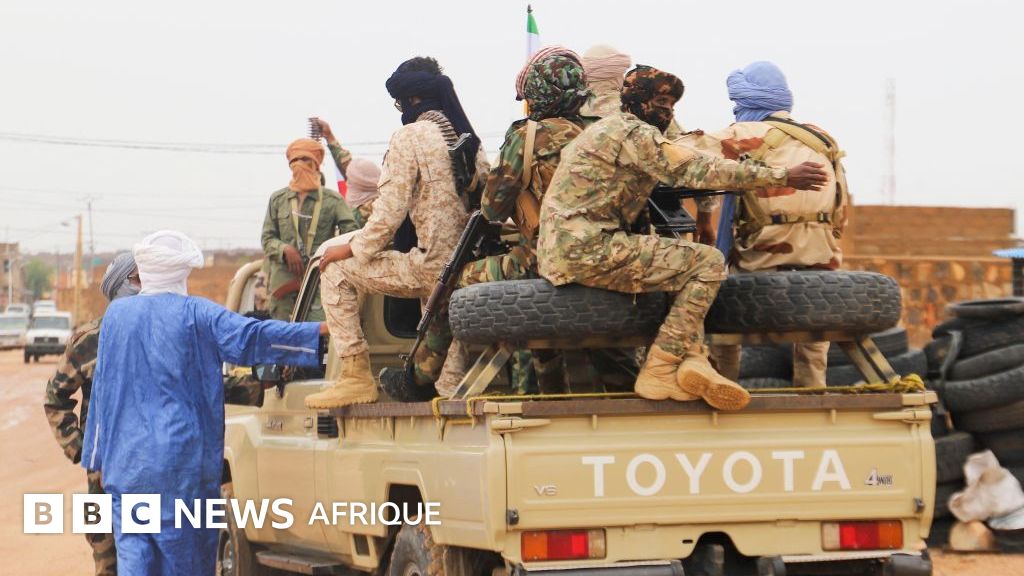

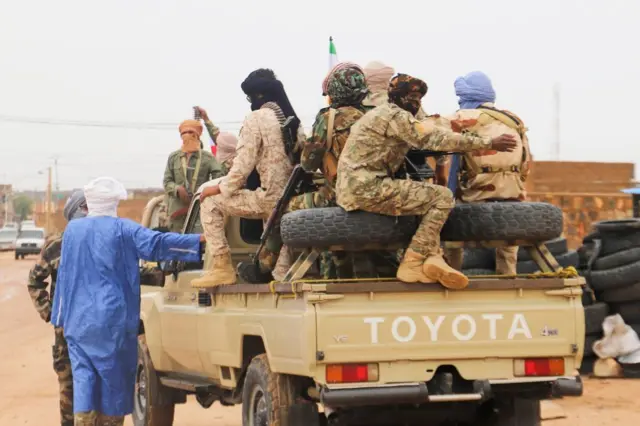
Coordinated strikes carried out this past weekend by the Group for the Support of Islam and Muslims (JNIM) and Tuareg rebels from the Azawad Liberation Front (FLA) have sparked widespread disorder, highlighting the vulnerabilities of the military junta against an increasingly structured insurgency.
From Bamako to Kidal, jihadist and separatist factions launched simultaneous assaults on various Malian urban centers, demonstrating a level of tactical synchronization never before seen in this conflict. This collaborative effort marks a significant turning point in the Malian crisis: despite long-standing ideological and territorial disputes, these two entities have united to confront their shared adversary, the military government.
This unusual partnership suggests a troubling shift in the security environment of the Sahel. Traditional divides appear to be fading in favor of strategic cooperation, signaling a deeper transformation where opportunistic alliances could permanently alter the regional balance of power. For those following Sahel news English, these developments represent a critical escalation.
Beyond the immediate combat results, these maneuvers undermine the internal stability of the administration in Bamako. They also intensify friction with external allies, such as Russia and fellow members of the Alliance of Sahel States, raising concerns about the regime’s potential strategic isolation as it faces a more unified and volatile rebellion.
A history of conflicting paths
The JNIM operates as a jihadist coalition linked to Al-Qaeda, functioning across the Sahel with the intent of establishing a transnational Islamic order. Their tactics involve guerrilla warfare and terrorism designed to destabilize sovereign states. Conversely, the FLA is a Tuareg separatist group born from northern uprisings, seeking autonomy or independence for the region of Azawad based on community identity and historical grievances.
Historically, these groups were rivals. The FLA remained wary of the global jihadist mission, while JNIM viewed the separatists as competitors for local dominance. Their current cooperation is built on a specific synergy: the FLA provides deep knowledge of the terrain and local social networks, while JNIM contributes heavy weaponry, experienced fighters, and a broad logistical reach. Despite their clashing worldviews, they are working together to weaken the Malian state and create uncertainty within the political and military core.
An unlikely partnership
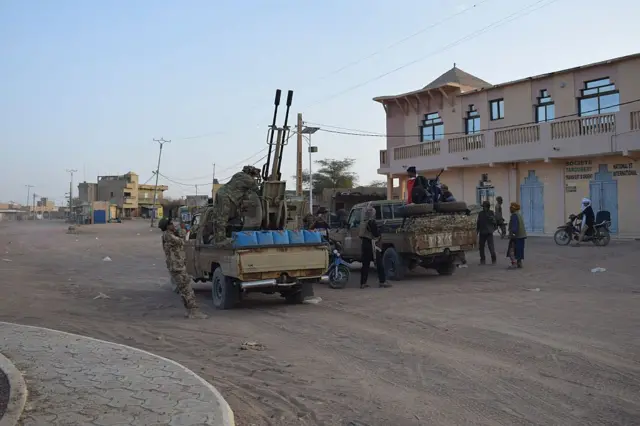
The objectives of the FLA and JNIM remain fundamentally at odds. One focuses on creating an independent state in northern Mali, while the other seeks to enforce a strict interpretation of Islamic law throughout the country. These differences have historically led to violent clashes over territory.
However, this temporary alignment is not entirely without precedent. Experts such as Emmanuel Odilon Koukoubou, a senior researcher at the Civic Academy for Africa’s Future (CiAAF), point out that similar dynamics were seen in early 2012. At that time, the National Movement for the Liberation of Azawad (MNLA) joined forces with Al-Qaeda in the Islamic Maghreb (AQIM) and Ansar Dine to push Malian forces out of the north. That alliance eventually collapsed as the jihadists turned on the separatists, leading to the French-led Operation Serval.
Today’s cooperation is effective because it creates a powerful psychological impact, making the state feel besieged from every angle. It provides the kind of on the ground Sahel insights that analysts find crucial for understanding the current instability.
The junta targeted at its center
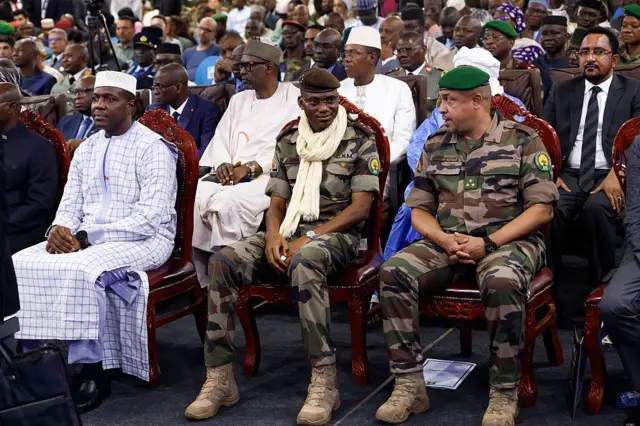
According to Alioune Tine, founder of the Afrikajom Center in Dakar, this current phase represents a major break from the past. The goal is to weaken or even dismantle the military junta. The recent violence struck the very heart of Mali’s security and political apparatus. The death of Defense Minister Sadio Camara, a pivotal military figure, is being described as a disaster for the government.
The President’s 48-hour silence following the events fueled rumors, until the Prime Minister eventually addressed the nation, acknowledging the asymmetric nature of the threat. He promised that the government would learn from the April 25 incidents and implement new measures to improve security. This reporting on Mali Niger Burkina reporting highlights the shared challenges faced by the region’s military regimes.
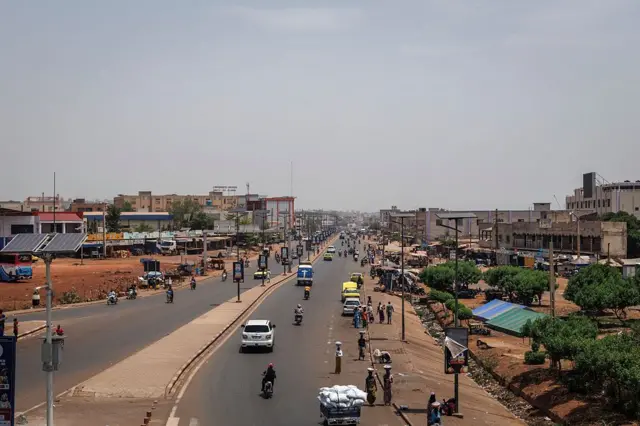
The assassination of Sadio Camara at his home in Kati reveals a massive intelligence failure, showing that the junta is vulnerable even in its most secure strongholds. Tine noted that Camara was more than just a minister; he was a strategic thinker and an influential figure within the armed forces. His loss severely weakens the entire command structure.
Concerns over a regional domino effect
This crisis occurs while Mali is diplomatically isolated from many Western nations, relying heavily on Russia and its partners in the Alliance of Sahel States (AES). Analysts warn that the regime’s fragility could lead to further isolation and eventual collapse. This is a focal point for Sahel current affairs experts.
Alioune Tine emphasizes that the stakes extend far beyond Mali’s borders. He warns that a collapse in Mali could trigger a domino effect across West Africa. He calls for an urgent regional strategy and shared defense initiatives between organizations like ECOWAS and the AES. According to Tine, leaders must set aside their egos and national disputes to build a collective security framework, as the crisis is regional in scope and requires a regional solution. Without such a unified response, the path forward remains uncertain for the Sahel Reporter and all regional stakeholders.