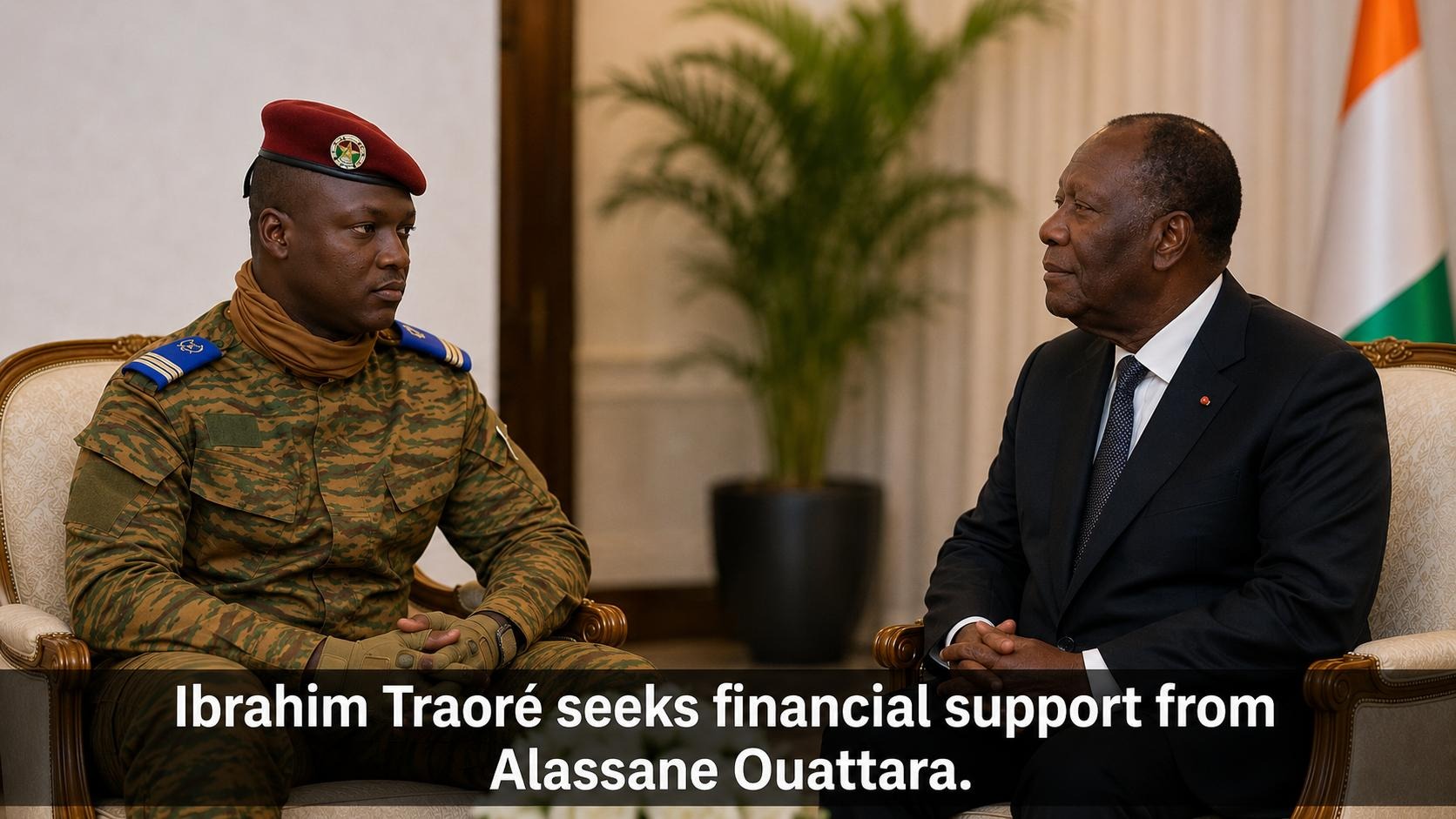

The moment of reckoning has arrived for Burkina Faso’s transitional government. Despite the bold declarations of rupture and sovereignty echoing from Ouagadougou, unmistakable signals now confirm that Captain Ibrahim Traoré dispatched an official delegation to Abidjan, seeking urgent financial assistance. This move lays bare a fiscal deadlock that the military leadership can no longer obscure.
The illusion of self-sufficiency has shattered. While Captain Ibrahim Traoré has repeatedly championed total autonomy from neighboring states, the stark reality of the nation’s depleted coffers has now caught up with his rhetoric. By sending envoys to Abidjan to “request funds,” the Burkinabè transitional leader implicitly concedes that state finances have been drained dry.
This overture to Ivory Coast is far from a routine diplomatic gesture—it signals a profound economic distress. Skyrocketing military expenditures and international isolation have crippled the nation’s resources, compelling Traoré to swallow his pride and seek financial relief from a government he once openly criticized.
The decision to approach Abidjan exposes a glaring contradiction in Traoré’s stance. How can one simultaneously accuse Ivory Coast of destabilization and yet discreetly plead for its financial lifeline to cover the costs of transition?
A shift toward pragmatic diplomacy: Despite the lofty rhetoric of sovereignty, Captain Traoré now finds himself forced into realpolitik, abandoning ideological posturing in favor of survival.
A humiliating admission of weakness: The plea for aid underscores that emergency taxes and the so-called “patriotic support fund” have failed to sustain the Burkinabè state. Viral videos and unverified reports have evolved from speculation into hard evidence of a government grappling with insolvency.
By authorizing this financial outreach, Ibrahim Traoré undermines the very foundation of his legitimacy. How can he continue to champion the Alliance des États du Sahel’s independence while seeking financial salvation from the very institutions he once vowed to reject?
This mission to Abidjan serves as the ultimate testament to ideology’s limitations. Traoré must now confront his people with the truth: his strategy of rupture was merely a facade, unable to withstand the weight of economic realities. True sovereignty, it turns out, cannot be decreed on television screens—it must be funded. And today, it is at the doorstep of Ivory Coast that Burkina Faso’s future now hangs in the balance.



