
JNIM alleges abuses against civilians in Mali’s Niono region
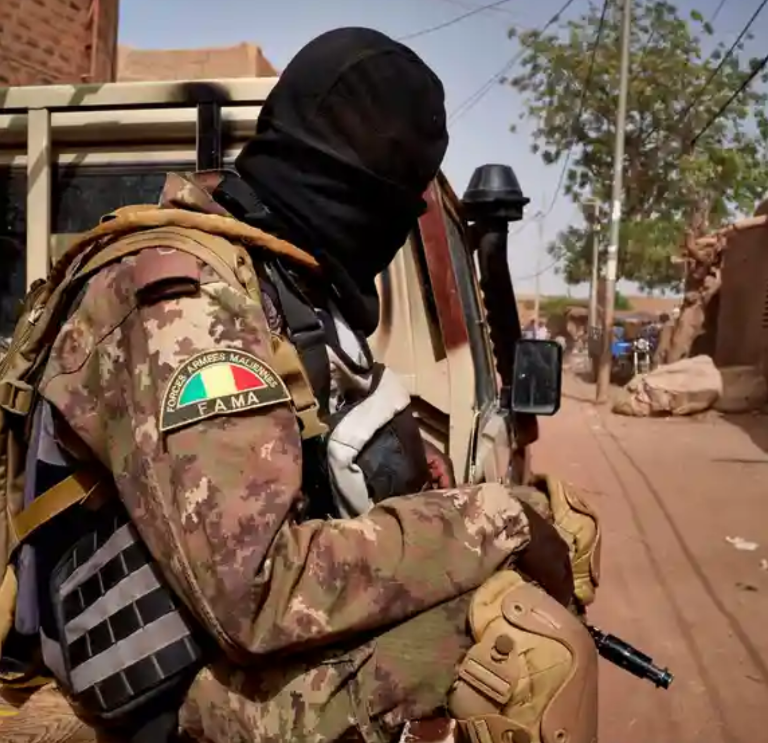
In a statement released on May 31, the Group for the Support of Islam and Muslims (JNIM) has openly accused the Malian Armed Forces (FAMa) and their Russian allies from Africa Corps of executing Fulani villagers within the Niono district. This recent allegation once again spotlights the extreme vulnerability of civilian populations, who find themselves trapped between counter-terrorism operations and the ongoing battle for media influence in central Mali.
Serious allegations in the heart of the central delta
The Niono district, situated in Mali’s Ségou region, is once more a focal point of dramatic tensions. According to the JNIM’s propaganda channels, elements of the Malian army, supported by Russian paramilitaries from Africa Corps (the successor to the Wagner structure), allegedly conducted a punitive expedition specifically targeting the Fulani community. The reported toll, though challenging to independently verify due to restricted information access in the area, indicates several civilian fatalities and significant property destruction.
This latest accusation emerges amidst an environment of intense scrutiny. For several years, central Mali has remained the epicenter of a multi-faceted crisis, where ethnic generalizations consistently fuel the conflict.
The Fulani community: a recurring target and communication leverage
For observers of the Sahel crisis, the JNIM’s deliberate choice to highlight the Fulani community in its rhetoric is far from coincidental. Since the outset of the jihadist insurgency, this pastoral population has frequently been caught in the crossfire. On one side, they face suspicion from regular forces, who sometimes accuse them of complicity with insurgents; on the other, they endure pressure from terrorist groups seeking to position themselves as exclusive protectors.
By emphasizing the ethnic identity of the Niono victims, the JNIM activates a highly sensitive issue. The organization aims to capitalize on the feelings of marginalization and persecution experienced by certain members of this community. By portraying itself as the sole bulwark against alleged abuses by Bamako and its Russian allies, the armed group endeavors to legitimize its local presence and facilitate recruitment efforts. The war of narratives and communication has become as vital as the actual fighting on the ground. For the JNIM, exploiting the suffering of Fulani civilians serves to undermine national cohesion.
The operational dilemma for Africa Corps and FAMa
From Bamako’s perspective, the military doctrine remains steadfast: the neutralization of Terrorist Armed Groups (GATs) is conducted without ethnic distinction, and the Transitional Authorities consistently reaffirm their commitment to human rights during operations. The FAMa, bolstered by the tactical and aerial capabilities of Africa Corps, have intensified their offensives in the Ségou region to dismantle the jihadist stranglehold.
However, the presence of Russian instructors and combatants significantly alters the dynamics on the ground. The methods employed, often characterized as ultra-offensive by human rights organizations, raise serious concerns regarding collateral damage. Reports of abuses, while systematically dismissed as “Western propaganda” or “Fake News” by the Malian General Staff, prove difficult to transparently refute due to the lack of access granted to independent journalists and international investigators. This opacity inadvertently strengthens the effectiveness of opposing narratives, which exploit any silence to assert their version of events.
The urgent need to protect civilians and information
The JNIM’s announcement on May 31 underscores the profound complexity of the Malian conflict, where humanitarian and community factors are ruthlessly weaponized. As military pressure mounts, the protection of all civilian populations, irrespective of community, must remain the absolute priority to prevent the country’s central region from spiraling into an irreversible cycle of inter-ethnic vendettas. For independent Sahel Reporter and those following Sahel current affairs, the challenge remains formidable: to report with impartiality and rigor, avoiding becoming a mouthpiece for terrorist communiques, while diligently documenting the on the ground Sahel reality without complacency. Peace in Mali will not be achieved solely through weapons, but also through justice and the vital rebuilding of trust among its afflicted populations, crucial for Mali reporting.