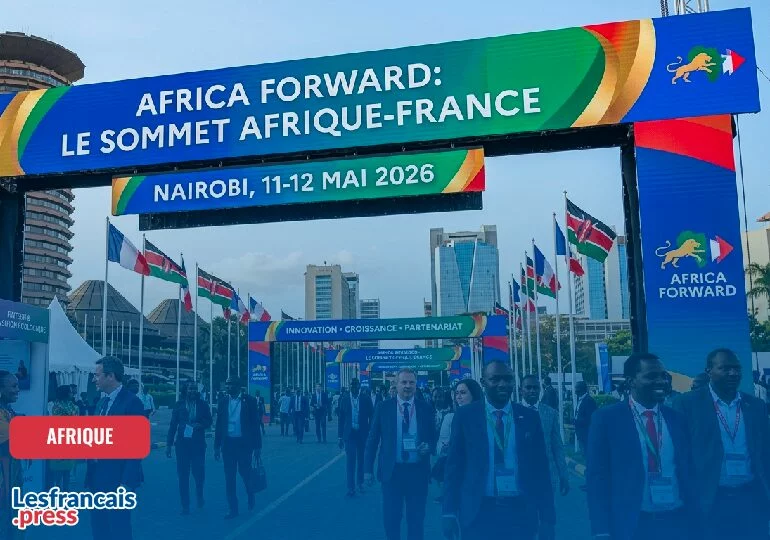

The Kenyatta International Convention Centre (KICC) in Nairobi has become the epicenter of diplomatic attention as the Africa-Forward summit commences. Co-chaired by French President Emmanuel Macron and Kenyan President William Ruto, this two-day gathering aims to foster a pragmatic and innovative partnership between France and Africa, moving beyond traditional frameworks of dependency toward a more balanced and collaborative model.
Nairobi was not chosen arbitrarily for this landmark event. By selecting Kenya—a regional economic powerhouse and a leader in green transition—the French government underscores its commitment to expanding its African policy beyond its historical francophone sphere. This strategic alignment signals a broader continental vision, one that prioritizes shared growth and mutual benefit over outdated paradigms of aid and assistance.
The summit’s agenda is structured around seven key pillars, each designed to address pressing global and continental challenges:
- Accelerating energy transition and sustainable industrialization
- Reforming the global financial architecture
- Advancing artificial intelligence and digital technologies
- Strengthening health systems, sustainable agriculture, and blue economy initiatives
A notable highlight of this new approach is the deepened scientific cooperation. In 2024, the CNRS (Centre National de la Recherche Scientifique) established a permanent office in Nairobi, marking a significant milestone in its engagement with the region. This initiative shifts the focus from one-way knowledge transfer to co-created research, positioning Nairobi as a central hub for East and Central Africa. By facilitating researcher mobility and shared infrastructure, the office exemplifies a model where local expertise is not only valued but integrated into global research networks.
The tangible impact of this collaboration is evident in the success stories emerging from the ground. For instance, a Kenyan researcher specializing in biodiversity has achieved groundbreaking progress, thanks to access to French laboratory networks. This partnership did not merely provide funding—it integrated her work into an international community, where her local insights became an asset for European researchers. The summit seeks to replicate this model of reciprocal knowledge exchange across the continent.
While innovation and technology dominate the discourse, the summit also carries significant diplomatic weight. For France, the event serves as a platform to reassert its relevance in a geopolitical landscape increasingly contested by emerging powers such as China, Russia, and Turkey. For President Ruto, co-hosting the summit reinforces his role as a pan-African leader, capable of engaging with global powers on equal footing.
Regional organizations, including the Economic Community of West African States (ECOWAS), are closely monitoring the outcomes. Should the summit translate its vision into concrete investments—particularly through the Business Forum attended by 1,500 participants—it could set a precedent for shifting from security-focused partnerships to those rooted in shared economic prosperity.
The success of Africa-Forward hinges on its ability to deliver actionable results. Unlike previous initiatives that have faltered under the weight of lofty declarations, this summit emphasizes tangible outcomes: signed contracts, established laboratories, and launched projects. For the continent’s young entrepreneurs and researchers, the proof of this new partnership will lie not in statements, but in visible progress. Only then can the slogan “Africa-Forward” transcend rhetoric and become a lived reality.



