
Lansana Gagny Sakho exposes Ousmane Sonko’s alleged anti-republican stance
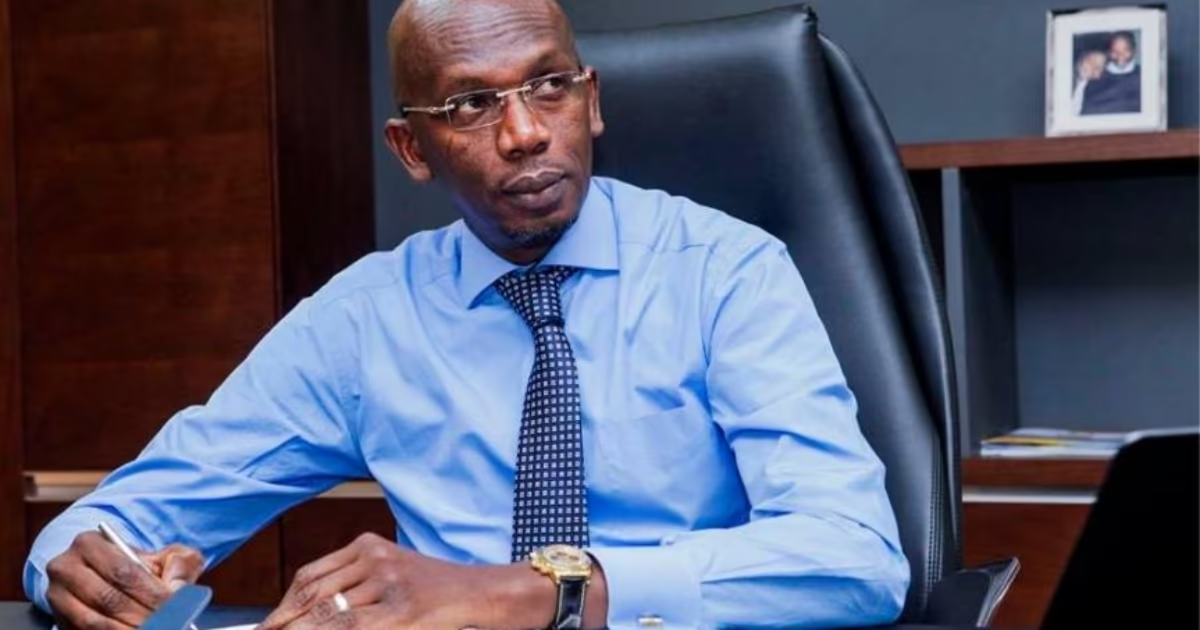
In a striking public declaration, Lansana Gagny Sakho, a former ally of Ousmane Sonko and now a prominent figure in the Kiiraay party supporting President Bassirou Diomaye Faye, has leveled serious accusations against his former mentor. Speaking on a national broadcast, the Chair of the APIX Board of Directors outlined his decision to distance himself from Sonko’s political project, citing fundamental differences in their vision for governance.
Sakho, who once aligned with Sonko’s movement, revealed that his initial involvement was driven by admiration for the individuals behind the political project. However, after the political transition, he made a deliberate choice to decline a high-profile government position in the water and sanitation sector, prioritizing his principles over political appointments. “I refused to prioritize positions over my convictions. That decision allowed me to walk away with integrity. From the outset, I chose the Republic,” he declared.
Ousmane Sonko’s alleged disregard for republican institutions
Sakho’s criticism of Sonko extended beyond personal differences, accusing him of actively undermining state institutions. He highlighted a public statement made by Sonko during President Faye’s official visits to the United States and China, where Sonko publicly questioned the government’s authority—a move Sakho described as deeply damaging to national cohesion. “Sonko has never chosen the Republic,” Sakho asserted, emphasizing the need for leaders to uphold institutional integrity.
The former ally acknowledged that challenges had arisen “on both sides” during the transition, but he pointed to tangible progress, particularly in the justice sector, as evidence of the government’s commitment to reform. His remarks came amid ongoing debates about the independence of the judiciary and the government’s efforts to strengthen democratic institutions.
Judicial independence under scrutiny
Sakho also addressed recent changes at the Ministry of Justice, where former Minister Ousmane Diagne had publicly asserted his autonomy, stating that no one could influence him. Sakho suggested that the minister’s removal was an attempt to install a more malleable figure who could sway judicial decisions. “They underestimated the judiciary. Magistrates are not puppets,” he emphasized, adding that realpolitik often diverges sharply from opposition narratives. His remarks underscored the tension between political expectations and the rule of law in Senegal’s evolving democratic landscape.
As Senegal navigates post-transition governance, Sakho’s statements reflect broader debates about leadership, institutional loyalty, and the future of democratic consolidation in West Africa.