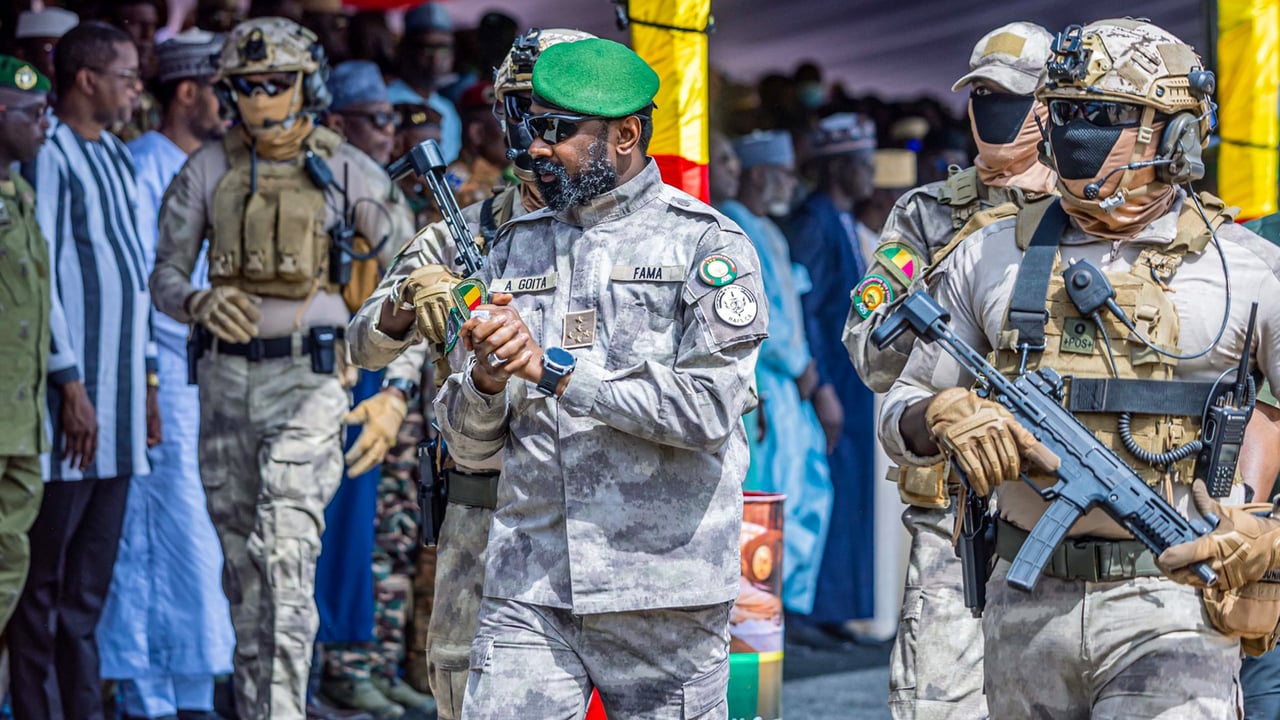


Following the significant security incidents that transpired on April 25, Mali has witnessed a discernible shift in its political landscape, marked by President Assimi Goïta’s strategic moves to consolidate his authority. These events, which underscored the persistent challenges to national stability, provided a critical juncture for the transitional leader to reinforce the state’s grip on power and steer the nation through its complex security environment.
The period immediately following the April 25 attacks saw a series of decisive actions aimed at bolstering Mali’s defense and security apparatus. President Goïta, pictured here attending the funeral of Sadio Camara on April 30, 2026, in Bamako, projected a strong image of leadership and resolve during a time of national mourning. This public display of unwavering commitment served to reassure the populace and demonstrate the government’s determination to confront threats head-on.
Amidst the ongoing struggle against extremist entities such as the Groupe de soutien à l’islam et aux musulmans (Jnim), the Malian leadership has increasingly focused on strengthening its internal security architecture and diversifying its international partnerships. This strategic pivot has involved a notable enhancement of military capabilities and a re-evaluation of external alliances. The presence and influence of entities like Africa Corps, often associated with Russian support, signify a deliberate shift in Mali’s security strategy under President Goïta. Such collaborations, reportedly backed by figures like Vladimir Poutine, are perceived as vital in the fight against insurgency and in securing Mali’s territorial integrity, thereby solidifying Assimi Goïta‘s position at the helm.



