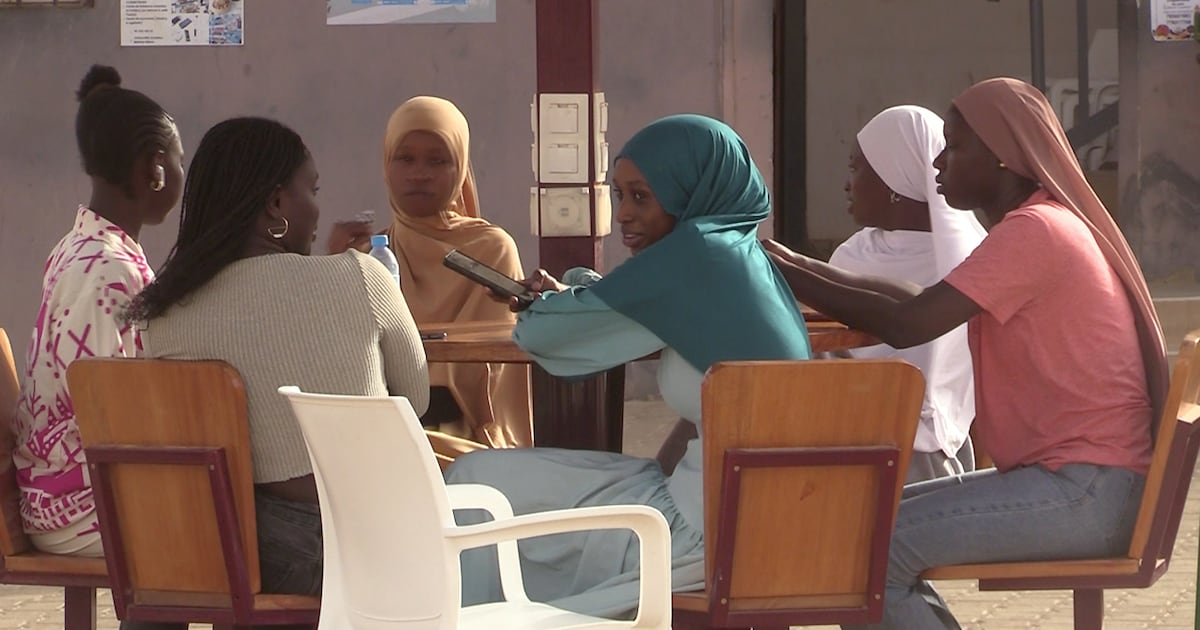

Across Senegal’s universities, a growing number of students are embracing political engagement alongside their studies, viewing it as a natural extension of their academic pursuits rather than a distraction.
The idea of merging activism with education is gaining traction, with many young learners seeing politics as a tool for personal growth and national contribution. Far from viewing political involvement as a barrier, these students argue that citizenship and scholarship can coexist harmoniously.
From classrooms to political movements
For Adama Lam, a law student at Cheikh Anta Diop University, political engagement is both a learning experience and a professional stepping stone. “My studies in law have shown me how knowledge translates into action,” he explains. “Engaging with political parties isn’t just about affiliation—it’s about shaping my perspective and preparing for the future.” He believes that university shouldn’t be an ivory tower but a space where ideas take shape and leaders emerge.
Amadou Saliou Diallo, another student leader, shares this perspective. “Politics isn’t a career—it’s a calling,” he says. “You can pursue accounting while staying politically active. The goal isn’t to replace one passion with another but to serve your community in multiple ways.” For him, activism isn’t a full-time job but a civic duty that complements academic or professional ambitions.
Learning beyond textbooks
Ousmane Seck, a political science major, sees university activism as a dual advantage. “Beyond lectures and exams, we need to understand how policies are shaped,” he notes. “If we aim to lead one day—whether as presidents or party founders—we must grasp the ‘Jub, Jubal, Jubanti’ framework now.” His point underscores a broader trend: students want to merge theoretical knowledge with real-world political literacy.
The debate isn’t just about balancing time—it’s about redefining the university’s role. Should campuses remain havens of pure scholarship, or should they incubate the next generation of policymakers? For many in Senegal’s student body, the answer is clear.