Mali fuel crisis disrupts humanitarian aid operations
A severe fuel shortage, triggered by jihadist blockades on key trade routes, is deepening the humanitarian crisis in Mali. This disruption is severely impacting daily life, paralyzing United Nations aid missions in a country already grappling with widespread hunger and escalating insecurity.
According to the United Nations Office for the Coordination of Humanitarian Affairs (OCHA), fuel supply challenges have significantly slowed aid interventions across central and southern regions, including key areas like Ségou, San, Koutiala, Mopti, and Bandiagara—critical links between Bamako and northern Mali, which remains under severe threat from armed groups.
Several humanitarian partners have been forced to scale back field operations, restricting mobile clinics to a mere 10-kilometer radius around their bases. Movement restrictions, armed robberies, and irregular checkpoints have even led to temporary suspensions of certain missions.
Since September, the Group for the Support of Islam and Muslims (JNIM), affiliated with Al-Qaeda, has been blocking fuel imports from Senegal and Côte d’Ivoire—primary transit routes for goods entering this landlocked West African nation. This blockade has now extended to Bamako and most regions, plunging communities into an energy and food emergency.
Léré isolated from aid
In the Tombouctou region of northwestern Mali, the town of Léré—near the Mauritanian border—has been cut off from the outside world since October 27 due to armed group-imposed restrictions.
«This latest measure has triggered population displacements toward safer areas,» reports OCHA in its October Humanitarian Access Dashboard. The report further notes that «aside from existing humanitarian actors in the town […], no humanitarian organization or agency has access to the locality.»
The same document highlights a 13% rise in humanitarian access incidents nationwide in October, totaling 50 cases. Explosive devices remain the primary threat, with 28 incidents recorded. Three direct attacks on aid workers were documented, alongside nine kidnappings, predominantly in Ségou and Gao regions.
In Douentza, two aid workers lost their lives when their boat capsized on the Niger River near the village of Kagnimé. «These violent incidents jeopardize staff safety and hinder ground operations,» OCHA states, warning that «the environment remains highly unpredictable» due to logistical hurdles, including fuel shortages and other physical barriers that obstruct access to vulnerable populations.
Political repression intensifies challenges
This crisis unfolds against a backdrop of growing political repression. Since seizing power in 2020, General Assimi Goïta has tightened his grip on governance, indefinitely postponing presidential elections and dissolving all political parties in May 2025. A July law granted him authority to extend his mandate «for as long as necessary until the country is pacified.»
United Nations High Commissioner for Human Rights Volker Türk has since condemned «the closure of any democratic electoral prospects in the foreseeable future» in Mali and the «weaponization of law against dissent.» Arrests of opposition figures and civilians have surged, including the detention of former Prime Minister Moussa Mara in August, who was sentenced to prison for «undermining state credibility.»
Armed violence has concurrently escalated, with attacks by JNIM and ISIS-affiliated groups continuing to plague central and northern Mali, particularly near borders with Burkina Faso and Niger. Since April, Volker Türk’s office has documented «hundreds of extrajudicial executions, arbitrary arrests, enforced disappearances, and kidnappings by all conflict parties.»
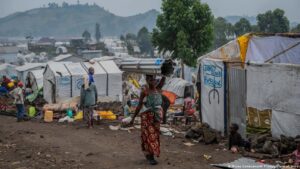
Compounding these issues, Mali faces a dire humanitarian situation, with 6.4 million people—including 3.5 million children—in need of assistance, per OCHA. The nation hosts over 400,000 internally displaced persons and 335,000 refugees in neighboring countries. A recent UN report on global food insecurity ranks Mali among the world’s six most severe crises, alongside Haiti, Palestine, South Sudan, Sudan, and Yemen. The situation is deteriorating rapidly in already fragile zones, exacerbated by the international community’s reduced engagement.
Burkinabé refugees strain local resources
In Koro district, bordering Burkina Faso, the arrival of nearly 50,000 Burkinabé refugees since April has doubled the refugee population, placing immense strain on local capacities. To address this, the United Nations High Commissioner for Refugees (UNHCR) opened a field office in Koro on October 16 to enhance coordination and accelerate humanitarian responses.
Mali now hosts over 150,000 refugees from Burkina Faso and Niger, fleeing both jihadist violence and military counter-operations against armed factions.