
- Home
- Debates
- Mali rebel offensive: what next for political talks?
Mali rebel offensive: assessing the crisis and potential political negotiations

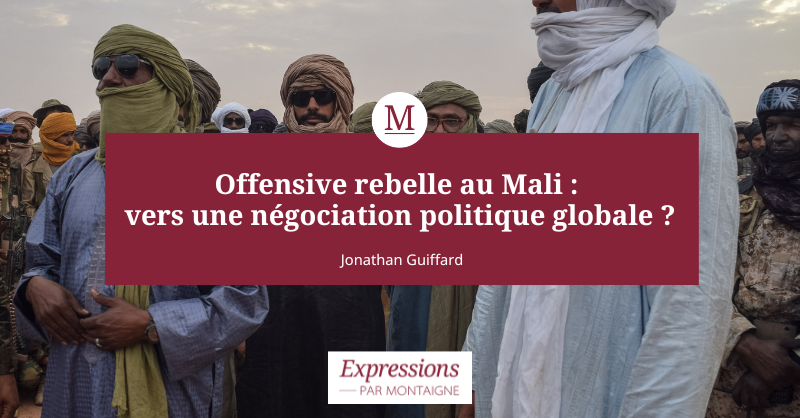
The Malian junta led by Assimi Goïta, backed by Russian forces, faces unprecedented pressure following a massive rebel offensive on April 25, 2026. Coordinated by the JNIM (Al-Qaeda’s Sahelian branch) and the Azawad Liberation Front (FLA), this assault targeted key cities including Bamako, Kidal, Gao, and Mopti. With the capital under siege and military leadership decimated, the question arises: could this lead to a comprehensive political negotiation?
The April 25 offensive marked the most ambitious rebel campaign in years, with coordinated attacks on five strategic cities. The JNIM and FLA, historically divided, now appear to operate as a unified front, marking a significant shift in their tactics. Unlike previous engagements, this offensive prioritizes negotiation over outright confrontation, offering fighters from the Malian Armed Forces (FAMa) safe passage in exchange for surrender.
Key developments from the offensive:
- Northern cities fall under rebel control: Kidal, Tessalit, and Anéfis were seized, encircling Gao and Tombouctou. While some Russian-backed military bases remain, the rebels now dominate the region’s landscape.
- Junta leadership severely weakened: Defense Minister Sadio Camara was killed, and President Goïta was reportedly evacuated to Turkey before resurfacing with Russian officials. Rumors of an internal coup attempt by General Malick Diaw further destabilized the regime.
- Strategic shifts in rebel approach: The JNIM and FLA now emphasize negotiation and local governance over territorial conquest, aiming to position themselves as protectors of both civilians and soldiers against junta abuses.
How this offensive differs from 2012
While the current offensive echoes the 2012 rebel takeover of northern Mali, critical distinctions exist. The JNIM and FLA now coordinate more closely, with the JNIM allowing FLA leaders to take public roles—a stark contrast to the anonymity of figures like Iyad ag Ghali and Hamadoun Kouffa. Additionally, the rebels’ strategy focuses on strangulation rather than direct conquest, using blockades and psychological pressure to force negotiations. The junta’s alliance with Russian mercenaries, once seen as a stabilizing force, now appears increasingly fragile.
Key differences include:
- Tactical coordination: The JNIM and FLA now communicate jointly, with the JNIM even facilitating FLA negotiations with Russian forces to secure safe withdrawals from northern bases.
- Negotiation over violence: Unlike 2012, when rebels targeted and executed soldiers, this offensive prioritizes surrender agreements, aiming to integrate former FAMa fighters into local governance structures.
- Urban siege tactics: The rebels have encircled Bamako with a blockade, burning supply trucks to demonstrate resolve while the junta struggles to maintain control.
The rebels’ siege of Bamako is less about immediate conquest and more about forcing a political reckoning.
The rebels’ siege of Bamako is less about immediate conquest and more about forcing a political reckoning. The junta’s reliance on Russian support has backfired, with local populations and soldiers increasingly alienated. Civil society voices, including politicians like Oumar Mariko and former minister Mamadou Ismaïla Konaté, have renewed calls for talks, criticizing the junta’s military-only approach. Meanwhile, the Islamic State’s Sahel Province (EIWS) remains a persistent threat in the northeast, having launched failed attacks on Ménaka.
What lies ahead for the Malian government and rebels
Military analysts suggest the rebels will likely secure Gao and Tombouctou as Russian forces withdraw, effectively partitioning northern Mali. The junta’s collapse appears imminent without external intervention, though its fall would not necessarily mean immediate rebel control over central and southern regions.
Short-term scenarios:
- Northern Mali’s fate: The rebels’ focus on negotiation and gradual governance suggests a softer imposition of Islamic law compared to 2012, with the FLA seeking autonomy and the JNIM prioritizing localized rule.
- Central Mali’s instability: The JNIM already controls rural areas in the center, using siege tactics and local agreements to expand influence. However, their limited manpower may prevent full territorial control.
- Bamako’s vulnerability: The junta’s survival hinges on Russian support, but internal fractures and public pressure for negotiations could force a political shift.
International response: negotiations or intervention?
The international community faces a dilemma: intervene militarily or push for negotiations. Given the failures of past interventions and the junta’s reliance on Russian mercenaries, a Western-led operation appears unlikely. Regional actors like Algeria and Mauritania may facilitate talks, but their involvement remains uncertain.
Potential scenarios:
- Political negotiations: The JNIM’s stated desire for dialogue, coupled with pressure from regional partners, could pave the way for a negotiated settlement. However, the group’s continued allegiance to Al-Qaeda complicates its legitimacy as a negotiating partner.
- Regional intervention: Only Algeria or Mauritania possess the capability to reverse rebel gains, but neither has shown willingness to intervene militarily. A UN-backed force remains improbable due to shifting global priorities.
- Junta’s survival strategy: The junta may cling to power by maintaining Russian support, but its long-term viability is questionable given internal divisions and public discontent.
A rebel-controlled proto-state in Mali would pose new security challenges, requiring sustained international monitoring.
A rebel-controlled proto-state in Mali would pose new security challenges, requiring sustained international monitoring. While the JNIM and FLA aim to normalize their rule, their extremist roots and regional ambitions could reignite instability. For Europe and West Africa, this scenario demands a coordinated response involving local partners to contain potential jihadist threats.

Related Posts