
Mali’s healthcare system: progress amid persistent challenges
The Mali healthcare landscape has seen notable improvements in recent years. Metrics such as infant mortality, under-five mortality, maternal health, and life expectancy have all trended upward, according to recent reports from the World Health Organization and UNICEF. In 2018, the country launched an ambitious universal health coverage initiative, aiming to transform access to medical services nationwide (Mathauer et al., 2019).
However, significant hurdles remain. A critical shortage of qualified healthcare professionals, coupled with inadequate funding, continues to strain the system—issues further compounded by years of political instability. The World Bank and other research bodies highlight that over half of Mali’s physicians are concentrated in the capital, Bamako, leaving rural regions severely underserved (Sangare et al., 2021; Touré et al., 2022).
Universal health coverage: where does Mali stand?
Despite these efforts, Mali’s progress toward universal health coverage remains below regional and global benchmarks. The World Health Organization’s 2024 Universal Health Coverage Service Coverage Index ranks Mali at 41 out of 100—far below the African average of 44 and the global average of 68.
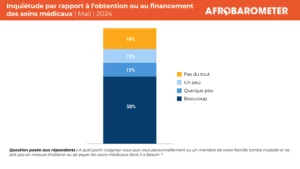
These figures reflect the daily realities faced by many Malians. Only about one in seven adults currently has access to health insurance, and affordability remains a major concern. A recent Afrobarometer survey reveals that citizens overwhelmingly view healthcare as the most pressing issue their government must address. Many express willingness to pay higher taxes in exchange for guaranteed access to quality medical services.
Public healthcare experiences: mixed reviews
Among those who sought care at public clinics or hospitals in the past year, experiences were varied. While many reported receiving necessary treatments, frequent complaints included exorbitant costs, long wait times, and shortages of essential medications or equipment. Nearly half of respondents stated that a family member had gone without necessary medical care in the previous 12 months.
Despite these frustrations, public confidence in the government’s healthcare efforts remains relatively high. Approximately two-thirds of Malians approve of the Ministry of Health’s performance in enhancing basic healthcare services.