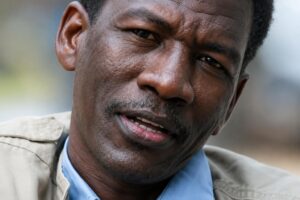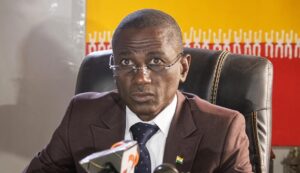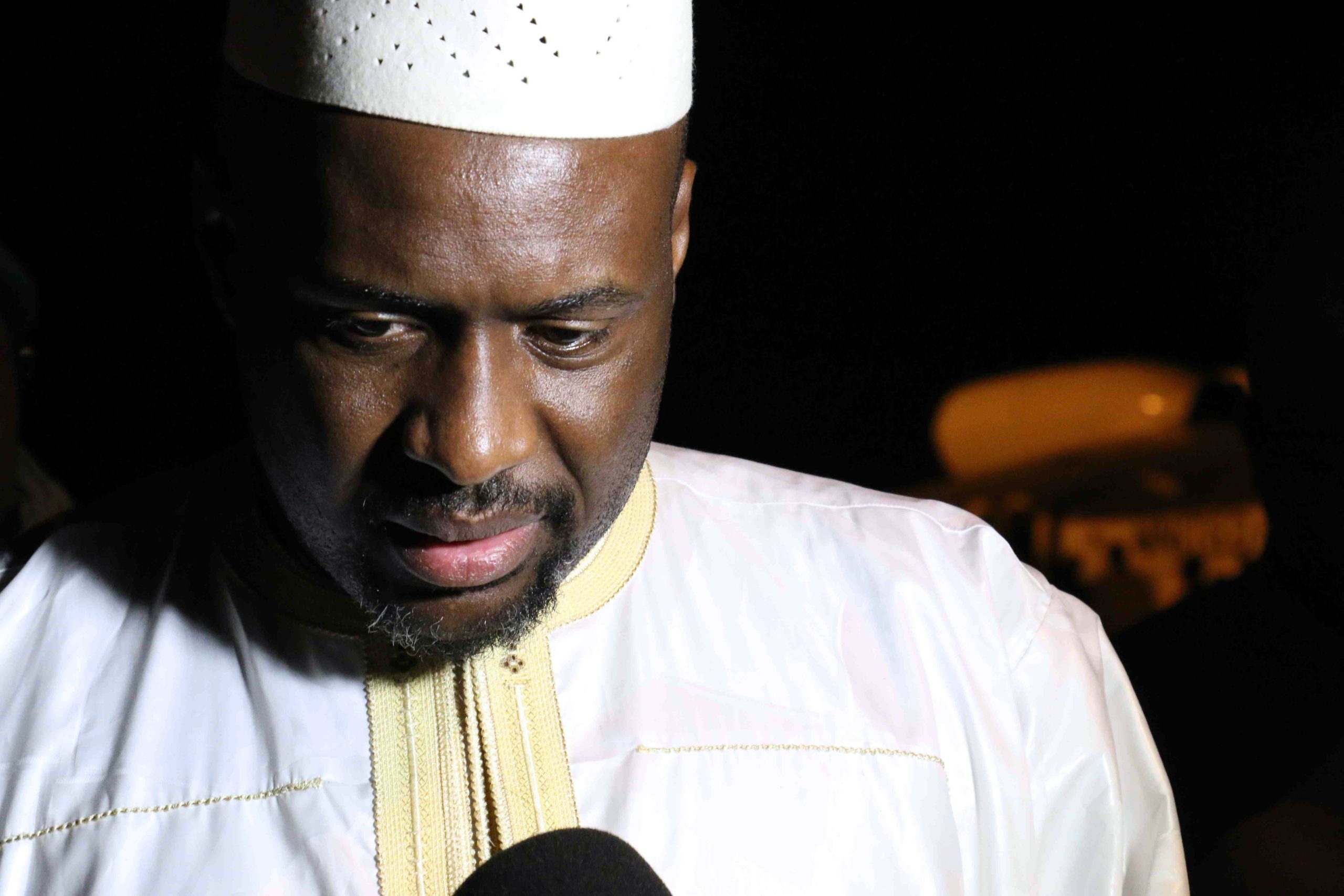

The sentencing of former Malian Prime Minister Moussa Mara to two years in prison, including one year of firm jail time and a fine of 500,000 CFA francs, has been condemned as a judicial farce. Amnesty International is demanding his immediate release, along with others held for their political views, after he was convicted of harming the state’s reputation and other charges.
Marceau Sivieude, the regional director for Amnesty International in West and Central Africa, stated that the penalty imposed on Moussa Mara reflects a blatant disregard for Mali’s human rights commitments. These obligations are enshrined in the national Constitution, the African Charter on Human and Peoples’ Rights, and the International Covenant on Civil and Political Rights, all of which Mali is a party to.
“Rather than silencing critics, the government must halt the escalating suppression of peaceful opposition and authoritarian tactics,” Sivieude remarked. He emphasized that individuals detained solely for expressing their views must be freed at once, and that the state must protect fundamental rights, such as the freedom of assembly, association, and speech.
Moussa Mara, who led the government from April 2014 to January 2015 and heads the Yéléma opposition party, was taken into custody on August 1. He faced allegations of inciting public disorder, opposing legal authority, and damaging the state’s credit.
His legal troubles began after a July 4 social media post where he voiced support for imprisoned politicians and activists. In that message, he used the metaphor of “night” to describe the current situation, pledging to use every available means to ensure that “the sun appears.”
The authorities must stop using arbitrary arrests, enforced disappearances, and the manipulation of the legal system to quiet peaceful dissenters in Mali.
Marceau Sivieude, Amnesty International Regional Director for West and Central Africa
Recent instances of arbitrary detention and disappearances
The crackdown on perceived critics in Mali has targeted a wide range of activists and members of the press.
On May 8, 2025, El Béchir Thiam, a journalist and Yéléma party member, was abducted by masked individuals claiming to be intelligence officers. This occurred shortly after he publicly questioned the transitional parliament’s move to grant the military government an additional five-year term. For months, his whereabouts remained a mystery as officials refused to acknowledge his capture. Following a kidnapping complaint filed by his spouse in July, Thiam was eventually released on September 26.
Anti-corruption advocate Clément Dembélé was arrested in November 2023. At the time, his organization, the Platform Against Corruption and Unemployment, was preparing to address the media regarding persistent power outages. Dembélé was accused of threatening the life of President Assimi Goïta. Despite an investigative judge dismissing these charges and ordering his release in April 2025, he remains in custody.
United Nations experts previously highlighted these cases in August and September 2025, specifically citing the enforced disappearance of El Béchir Thiam and the unlawful holding of Clément Dembélé, while calling for their freedom.
Sivieude added that the Malian government must end the misuse of the penal system to stifle opposition and ensure that the rule of law and the right to a fair trial are strictly upheld.
Other dissenting voices silenced since 2023
Rokiatou Doumbia, known to the public as “Rose Vie Chère,” was detained in March 2023 after criticizing the rising cost of living and the security crisis under military rule. Charged with inciting revolt and damaging the state’s credit, she received a one-year sentence in August 2023. Although her original term has concluded, she continues to be held arbitrarily.
In March 2023, activist and radio host Mohamed Youssouf Bathily, or “Ras Bath,” was arrested for describing the death of former Prime Minister Soumeylou Boubeye Maïga in custody as an assassination. He was sentenced to 18 months for “simulating an offense.” Despite completing this sentence, he faces new charges of criminal association and regionalist crimes, keeping him in pre-trial detention.
Adama Diarra, a member of the National Transition Council known as “Ben le Cerveau,” was arrested in September 2023 for advocating for a return to civilian constitutional governance. He was sentenced to two years for harming the state’s credit. His legal team’s request for provisional release was denied in February 2025, and he remains imprisoned.
Issa Kaou N’Djim, another former council member, was handed a two-year sentence after he cast doubt on a statement from Burkina Faso regarding a coup attempt in November 2024. His arrest followed a complaint from Burkinabè authorities, leading to charges of publicly offending a foreign leader.
Background
Mali has been under military leadership since the 2020 coup against President Ibrahim Boubacar Keïta. The initial 18-month transition period has been extended three times. In April 2025, the administration dissolved all political parties and announced that the transition would continue for another five years.