Following the military takeovers in 2020 and 2021, the leadership in Mali has sought to redefine the nation as a fully autonomous power. By moving away from traditional Western alliances and fostering new connections with Russia and the United Arab Emirates (UAE), the government has framed its actions as a reclamation of national independence. However, this shift has primarily highlighted the constraints of transactional diplomacy in unstable regions. Despite a diversification of international ties, Mali continues to face persistent violence, a stagnant economy, and deteriorating governance. Furthermore, the country is increasingly caught in the crossfire of global power struggles involving Ukraine and the Middle East, which intensifies external pressure without providing a clear path to peace.
The shift toward transactional sovereignty
Under the direction of Assimi Goïta, Mali has moved into an era of political uncertainty. The regime’s rhetoric focuses heavily on self-determination and a rejection of foreign meddling, a message that has found support among citizens weary of long-term insecurity and the perceived failures of former colonial powers like France. While positioning himself as a guardian of Mali‘s autonomy, Goïta has strategically pivoted the country’s external relations. This has included the expulsion of the United Nations mission (MINUSMA) and a significant deepening of military and diplomatic ties with Russia.
This new approach can be characterized as transactional sovereigntist post-alignment. In this model, Bamako maintains formal independence while selectively engaging with various global players—both state and non-state—to ensure the regime’s survival and secure material resources. Rather than sticking to a rigid alliance, the government plays competing interests against one another to bolster its domestic standing.
Governance challenges and economic stagnation
To gain public favor, Goïta pledged to eliminate corruption and modernize Mali‘s state institutions. While these promises initially appealed to those frustrated by government impunity, real progress in infrastructure and security has been minimal. The transitional authorities have repeatedly pushed back election dates, citing technical issues, with some proposals suggesting the current leadership could remain until 2030. In May 2025, the government took the drastic step of dissolving all political parties and prohibiting their gatherings, claiming the need to maintain public order.
Despite the official narrative, the state has struggled to provide essential services like justice and healthcare, particularly in border regions. Economic growth is largely confined to cities, leaving rural populations in poverty. Mali currently holds a low position on the United Nations Human Development Index, ranking 188th out of 193 nations. While the authorities promised to fight graft, the visible wealth of the new elite has only deepened the sense of social inequality.

Security threats and the role of external military forces
The security situation in Mali remains dire, providing fertile ground for the expansion of extremist organizations. Economic desperation continues to drive recruitment for groups such as Jama’at Nusrat al-Islam wal-Muslimin (JNIM) and ISIS-Sahel, which skillfully exploit local grievances. Despite military efforts, ambushes and violent attacks remain common occurrences across the territory.
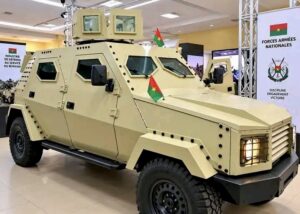
Russia has become a primary security partner in this new landscape. After France and the UN departed, the Wagner Group stepped in to offer training and protection for the regime. While they achieved some tactical successes, such as the 2023 takeover of Kidal, their presence was marred by reports of civilian casualties. By June 2025, Wagner was officially replaced by the Africa Corps, a force directly under the Russian Ministry of Defense. Although this new group is smaller, its presence indicates a more formal and permanent Russian influence in Mali‘s defense sector.
However, Mali‘s strategy remains flexible. Even as it strengthens ties with Moscow, Bamako has reportedly discussed resuming intelligence-sharing flights with the United States. This suggests that the regime’s “sovereignty” is highly pragmatic. Meanwhile, Mali has become an indirect battleground for the Russia–Ukraine conflict. In July 2024, Ukrainian intelligence support reportedly helped rebels carry out a major ambush near Tinzaouatene, leading Mali to cut diplomatic ties with Kyiv.
The impact of global instability
Events far beyond the Sahel are also shaping Mali‘s future. The conflict in Ukraine has caused volatility in global energy and food markets, driving up prices in Mali and increasing social unrest. Furthermore, the UAE has emerged as a quiet but influential player, supporting new regimes in the Sahel to counter regional rivals like Algeria. These external actors often prioritize their own strategic interests over the long-term stability of the Malian state.
Without significant internal reforms, the ongoing crisis in Mali is likely to worsen and potentially spread toward the Gulf of Guinea. Achieving lasting peace will require more than just new foreign partners; it will necessitate a fundamental transformation of the relationship between the state and its citizens, as well as a strategy to protect the country from global economic shocks.