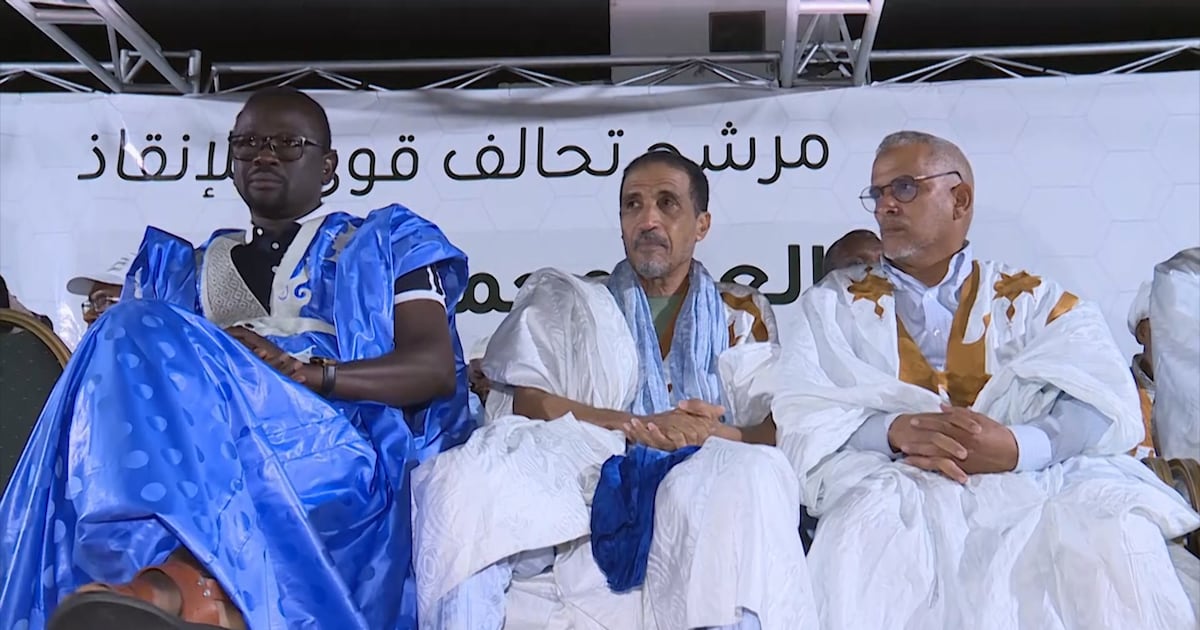

Professor Mohamed Maouloud steps into his role as head of Mauritania’s largest opposition coalition amid a pivotal moment, following a historic gathering in Nouakchott that drew tens of thousands of citizens. The event underscored both the depth of public engagement and the scale of issues facing the nation.
Mauritania stands at a crossroads, grappling with a series of pressing challenges: a stalled national dialogue process, a resurgence of divisive identity rhetoric, heightened security concerns along the eastern borders with Mali, and widespread economic hardship marked by soaring living costs.
The newly elected president of the Coalition of Opposition Parties and Democratic Forces (PCOD) expressed deep concern over the paralysis in national discussions. “The current situation reflects a dangerous stagnation in dialogue, where critical issues remain unresolved due to the absence of inclusive participation from all stakeholders,” he stated.
Breaking the deadlock in national dialogue
The stalled dialogue process tops Maouloud’s agenda. In a bold move, he has urged President Mohamed Cheikh El Ghazouani to intervene decisively, warning against any attempt by the ruling majority to introduce the third presidential term debate—a topic constitutionally off-limits and absent from any national roadmap.
Maouloud emphasized that genuine national consensus can only emerge through structured, transparent dialogue. “The solution to every other challenge—security, economic stability, national unity—begins with breaking this deliberate impasse,” he noted, highlighting what he sees as obstruction by the majority bloc.
Nation at risk: identity, security, and survival
Beyond political gridlock, the opposition leader warned of growing national fractures fueled by divisive identity narratives, amplified on social media. He described Mauritania as facing an emergency on three fronts:
- National unity under strain: The spread of exclusionary rhetoric threatens social cohesion and public trust.
- Eastern border insecurity: Spillover violence from neighboring Mali, combined with refugee inflows and a sealed frontier, has severely disrupted transhumance routes vital to Mauritanian herders.
- Economic crisis: Families across the country struggle under rising prices, with no relief in sight.
These converging crises define the immediate priorities for the PCOD as Maouloud assumes leadership. His presidency marks not just a change in opposition tactics, but a call for urgent, collective action to restore stability and progress.