
Morocco champions humanitarian action at au Peace and Security Council
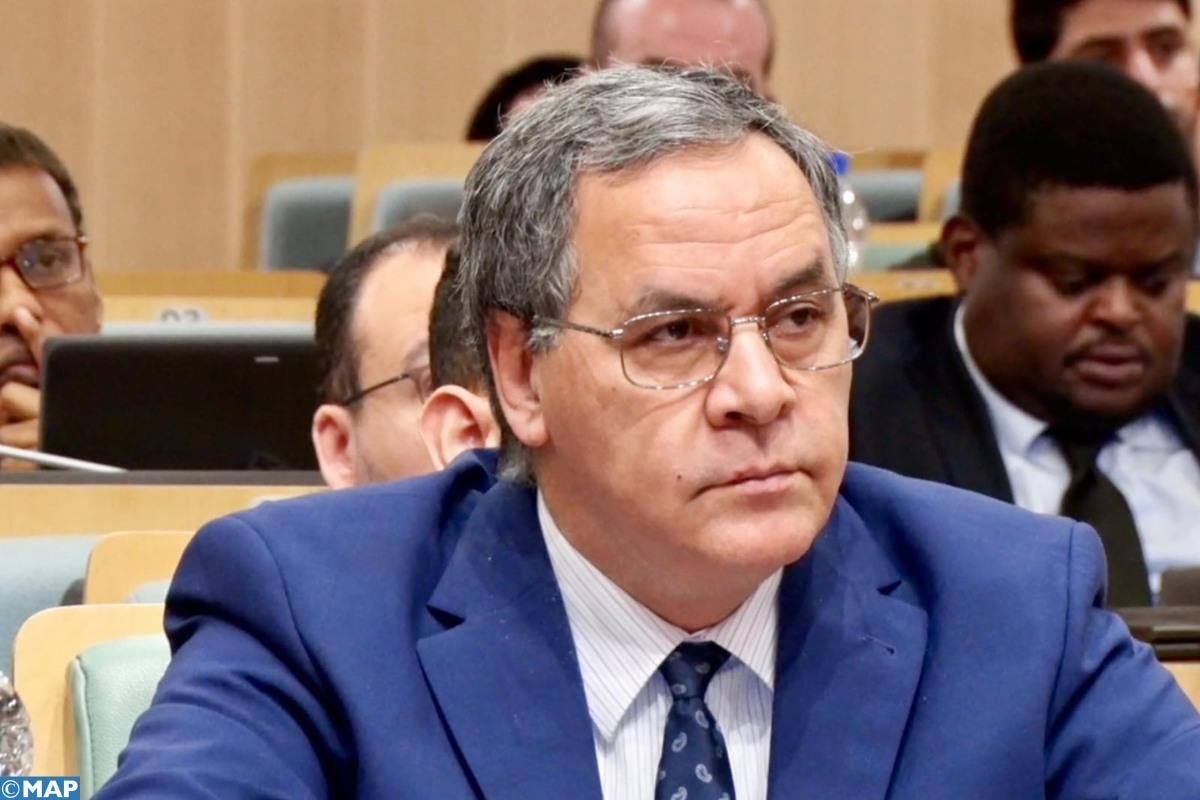
Morocco champions humanitarian action at AU Peace and Security Council
The Kingdom, as AU Champion on migration, has made humanitarian action a cornerstone of its foreign policy and African cooperation, sparing no effort to address crises across the continent.
Maroc Hebdo
Posted on June 2, 2026 at 12:12 | 4 min read
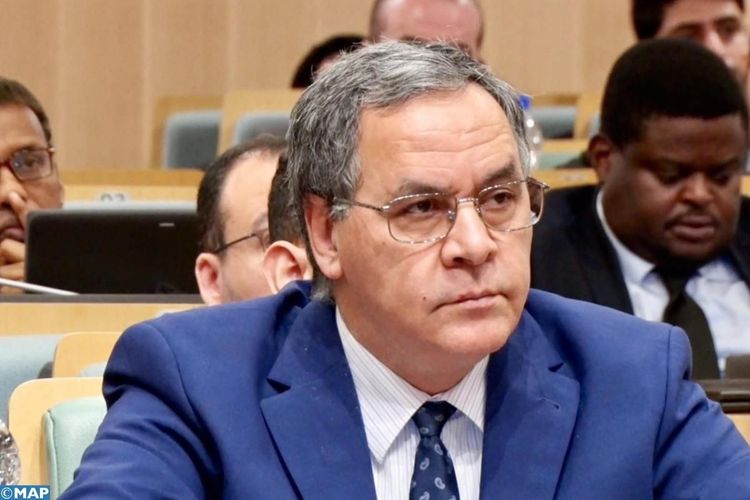
Mohamed Arrouchi, Morocco’s Permanent Representative to the African Union
The Kingdom, guided by the enlightened vision of King Mohammed VI and serving as AU Champion on migration, has prioritized humanitarian action as a central pillar of its foreign policy and African cooperation. Morocco continues to spare no effort in addressing humanitarian crises wherever they arise across Africa, Arrouchi emphasized during the PSC session on refugees, internally displaced persons (IDPs), and humanitarian aid in Africa.
The diplomat highlighted that Morocco’s humanitarian efforts extend beyond emergency aid or field hospitals. They are part of a broader, sustainable strategy aimed at alleviating the suffering of affected populations, rooted in co-development, expertise-sharing, and best practices. This approach also targets the impacts of climate change and desertification, whose humanitarian consequences are already evident through the rising number of climate refugees on the continent, he explained.
Morocco’s commitment is equally focused on fostering responsible governance in humanitarian action. The goal is to ensure that aid reaches its intended beneficiaries without diversion or exploitation for harmful purposes, Arrouchi continued.
He further affirmed that Morocco views humanitarian responses in Africa as requiring an integrated, multidimensional approach. This includes humanitarian action, conflict prevention, mediation, peacebuilding, and development to address the root causes of forced displacement sustainably.
The ambassador also stressed the importance of strengthening the resilience of communities affected by conflicts, natural disasters, and climate shocks to reduce their vulnerability to future crises.
Additionally, he underscored the need to bolster Africa’s capacity to anticipate, prevent, and respond to future humanitarian crises—particularly those linked to climate change—by developing early warning systems, preparedness measures, and resilience strategies tailored to the continent’s realities.
Arrouchi emphasized the necessity of enhancing transparency, accountability, oversight, and evaluation mechanisms in Africa’s humanitarian action. This ensures that aid reaches the right populations and prevents any misuse or manipulation of humanitarian resources.
He also highlighted the importance of strengthening data registration, tracking, and management systems for refugees and internally displaced persons. Reliable, verified, and regularly updated data are critical to improving the effectiveness of humanitarian responses and ensuring the proper allocation of resources.
The diplomat noted that Africa is currently facing an alarming humanitarian situation. Unprecedented waves of people are fleeing conflicts, climate hazards, economic slowdowns, food insecurity, and malnutrition across several regions.
This has created exceptional humanitarian needs, yet the collective response has often proven insufficient and ineffective due to national, regional, and continental constraints, he said.
Arrouchi stressed that in the face of this crisis, the priority must be pragmatic, operational solutions. A rational approach is needed—one that offers sustainable solutions and proactive proposals to illuminate the path toward an optimal new African humanitarian order.
In this context, he called for prioritizing preventive action in the face of increasingly frequent and complex shocks.