
Urgent appeal for the release of detained artist El Mahdi Lyoubi in Morocco
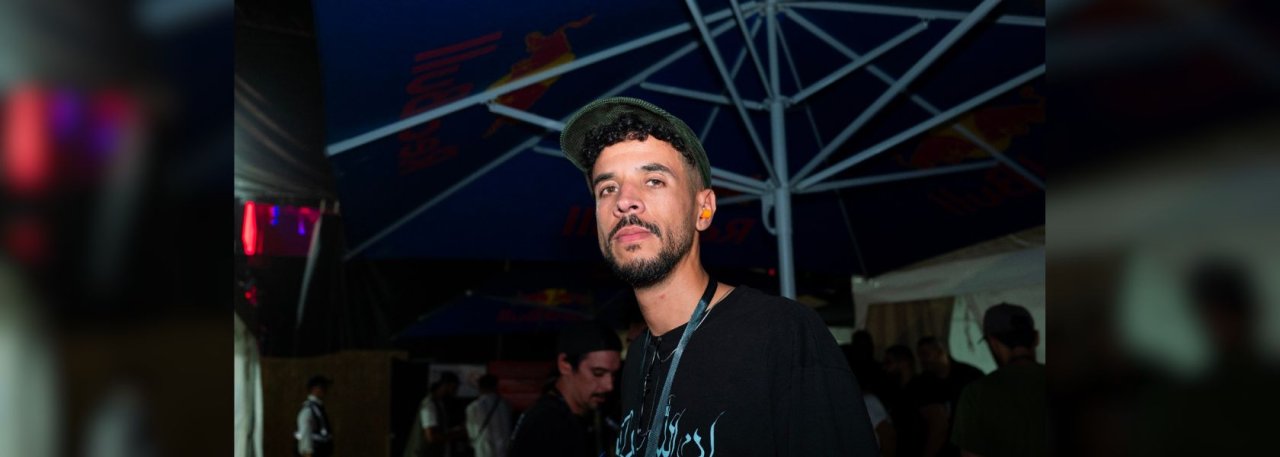
Morocco’s artistic voice silenced: urgent call for El Mahdi Lyoubi’s freedom

In a stark reminder of the fragility of artistic freedom, Moroccan filmmaker and musician El Mahdi Lyoubi remains detained without clear justification, sparking widespread concern about the state of free expression in the country. Since July 13, 2026, Lyoubi has been held under an undisclosed travel ban, a move that has drawn sharp criticism from cultural institutions, human rights organizations, and global artistic communities alike.
A celebrated artist facing arbitrary detention
Born in 1992 in Salé and now based in Marseille since 2017, Lyoubi graduated from La Fémis and has built an international reputation as a filmmaker. His acclaimed short documentary Marseille, 14 juillet has been featured in prestigious festivals including New Directors-New Films at MoMA (New York), Sheffield DocFest, Kerala International Film Festival, and the Franco-Arab Cinema Festival in Noisy-le-Sec. Currently developing his first feature-length documentary—a project supported by the Arab Fund for Arts and Culture (AFAC) in 2025—Lyoubi is also a prominent figure in Morocco’s music scene, performing under the name Mehdi Black Wind. His work consistently explores themes of social justice and freedom of expression, resonating with audiences both at home and abroad. Notably, his performance at the L’Boulevard festival in Casablanca last September drew over 50,000 attendees.
On July 10, 2026, Lyoubi was at Rabat-Salé airport preparing to return to Marseille after a family visit and research for his upcoming film when he was suddenly informed of a travel ban preventing his departure. The grounds for this restriction were never disclosed. Denied boarding and sent to a police station in Salé, Lyoubi received only a vague summons to appear before the National Brigade of Judicial Police (BNPJ) in Casablanca the following Monday, July 13.
During his interrogation that day, he was placed in custody and held incommunicado for hours. Relatives were only informed much later—through informal channels—that his arrest might be linked to social media posts, though no specifics were provided. By Wednesday, July 15, he was presented to a prosecutor and subsequently remanded in custody at Oukacha prison, awaiting a hearing scheduled for July 22. The situation is further complicated by a nationwide lawyers’ strike, which has prevented his legal team from accessing him or reviewing his case file. Family visits have also been denied.
A troubling pattern of artistic repression
Lyoubi’s detention is not an isolated incident. Since late 2025, Morocco has seen a troubling escalation in the criminalization of artistic expression. In November 2025, rapper Jawad Asradi, known as Pause Flow, was arrested and held in provisional detention for lyrics deemed offensive to state institutions. In June 2026, he was handed a three-month suspended sentence for insulting a constituted body. Similarly, rapper Hamza Raid was detained in Casablanca and received a six-month suspended prison term. In March 2026, 20-year-old rapper Souhaib Qabli was sentenced to eight months in prison for insulting a constitutional institution and spreading false news. Earlier that year, film distributor Zineb Kharroubi was given a six-month suspended sentence for allegedly inciting crimes via electronic means.
These cases, while varied in nature, collectively signal a dangerous trend: the increasing criminalization of artistic expression. Yet, Article 25 of Morocco’s Constitution explicitly guarantees the freedoms of thought, opinion, and expression in all their forms. This constitutional safeguard, along with Morocco’s international commitments, underscores the gravity of Lyoubi’s detention and the broader crackdown on creative voices.
The timing of these events coincides with the GenZ 212 protest movement, which gained momentum on social media in late 2025. The movement’s demands centered on access to healthcare and education, anti-corruption measures, and the protection of free speech—issues that resonate deeply with Lyoubi’s own artistic mission.
An urgent appeal for justice and artistic freedom
In response to Lyoubi’s detention and the broader repression of artists, a coalition of cultural institutions, human rights defenders, journalists, academics, and legal professionals has issued a joint demand for his immediate release. The call emphasizes the need to uphold constitutional and international human rights standards, including:
- Ensuring Lyoubi’s full procedural rights, including access to legal counsel and a fair trial, as guaranteed by Moroccan law and international obligations;
- Reviewing his travel ban and detention to verify their legal basis, legitimacy, and compliance with principles of necessity and proportionality;
- Upholding the right to a fair trial and ensuring that his case is handled in accordance with Morocco’s constitutional and international human rights commitments;
- Protecting the space for artistic expression and fostering an environment where creators can engage freely in public debate without fear of reprisal;
- Immediately and unconditionally releasing El Mahdi Lyoubi.
This coalition remains vigilant and stands ready to engage in constructive dialogue with Moroccan authorities to address these critical concerns. The freedom to create and express oneself is the lifeblood of any vibrant democracy—and its suppression threatens not only individual artists but the very fabric of cultural and civic life.
Co-signatories: a global outcry for artistic freedom
The call for Lyoubi’s release has garnered support from a diverse coalition of organizations and prominent figures, including:
- Moroccan Association for Human Rights (AMDH)
- Moroccan Organization for Human Rights (OMDH)
- Democratic Association of Moroccan Women (ADFM)
- Fédération internationale pour les droits humains (FIDH) within the Observatory for the Protection of Human Rights Defenders
- La Fémis
- Lincoln Center for the Performing Arts
- Ligue des Droits de l’homme
- Organization Mondiale Contre la Torture (OMCT) within the Observatory for the Protection of Human Rights Defenders
- Magistrates’ Union
- The International Coalition for Filmmakers at Risk
- Notable signatories include Adele Haenel, Aïssa Maïga, Alice Diop, Annie Ernaux, Bachar Mar-Khalifé, Clément Cogitore, Édouard Louis, Fatna El Bouih, Françoise Vergès, Geoffroy de Lagasnerie, Georges Didi-Huberman, Guillaume Cailleau, Judith Lévy, Leaticia Dosch, Lina Soualem, Louis Arène, Maguy Marin, Mati Diop, Milo Rau, Montassir Sakhi, Pinar Selek, Robert Guédiguian, Tiago Rodrigues, and Virginie Despentes.