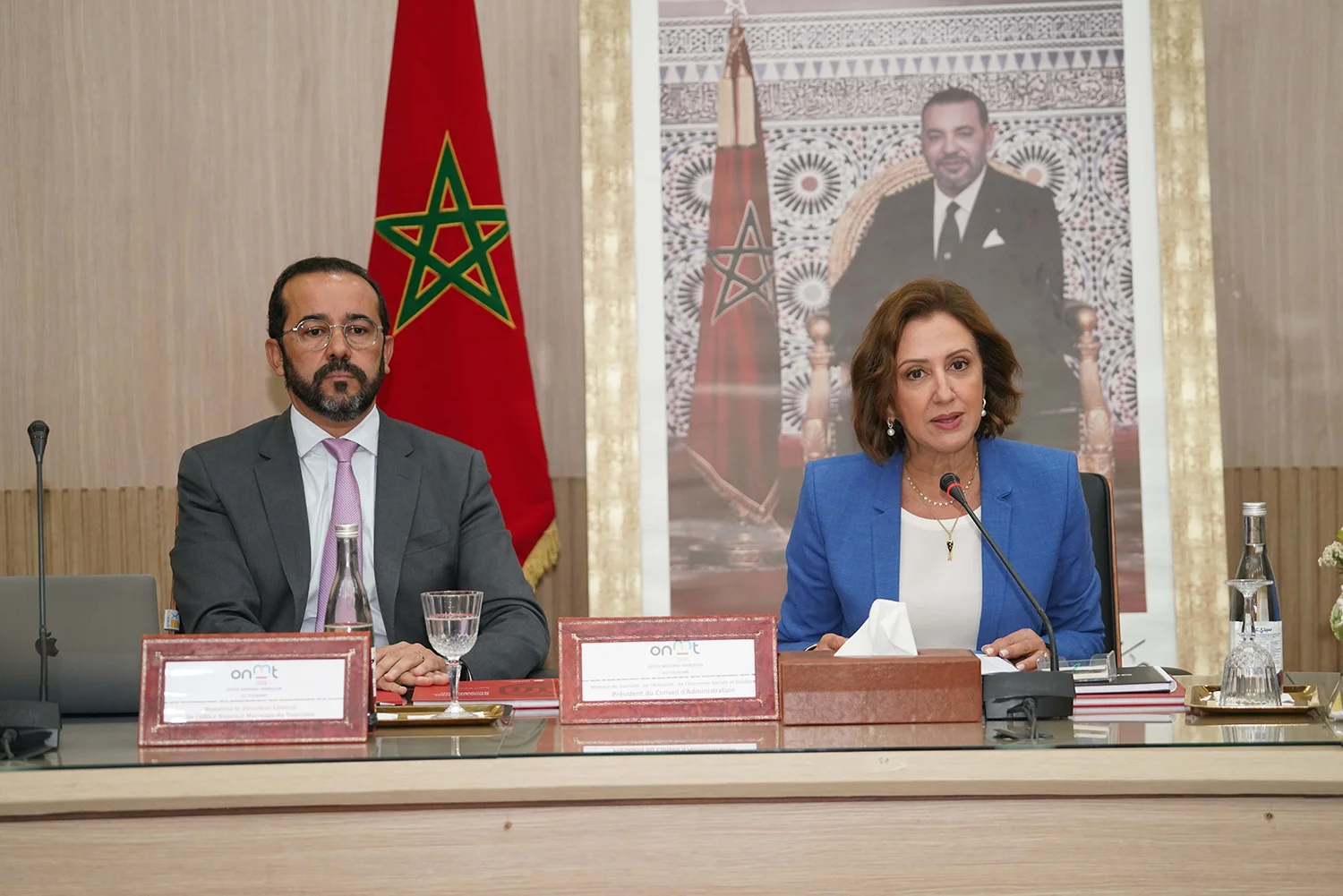

Morocco’s Tourism Sector Shows Robust Growth in 2026
Morocco welcomed nearly 20 million tourists in 2025, generating 138 billion dirhams in tourism revenue. The momentum continued into the first five months of 2026, as confirmed during a high-level meeting of the Moroccan National Tourism Office (ONMT) in Rabat. The gathering, led by Minister of Tourism, Crafts, and Social Economy Fatim-Zahra Ammor, alongside ONMT Director General Achraf Fayda, assessed sector performance and progress toward the 2030 target of 26 million tourists.
Record-Breaking Tourism Statistics
Official data reveals a 7% rise in international arrivals by the end of May 2026, accompanied by a 21% surge in tourism revenue and a 9% increase in overnight stays at classified accommodations. These figures underscore the sector’s resilience and upward trajectory under the current strategic framework.
Strategic Pillars Driving Tourism Expansion
Minister Ammor emphasized the success of the 2023-2026 roadmap, which integrates multiple levers to elevate Morocco’s standing in global tourism. By focusing on air connectivity, targeted promotion, strategic investments, service quality, and regional development, the country is positioning itself to compete with leading international destinations.
Air Connectivity Takes Center Stage
The ONMT highlighted significant progress in air travel infrastructure. For the 2026 summer season, contracted airline capacity reached 7.74 million seats, a 13% year-on-year increase. This growth is fueled by new airline bases in Rabat, Marrakech, and Tétouan, as well as the addition of 52 new international routes in the first half of 2026 alone.
Future Roadmap: What Lies Ahead?
To sustain momentum toward the 2030 goal, the ONMT outlined key priorities, including:
- Expanding air links to enhance accessibility from major global hubs.
- Diversifying source markets, with a focus on China, India, and Latin America, to reduce reliance on traditional markets.
- Developing maritime routes and cruise tourism to attract high-spending travelers and explore coastal tourism potential.
- Leveraging artificial intelligence in marketing and customer service to personalize experiences and optimize operational efficiency.