
From revolutionary promises to hidden deals: the SORAZ saga
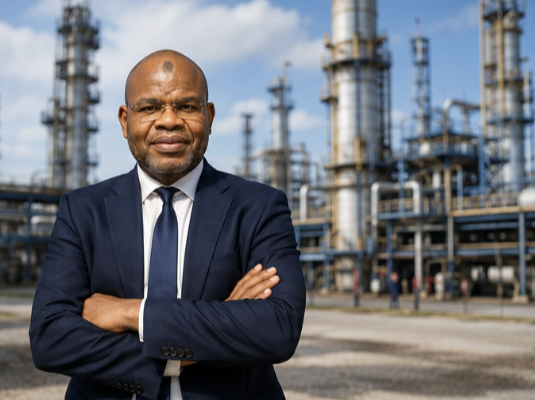
Eighteen months after the July 26, 2023 upheaval in Niamey, the lofty pledges of « Refoundation » and radical economic breakaway have collided with the unyielding realities of oil governance. At the epicenter of this turmoil sits Hamadou Tini, the newly appointed Petroleum Minister, whose actions have sparked accusations of flagrant ethical violations. The former Mazars executive now wields public authority to reinstate contracts for his private firm, demanding unrestricted access to SORAZ’s confidential records. This is the unfolding narrative of a high-stakes conflict of interest where financial auditing has morphed into a tool of political purge and self-enrichment.
The myth of change and the resurgence of old guard interests
In the immediate aftermath of the CNSP’s rise to power, the military leadership vowed to reclaim economic sovereignty, with oil management—particularly the Zinder Refining Company (SORAZ)—as the prime target. State television broadcasts denounced the fallen democratic system and its « international accomplices », with the Mazars consulting firm, a decade-long partner of Niger, bearing the brunt of accusations. Accused of biased audits by both Niamey and its Chinese collaborators at CNPC, Mazars was seemingly blacklisted from Niger’s economic landscape. The official line was unequivocal: Niamey needed an independent, untainted international firm to meticulously scrutinize SORAZ’s affairs.
Yet beneath the surface, the power of lobbying reshaped reality. By early 2026, one of Mazars’ top executives had secured a pivotal role within Niger’s government. Under the patronage of General Mody, accountant Hamadou Tini was swiftly elevated to Petroleum Minister—a move that signaled Mazars’ triumphant return.
A minister wearing multiple hats: client, auditor, and paymaster
Once ensconced in his ministerial office, Hamadou Tini acted swiftly to enforce a strategy he knew all too well. The Petroleum Minister ordered an immediate financial and operational audit of SORAZ—but with a decisive caveat: the mission had to be entrusted exclusively to Mazars, his former employer. The rationale? To « finalize pending work and secure payment », a claim that underscores the glaring conflict of interest at play.
This concentration of powers strips the Nigerien state of any semblance of impartial oversight. How can an auditing firm deliver an objective assessment when its former executive now holds the purse strings as minister? The question hangs heavy over Niamey’s corridors of power.
The iron-fisted directive: a race for confidential data
The minister’s ambitions extend beyond mere contract renewal. With urgency dictated by the fragility of the current administration, Tini issued a non-negotiable ministerial order to SORAZ’s leadership. Under threat of unspecified consequences, the directive demanded the immediate transfer—within eight days—of all financial, technical, and operational records to Mazars. This includes the very strategic data that Chinese partners and SORAZ’s management had long withheld to protect proprietary information.
Local observers have not hesitated to invoke an old proverb: « He who peers through the keyhole already knows what’s on the table. » Having intimate knowledge of SORAZ’s accounting flaws from his days at Mazars, Tini knows precisely where to dig for the evidence he seeks.
The disappearing ministers: a pattern of instability
The abrupt takeover of SORAZ sheds harsh light on the chronic instability plaguing the Petroleum Ministry since the coup. Over three years, three ministers have cycled through the role—a revolving door seemingly linked to the secrets buried in Zinder’s refinery.
Preceding Tini’s appointment, Minister Mahaman Moustapha Barké had proudly announced a sweeping audit of SORAZ in June 2024. By January 13, 2025, he found himself detained incommunicado by the DGDSE. His year-long detention, devoid of any legal process, ended only on January 6, 2026. His successor, Dr. Sahabi Oumarou, appointed in haste, attempted to relaunch the audit in February 2025 before being swiftly sidelined.
Sector insiders now allege Tini played a pivotal role in their downfalls. While still with Mazars, he allegedly drafted damning reports targeting Barké and Oumarou, accusations that helped discredit their tenure and pave the way for his own ministerial appointment.
The illusion of reform: oil revenues feeding private interests
The SORAZ affair exposes the stark contradictions of Niamey’s current regime. While Nigeriens endure the harsh economic fallout of diplomatic isolation and await the promised dividends from oil wealth, the proceeds appear to be siphoned toward corporate interests rather than public welfare.
What began as a civil society demand for transparency has devolved into a factional battleground. In Tini’s hands, the SORAZ audit serves a dual purpose: a shield to obscure conflicts of interest and a cash cow for his former firm. The « Refoundation » promised by the CNSP now faces a damning verdict: the methods of oil governance have not evolved—they have merely shifted beneficiaries.