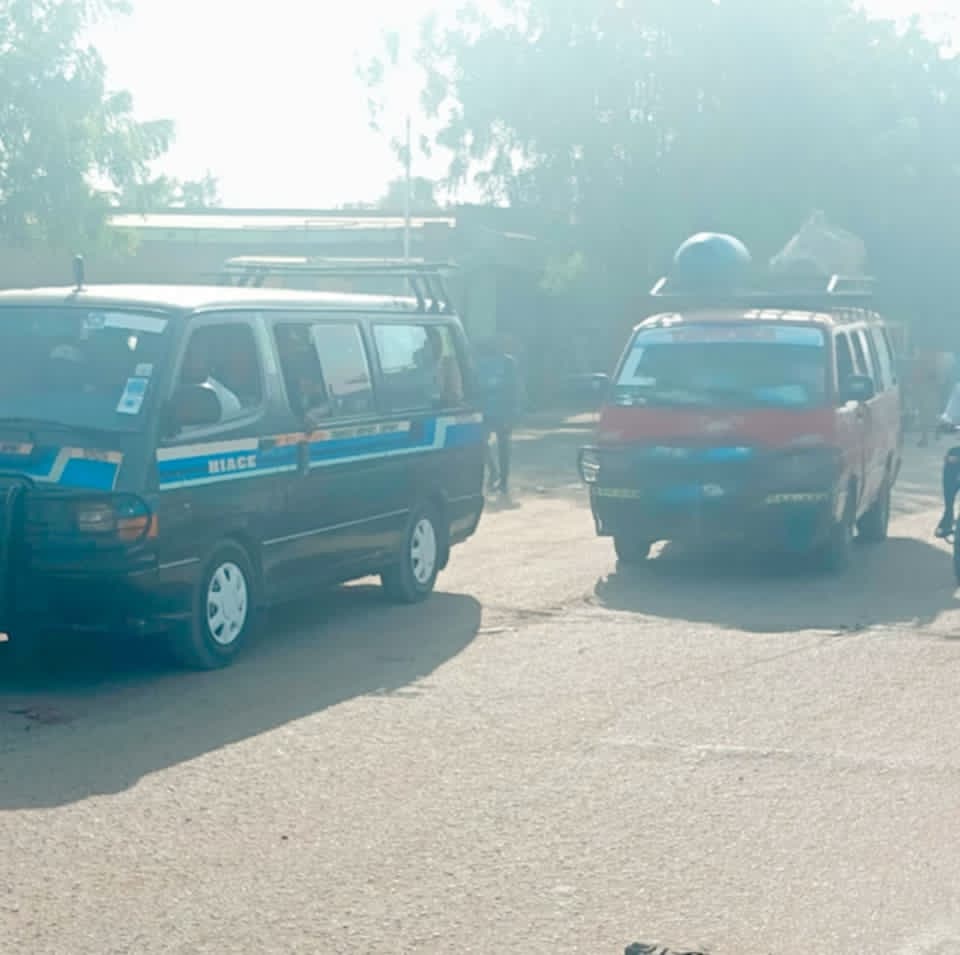

In N’Djamena, a capital undergoing significant demographic and urban transformation, the efficiency of public transport has become a critical concern. Minibuses, serving as the primary mode of travel for a vast segment of the population, continue to operate within a largely informal framework.
This lack of formal structure results in improvised stops, traffic congestion, and a recurring pattern of accidents. The absence of designated and properly equipped stopping points now stands as a pressing issue affecting both public safety and urban planning. Daily, along the city’s main thoroughfares, minibuses abruptly halt to pick up or drop off passengers.
Without dedicated zones, drivers frequently pull over to the roadside, often directly within active traffic lanes. This common practice not only impedes vehicle flow but also exposes commuters to a high risk of collisions, particularly during peak hours. Pedestrians, too, are forced to navigate through moving vehicles to board or alight, creating an unsafe environment for all.
In light of this reality, establishing clearly defined and structured **N’Djamena minibus stops** emerges as a straightforward yet fundamentally transformative solution. The proposal involves designating regular stopping areas along major urban arteries, ideally spaced every 150 to 200 meters depending on neighborhood density, to streamline passenger embarkation and disembarkation.
These dedicated spaces would not only enhance traffic fluidity but also significantly curb dangerous driving behaviors linked to impromptu stops. Beyond immediate safety improvements, this initiative calls for a broader re-evaluation of urban mobility culture.
Many other African capitals, facing comparable challenges, have successfully implemented structured public transport stops, leading to improved road discipline and greater travel efficiency. N’Djamena should not lag behind in adopting such progressive measures. Local communes, in collaboration with transport authorities and stakeholders from the informal sector, bear a crucial responsibility in this endeavor.
Initial concrete steps could include installing signage, constructing simple shelters, and conducting awareness campaigns for drivers. However, beyond physical infrastructure, a strong political will and coordinated collective action are essential. As N’Djamena experiences accelerating urban growth, anticipating and addressing mobility needs is no longer optional but an absolute necessity.
Structuring **N’Djamena minibus stops** represents a vital investment in creating a safer, more fluid, and ultimately more modern transport system for the city.