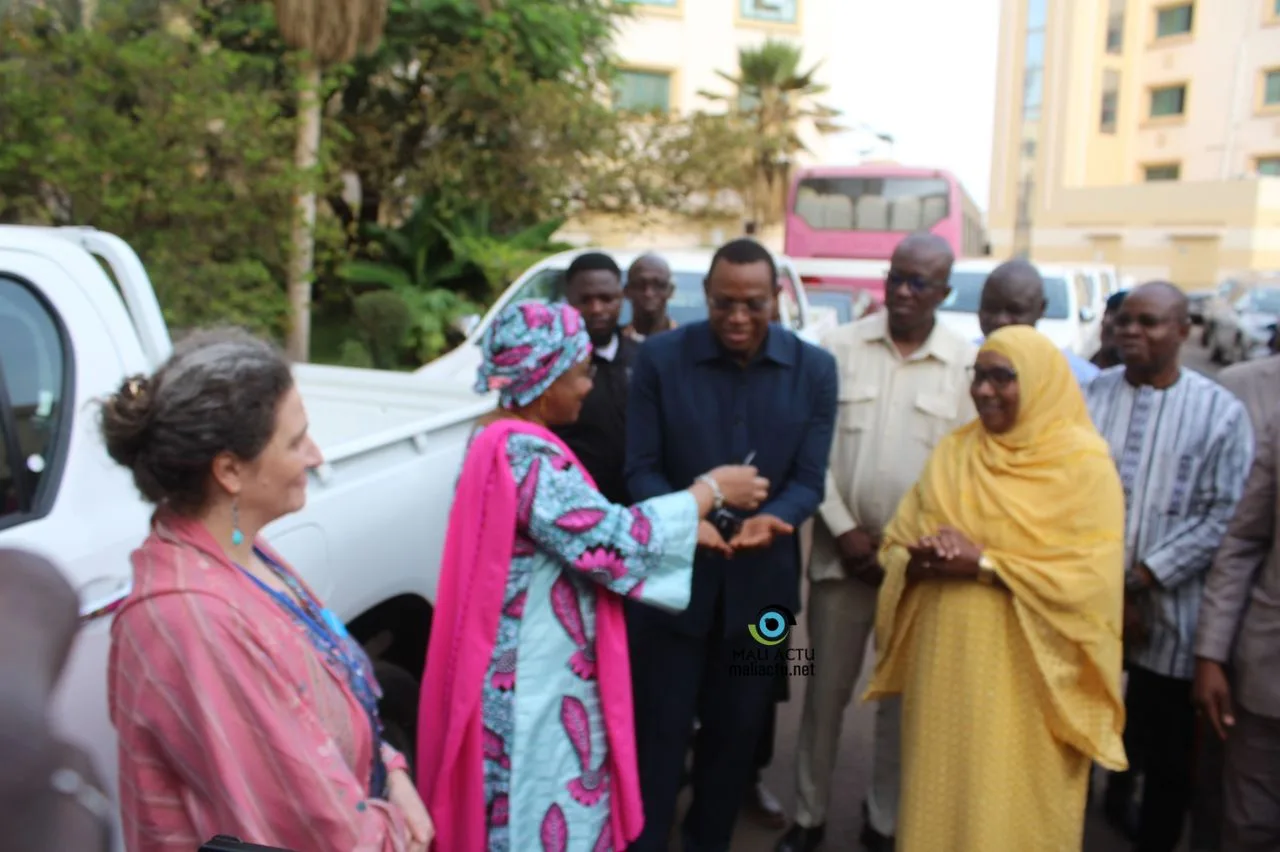

On Thursday, February 5, 2026, Mali’s Ministry of Health and Social Development officially received a fleet of 39 all-terrain 4×4 vehicles. These robust vehicles are set to significantly enhance the national health system and broaden access to crucial health services, particularly immunization programs, in the nation’s most underserved regions. The handover ceremony took place at the Ministry of Health’s headquarters within Bamako’s Administrative City.

Valued at an estimated 689 million CFA francs, this vital consignment of equipment stems from a robust and productive collaboration between the Ministry of Health and Gavi, the Vaccine Alliance. Minister of Health, Assa Badiallo Touré, emphasized that “this delivery is neither the first nor will it be the last,” referencing a previous acquisition of 68 vehicles in 2023, which supported COVID-19 vaccination efforts through World Bank funding. She also confirmed that additional essential equipment is anticipated throughout 2026.
“These new vehicles will significantly bolster the operational capabilities of our health facilities in monitoring health interventions, especially those related to immunization programs,” the Minister declared in her address. She strongly urged all recipients and drivers to ensure diligent maintenance of the vehicles, stressing the importance of preserving these assets amidst current challenges, as the Ministry continues its drive to expand its service vehicle fleet.

Representing the technical and financial partners, UNICEF’s representative in Mali, Fosca Giulidori, highlighted the profound symbolic significance of the occasion. She articulated, “Far beyond a mere exchange of keys, this event signifies a powerful demonstration of international solidarity, exemplified by Gavi’s unwavering commitment to accelerating global vaccination and ensuring equitable access to life-saving vaccines.“
Fosca Giulidori further described these 39 vehicles as essential lifelines for the health infrastructure. Their deployment will specifically enable the transport of vaccines and other critical medical supplies, adhering strictly to standards, to the most remote health centers. They will also facilitate the deployment of mobile health teams into hard-to-reach communities and enhance vital activities such as immunization campaigns, nutritional monitoring, and other crucial care, all for the betterment of the population.



