
The capital of Niger, Niamey, finds itself trapped in a relentless cycle of conflict, regardless of regime changes or dramatic geopolitical shifts. Despite the fall of one government after another, one grim reality persists: the jihadist threat shows no sign of weakening in the volatile regions of the “three borders” and the Lake Chad basin.
From western alliances to sovereignist rebellion
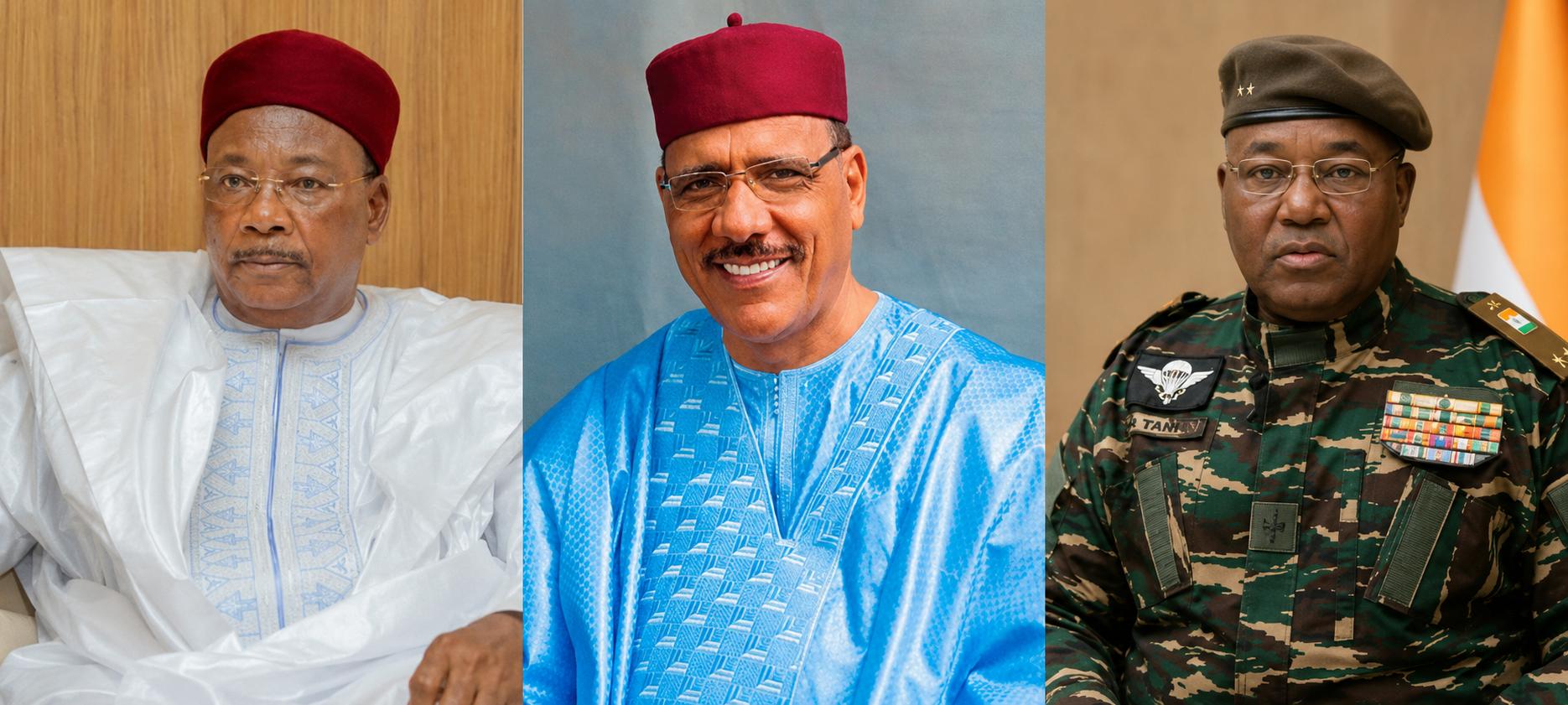
Three presidents, two democratic transitions, one coup d’état, and a single unchanging truth: blood continues to stain the sands of Niger’s most vulnerable territories. Whether under Mahamadou Issoufou’s pro-Western strategy or Abdourahamane Tiani’s sovereignist rebellion, the hydra of terrorism—embodied by the Islamic State in the Greater Sahara (EIGS) and the Support Group for Islam and Muslims (GSIM)—remains unbroken.
The military-led National Council for the Safeguard of the Homeland (CNSP), which seized power in July 2023, had vowed to restore security by severing ties with Western partners. Yet reality has struck hard: the country now faces a sobering reckoning as the conflict rages on with no end in sight.
The Issoufou-Bazoum era: the mirage of western protection
During Mahamadou Issoufou’s presidency (2011–2021), Niger positioned itself as the cornerstone of Western counterterrorism efforts in the Sahel. As neighboring Mali descended into chaos, Niamey became the operational hub for French forces (Operation Barkhane) and a critical drone base for the United States in Agadez.
His successor, Mohamed Bazoum, attempted to soften this approach with a mix of political pragmatism and military investment:
- A policy of outreach toward repentant jihadists, offering conditional reintegration.
- A surge in training programs for elite Nigerian special forces.
The strategy yielded mixed results. While it prevented total state collapse, it failed to eradicate the insurgency. Worse, the presence of foreign troops fueled widespread resentment among soldiers and civilians alike, who saw it as a surrender of sovereignty with little tangible benefit.
The Tiani doctrine: sovereignty tested by bullets
The July 26, 2023, coup led by General Abdourahamane Tiani and the CNSP was justified as a desperate response to the country’s worsening security crisis. The aftermath has been swift and decisive: a sharp break with Paris and Washington, the formation of the Alliance of Sahel States (AES) with Mali and Burkina Faso, and a strategic pivot toward Moscow (via the Africa Corps) and Ankara.
On the rhetorical front, the military junta has championed a bold nationalist narrative, vowing to confront the insurgency with purely domestic means and rejecting the so-called hidden agendas of the West.
The harsh truth on the ground
Yet the reality is unforgiving. Strategic analysts and United Nations observers agree: the withdrawal of Western forces has created an immediate capability gap, particularly in aerial intelligence and cutting-edge surveillance technology.
Complex attacks have surged, often targeting entire garrisons of the Nigerien armed forces (FDS) and inflicting heavy casualties. The subsequent economic blockade in certain regions and diplomatic isolation have further crippled the logistical and financial capacity to sustain a war that now drains millions of dollars daily.
Why Niger remains mired in deadlock
Successive regimes—both civilian and military—have clung to the same flawed assumption: that a purely military solution can defeat a threat rooted in political and social grievances. Two competing visions have each come up short.
The Issoufou-Bazoum model staked everything on integration into the international security framework. Its fatal flaw was over-reliance on external partners, a stance that alienated public opinion and rendered French narratives largely ineffective among Nigerien citizens.
In contrast, the Tiani doctrine champions radical geopolitical rupture and martial sovereignty through the AES. Yet its early performance reveals glaring weaknesses: loss of critical technological intelligence, financial suffocation from isolation, and—paradoxically—an escalation in violence as armed groups exploit regional instability.
At the heart of the crisis lie stubborn structural issues that no military strategy can resolve: the absence of state authority in peripheral zones, the lack of economic opportunity for rural youth, and intercommunal tensions—especially between herders and farmers—that extremist groups exploit to fuel recruitment.
Whether pursued through international cooperation or the AES’s sovereignist banner, Niger’s war cannot be won by force alone. For General Tiani, the real test is no longer merely condemning past failures, but proving that this new military formula can genuinely protect Nigerien lives. Without a massive reintroduction of essential public services—schools, courts, clinics—into insecure areas, the country risks losing this war not on the battlefield, but in the long run.