Niger’s breaking point: mass abduction of 500 worshippers signals a decisive security shift
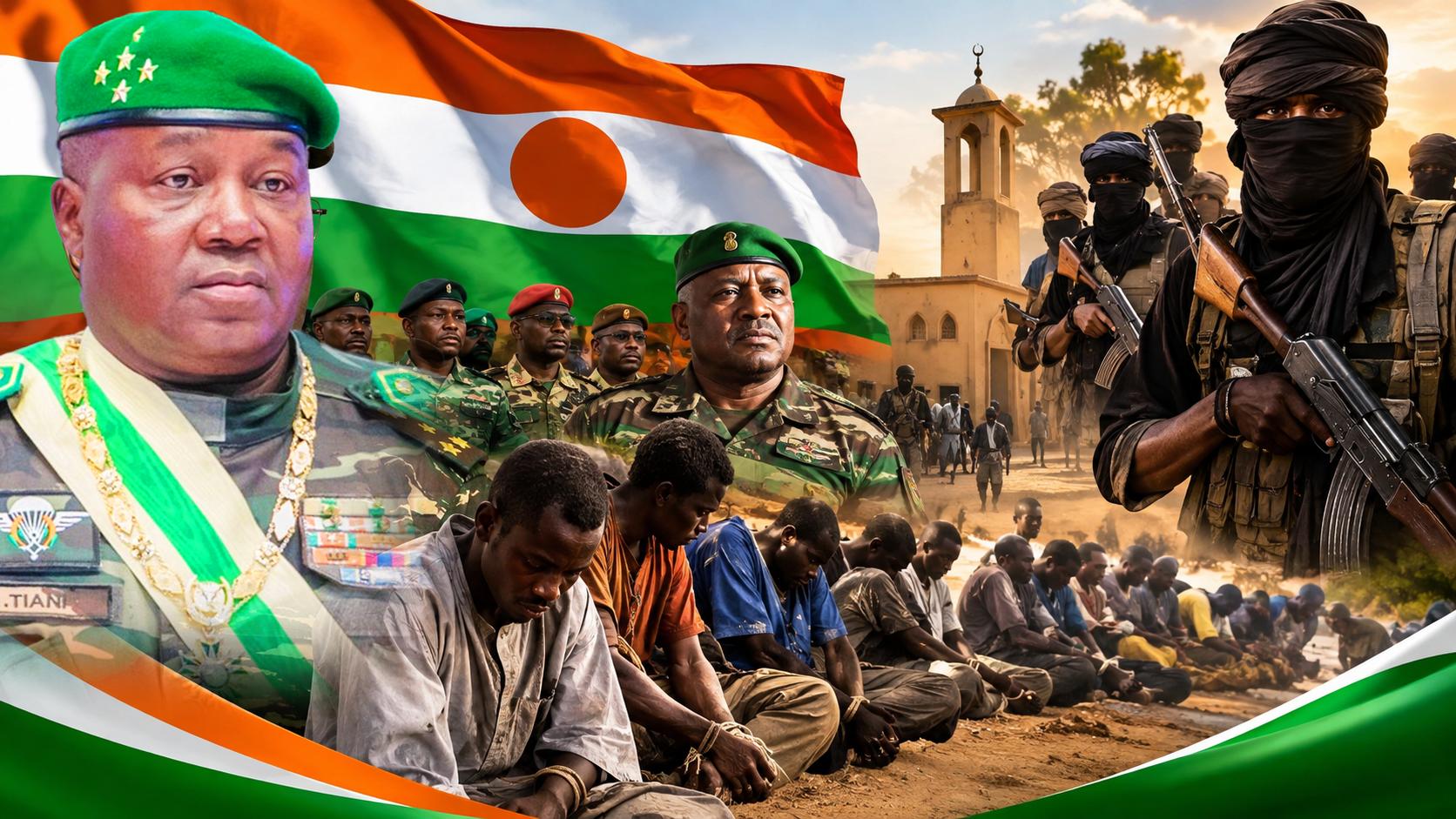
On 21 August 2026, Niger crossed a line that can never be uncrossed. As Friday prayers ended, armed men encircled multiple mosques, sealed the exits, and marched nearly five hundred believers into a dense forest. Days later, the fate of those hostages remains unknown. This unprecedented mass kidnapping lays bare the glaring inability of the military regime led by General Abdourahamane Tiani to protect its own people, despite repeated martial promises. It is a turning point — the moment the state’s failure became impossible to deny.
When friday prayers turned into a trap
It was just after 1 p.m. on that Friday, 21 August, when religious devotion suddenly became a scene of terror. As worshippers finished their invocations, dozens of heavily armed attackers methodically surrounded the places of worship. By blocking the access doors, the assailants trapped hundreds of defenceless civilians — the elderly, adults, and young boys — before forcing them into the forest canopy under the threat of assault rifles.
The scale of the operation betrays meticulous logistics and preparation. Panic among the families remains absolute: no group has officially claimed the assault in the early hours, and no ransom demand has emerged. This deafening silence deepens the anguish of relatives, left to scan the edge of the woods in hope of a sign of life.
The sovereignty illusion meets reality
This tragic event acts as a brutal reveal of the security deterioration ravaging the country. When it staged its coup against democratically elected President Mohamed Bazoum, the National Council for the Safeguard of the Homeland (CNSP) justified its seizure of power by the absolute need to halt the terrorist threat. The promise was clear: restore state authority and guarantee the safety of citizens.
Three years later, the verdict is damning. Anti-Western rhetoric and the expulsion of traditional international partners have not produced the promised security surge. On the ground, the Nigerien army, often under-equipped and overwhelmed, struggles to contain the expansion of armed groups. The gap between the sovereignty speeches broadcast on state television and the daily reality of rural areas has never been so wide.
A territory abandoned to armed groups
The abduction of these 500 worshippers is not an isolated incident but the culmination of a process of state decomposition in peripheral regions. By expelling allied forces without first building a solid operational alternative, the junta created a strategic vacuum that jihadists and criminal gangs rushed to fill.
Across vast stretches of territory, the administration is absent and defence forces are forced into a defensive posture within isolated garrisons. Local populations, abandoned to their fate, suffer a double punishment: the daily violence of insurgents and the heavy silence of transitional authorities, more focused on consolidating political control in Niamey than on securing rural areas.
The deafening silence from Niamey
In the face of this drama of unprecedented scale, the reaction of General Tiani and CNSP members is sparking growing outrage. Official communication, usually so quick to denounce foreign interference or celebrate supposed tactical victories, is mired in embarrassed silence. No clear search or negotiation strategy has been publicly presented to the grieving families.
This failing crisis management erodes the credibility of military power a little more each day. By proving incapable of protecting citizens even within their places of worship, the regime shows its structural limits. Anger is now simmering among a population tired of paying the high price of geopolitical calculations and patriotic incantations with no effect on the ground.
A dangerous turning point for Niger’s future
The abduction of 21 August marks a worrying escalation in Niger’s crisis. By massively targeting religious gatherings, armed groups demonstrate their ability to strike hard, far from any immediate state response. While the fate of the 500 missing remains the absolute priority for families, this tragedy raises a fundamental question: how long can Niger bear this tragic gap between the political ambitions of an isolated junta and the elementary protection of its people?