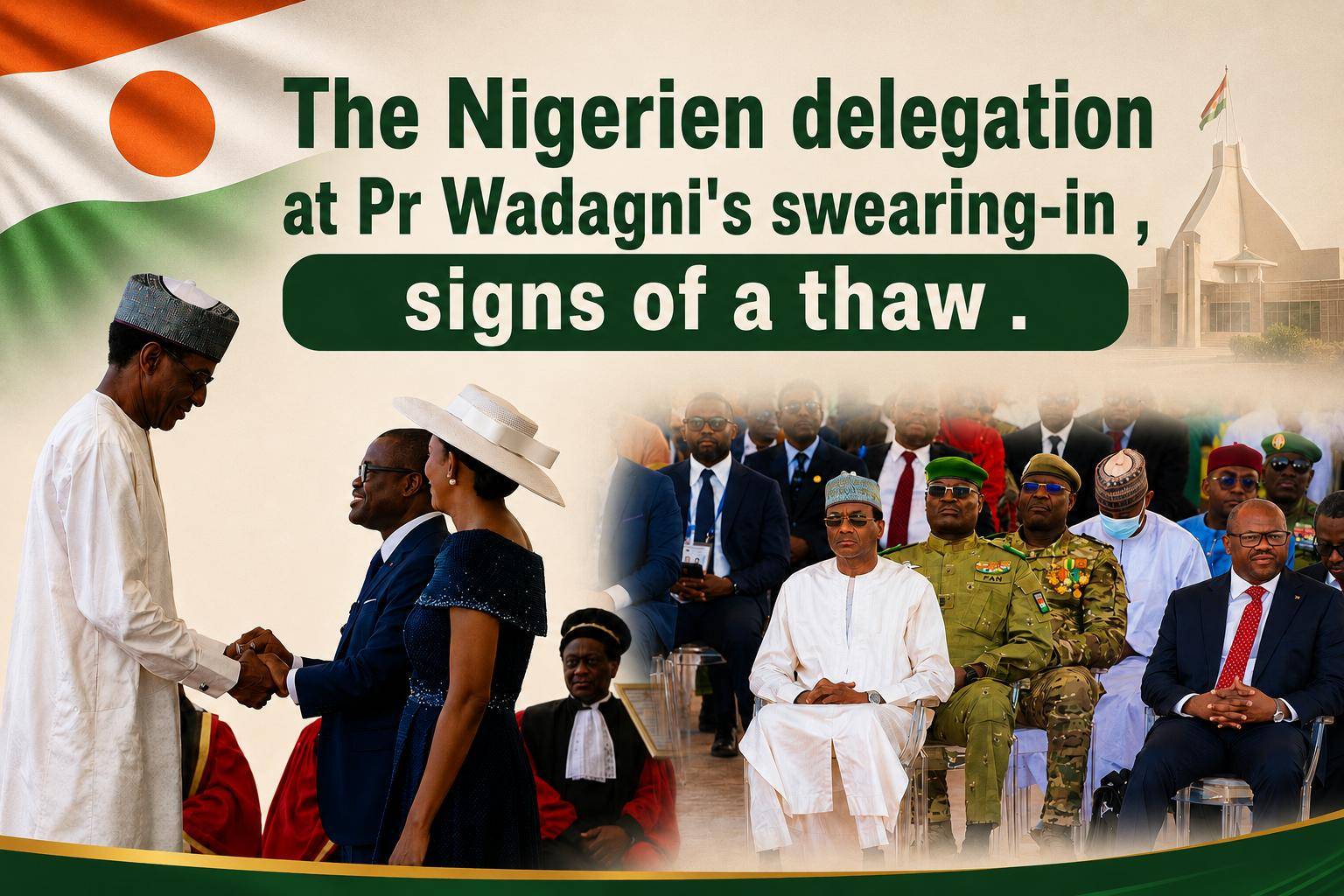

The recent official ceremony in Cotonou witnessed an unprecedented diplomatic moment as the Prime Minister of Niger’s transitional government, accompanied by the foreign ministers of Mali and Burkina Faso, made a high-profile appearance, signaling a potential shift in regional relations.
Against expectations, the presence of Niger’s Prime Minister, Ali Mahamane Lamine Zeine, at the event underscored a deliberate effort to recalibrate ties amid escalating tensions. The invitation to Cotonou, Benin’s economic hub, was not merely a courtesy but a calculated move to reopen channels of communication.
Regional alliances and economic pragmatism
The delegation’s composition—comprising the three member states of the Alliance of Sahel States (AES)—highlighted a unified front. The simultaneous arrival of the foreign ministers from Mali and Burkina Faso alongside Niger’s Prime Minister sent a clear message: despite ideological divides, economic imperatives may be steering a cautious rapprochement.
Breaking the ice after prolonged disputes
The timing of the visit was particularly significant, arriving after months of strained relations between Niger and Benin. Since mid-2023, the closure of their shared border and recurring disputes over oil transit via Benin’s Sèmè-Podji port had deepened the rift. The physical presence of Niger’s leadership in Benin’s capital suggested a willingness to address these grievances.
Trade and logistics at the heart of the thaw
The economic fallout of the border closure has been severe for both nations. Benin, heavily reliant on cross-border trade, faces substantial revenue losses, while Niger grapples with logistical bottlenecks that hinder critical exports and imports. The high-level meeting in Cotonou may pave the way for technical discussions on reopening the border, a move that could revitalize regional commerce.
Though political fractures persist, the gathering in Cotonou demonstrated that geography and economic necessity often outweigh ideological differences in the Sahel. For Benin, the diplomatic overture provides a much-needed respite, while for Niger, it offers a chance to ease the isolation imposed since last year’s transition.