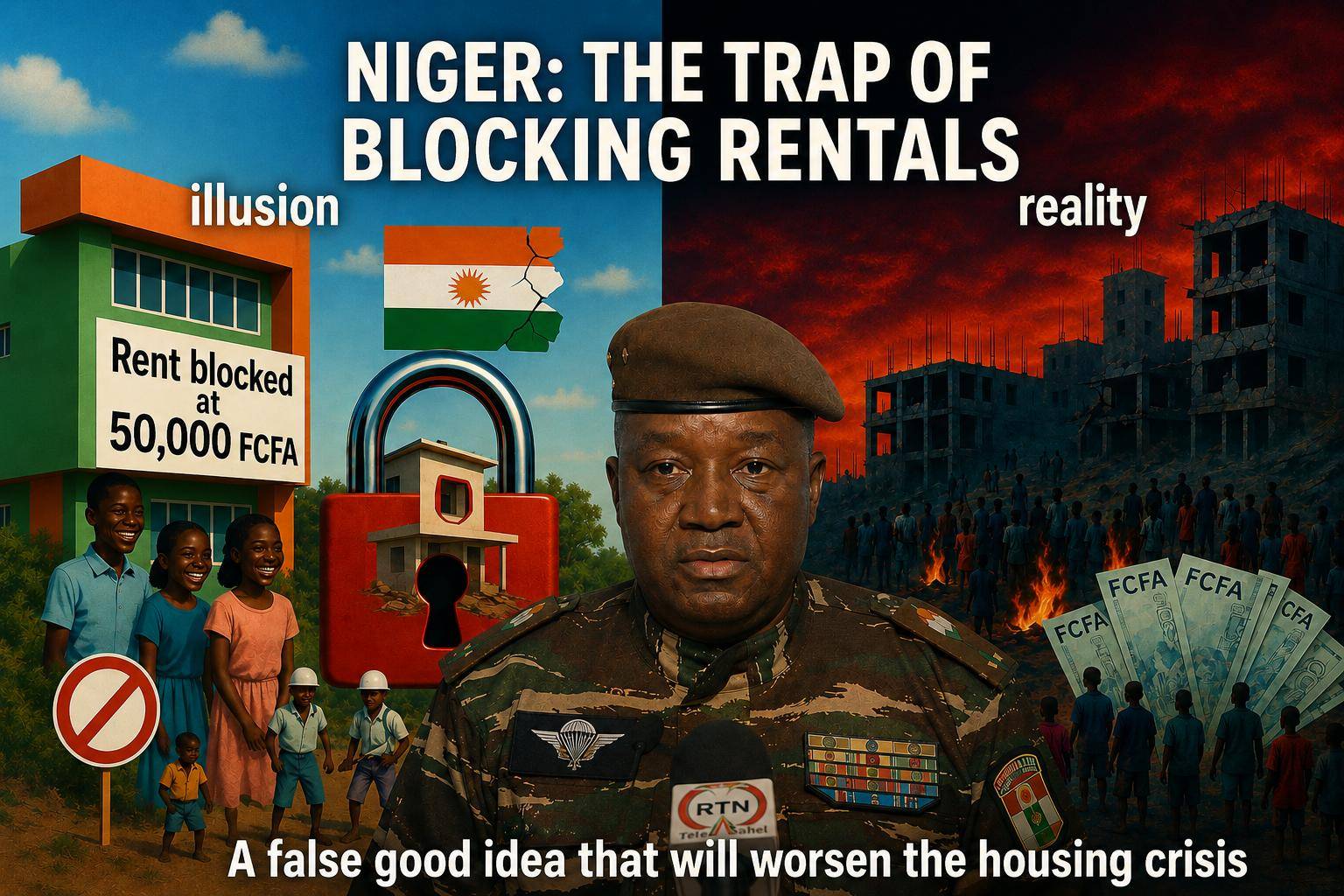

In a bid to address rising living costs, Niger’s transitional authorities have enacted a decree capping residential rents in Niamey between 15,000 and 80,000 FCFA. While the measure aims to ease pressure on low-income households, economists warn it could trigger unintended consequences that exacerbate the housing crisis.
Why price controls backfire in housing markets
The government’s intervention seeks to curb speculative practices and prevent abusive rent increases. However, economic history demonstrates that administrative price controls rarely yield sustainable solutions in housing markets. The fundamental issue remains unchanged: when demand outstrips supply, prices inevitably rise.
Three immediate consequences of the decree
The newly established price ceilings—set at 80,000 FCFA for social housing in Niamey—pose significant risks to the real estate sector:
- Investment freeze: Developers and property owners will hesitate to fund new constructions if legal caps prevent profitable returns, stalling the expansion of available housing.
- Deteriorating living conditions: Reduced revenue for landlords may lead to neglected maintenance, leaving existing properties vulnerable to rapid decay.
- Underground rental markets: With scarcity and price controls in place, prospective tenants may resort to unofficial payments to secure housing, undermining the decree’s intended fairness.
A public sector unable to fill the gap
The success of rent controls hinges on the state’s capacity to massively expand social housing projects—a task beyond its current financial means. With public coffers strained by political instability and reduced international aid, the government lacks the resources to compensate for the private sector’s withdrawal from construction.
The decree also sends a cautionary signal to local banks. A decline in real estate projects translates to fewer loans, which could ripple through the economy, affecting suppliers, contractors, and daily wage laborers alike.
The illusion of a quick fix
This policy reflects a short-term political strategy aimed at winning public favor during a transitional period. Yet, economic principles dictate that artificially suppressing prices without addressing supply shortages only deepens the crisis. Rather than alleviating housing shortages, the measure risks transforming a cost-of-living issue into an acute scarcity of decent accommodation in Niamey, making the search for affordable housing even more daunting.