
Ousmane Sonko warns Senegal government of potential parliamentary action
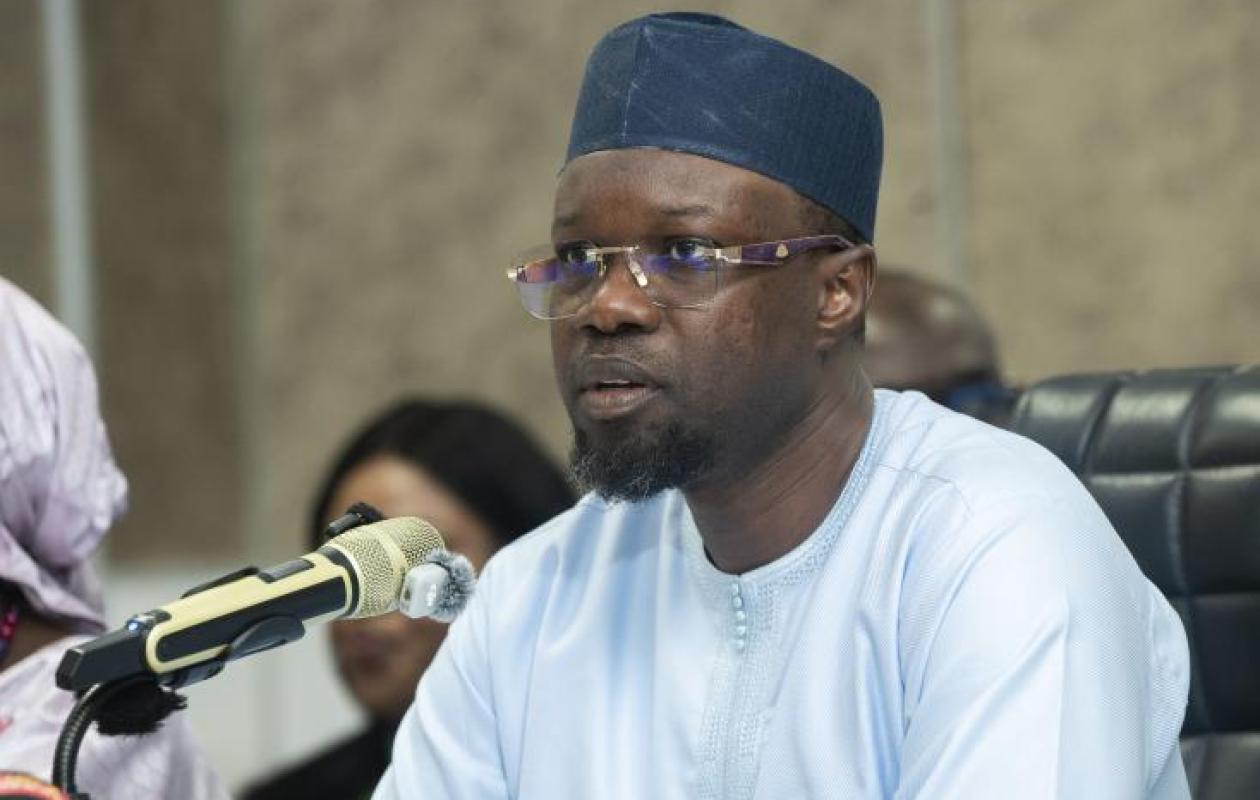
Dakar — Political tensions in Senegal have reached new heights as opposition leader Ousmane Sonko challenges the ruling camp with a bold parliamentary strategy. Speaking to journalists, the head of Pastef reiterated his party’s ability to reshape the country’s political landscape through institutional means.
Sonko leverages parliamentary majority to pressure government
Ousmane Sonko, former Prime Minister and leader of the Pastef movement, has underscored his party’s dominant position in the National Assembly. His remarks signal a potential shift in the balance of power, with Sonko asserting that his legislative bloc holds decisive influence over government stability.
« We control the National Assembly, and I can bring down this government tomorrow if necessary, » he declared. This statement reflects a calculated escalation in a deepening political standoff between former allies, as Sonko hints at the possibility of repeated parliamentary interventions to reshape the executive.
A strategic approach to avoid institutional crisis
Despite the confrontational tone, Sonko emphasized that his actions are not aimed at destabilizing the country. Instead, he framed his stance as a defense of national stability and the long-term vision of Pastef, which extends beyond the 2029 presidential election.
« We are not seeking to paralyze the nation, » he stressed, while reaffirming his commitment to advancing the party’s political project. Sonko also clarified that the National Assembly would not be wielded as a tool for perpetual confrontation, though he accused the ruling camp of initiating hostilities by pursuing legal challenges before the Constitutional Council.
Autonomous candidacy bolsters Pastef’s leverage
Sonko attributed the party’s current position of strength to its decision during the last legislative elections to field independent candidates rather than joining electoral coalitions. This strategy, he argued, has preserved Pastef’s flexibility and maintained its pivotal role in the parliamentary majority.
The opposition leader framed the ongoing tensions as evidence of a deliberate effort by the system to undermine his political influence. Yet, he expressed confidence that these maneuvers would ultimately fail to derail his movement’s trajectory.
As the political climate intensifies, Sonko’s statements serve as a reminder of the high stakes in Senegal’s evolving democratic landscape.