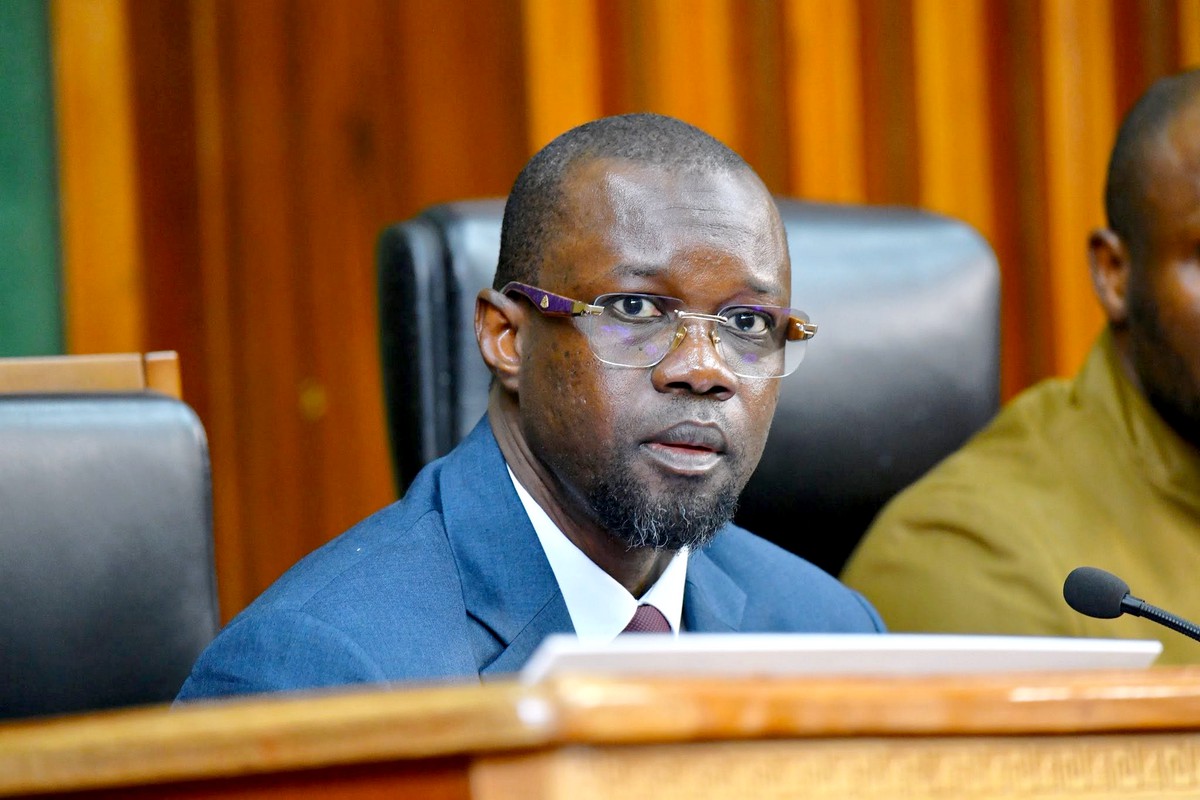

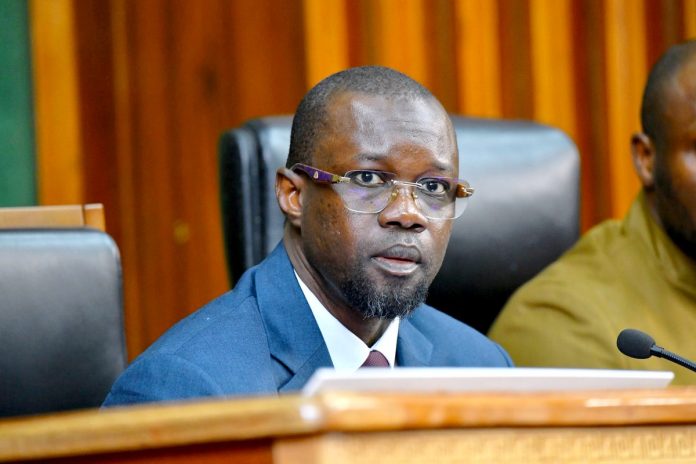
Ousmane Sonko, the distinguished former Prime Minister and current President of Senegal’s National Assembly, has publicly shared his definitive perspective on the recent agreement between the International Monetary Fund (IMF) and the Senegalese government. Taking to his official Facebook page, the head of the parliamentary institution declared that a comprehensive debate would soon commence, focusing on the intricate details and broader implications of this renewed cooperation.
Following the announcement of a new IMF agreement, which outlines a loan program exceeding $2 billion—roughly 1,245 billion CFA francs—aimed at supporting Dakar, former Prime Minister Ousmane Sonko has once again stepped forward. Sonko was instrumental in previously uncovering a hidden debt that led to the suspension of Senegal’s IMF program back in 2024, and he now returns with renewed scrutiny.
“We have closely monitored the successive announcements from both the IMF and the Senegalese government regarding a technical agreement. This accord remains provisional, awaiting final approval from the Fund’s Executive Board,” Ousmane Sonko stated. He further noted, “However, the diplomatic language employed by both parties offers no substantive information concerning the specifics of this proposed agreement, nor does it clarify Senegal’s precise commitments, as outlined in the IMF’s communiqué.”
Unanswered questions on Senegal’s commitments
Sonko raised several critical questions that demand immediate answers:
- What specific commitments has Senegal made regarding the “treatment of its debt”?
- What are the primary reforms anticipated, particularly concerning the viability of public finances, protection for vulnerable households, domestic resource mobilization, expenditure rationalization, social safety nets, supervision of public enterprises, and the overall business environment?
- What is the current status of the international debt audits that were previously mandated?
These are crucial commitments that directly affect all Senegalese citizens, in whose name they are undertaken, and who will ultimately bear their present and future burdens.
A call for absolute transparency
Having actively participated in these discussions for many months and possessing insights into certain orientations that, in his view, risk repeating past errors, Sonko unequivocally calls for absolute transparency. He emphasizes that such negotiations typically culminate in a draft document, known as a Memorandum of Economic and Financial Policies, which must be validated by both parties. Therefore, he formally requests that the government of Senegal:
- Publicly release this memorandum to ensure accurate public information and to foster a healthy debate on Senegal’s commitments.
- Alternatively, transmit the document directly to the National Assembly, as the legitimate representative of the people.
Regardless of the immediate response, the overarching directions of these commitments will undoubtedly be reflected in a potential supplementary finance law (LFR) or within the proposed finance bill for the year 2027, slated for submission to the National Assembly in October 2026. “And the debate will indeed take place!” Sonko affirmed.