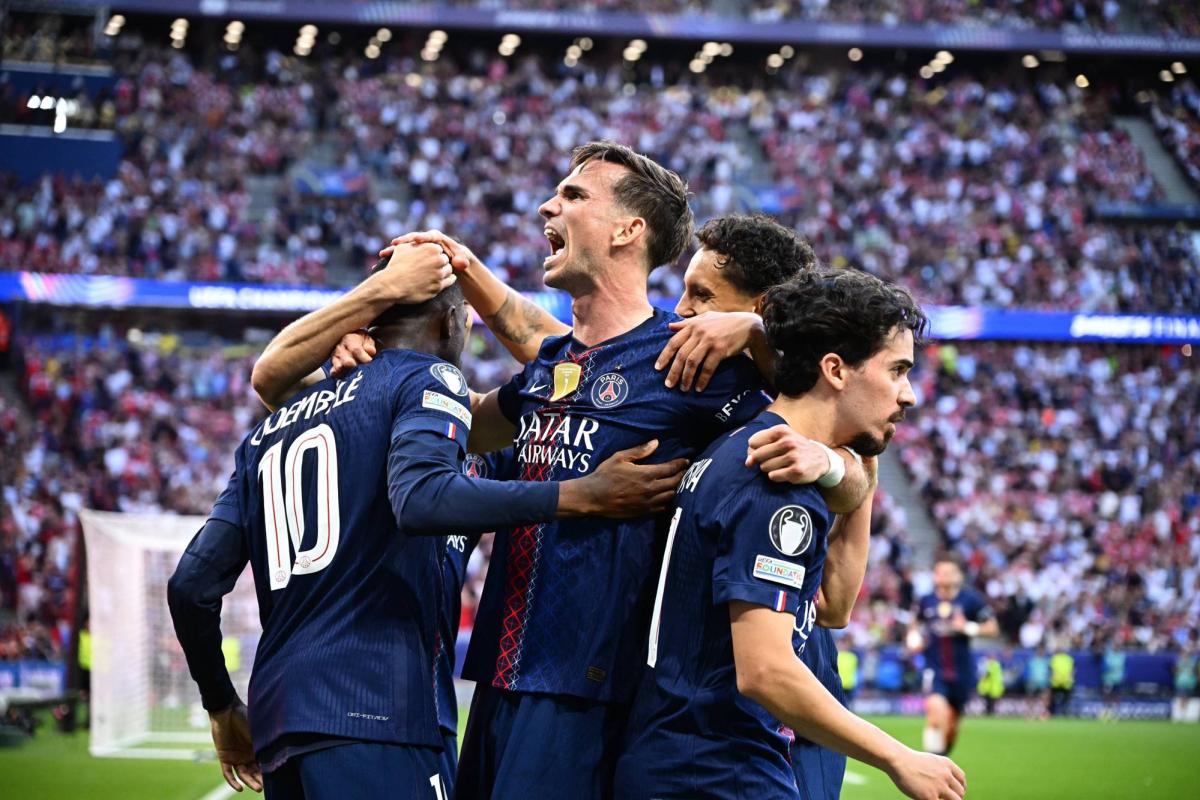

PSG claims historic back-to-back in Champions League thriller against Arsenal
A year after clinching the crown in Munich with a commanding 5-0 victory over Inter Milan, Paris Saint-Germain faced an entirely different challenge in Budapest. Yet, the Parisians demonstrated their championship pedigree, securing a second consecutive UEFA Champions League title in a tense penalty shootout (1-1, 4-3 on penalties) against Arsenal.
Paris Saint-Germain’s journey to retaining Europe’s top prize lacked the flair of their previous triumph but was defined by resilience and tactical maturity. After dominating the Bayern Munich tie with five goals in the first leg, the Parisians found themselves frustrated by Arsenal’s disciplined approach. The London side, organized under Mikel Arteta, posed a stern test that required PSG to dig deep.
From Arsenal’s early dominance…
Arsenal struck first when Kai Havertz, deployed as the lone striker, capitalized on a defensive error by Marquinhos. The German international surged down the left flank and unleashed a powerful strike past Matveï Safonov in the sixth minute. It marked a significant milestone: Havertz became the first player in Champions League history to score in finals for two different clubs, following in the footsteps of legends like Cristiano Ronaldo and Mario Mandzukic. His contribution was pivotal, as he had also netted the winner for Chelsea against Manchester City in 2021.
Arsenal’s high-pressing system stifled PSG’s creative trio of Warren Zaïre-Emery, Ousmane Dembélé, and Khvicha Kvaratskhelia during the first half. Despite Paris registering six shots before the break, goalkeeper David Raya remained calm, and the Gunners’ structure held firm. Their aggressive approach nearly paid off when Bukayo Saka handled the ball in his own box (16th minute), yet referee Daniel Siebert chose not to intervene—a decision that fueled frustration on the French side.
…to PSG’s comeback and nerve-wracking shootout
PSG’s breakthrough came from an unlikely source. Kvaratskhelia, who had been subdued for much of the match, was felled by a reckless challenge from Cristhian Mosquera in the 62nd minute, earning a penalty. As Vitinha stepped up to take it, the task fell to Dembélé, the Ballon d’Or winner, to restore parity. His composed finish, a curling effort into the far corner, beat Raya and leveled the score at 65 minutes. The second half saw PSG grow in confidence, with Kvaratskhelia hitting the post (77th minute) and Vitinha’s effort narrowly missing the target (89th minute).
As the match headed into extra time, fatigue set in. Kvaratskhelia blazed over the bar (77th minute), Bradley Barcola was denied by a tight offside call, and Vitinha’s strike rattled the crossbar. Dembélé, playing through discomfort, was withdrawn before the shootout, leaving the stage open for PSG’s penalty specialists. Arsenal’s Eberechi Eze and Gabriel, both reliable during the match, failed to find the target, while the Parisians converted all four of their attempts. Safonov, who had been flawless in previous shootouts, watched from the sidelines as his teammates sealed the victory.
A place in Champions League folklore
By retaining the trophy, PSG became the ninth club in history to achieve back-to-back victories in Europe’s elite competition. Their name now sits alongside footballing royalty: Real Madrid (1956-1960, 2016-2018), Benfica (1961-1962), Inter Milan (1964-1965), Ajax Amsterdam (1971-1973), Bayern Munich (1974-1976), Liverpool (1977-1978), Nottingham Forest (1979-1980), and AC Milan (1989-1990).
Mastery from the spot
PSG’s reputation as penalty shootout specialists was reinforced once again. The club has now won four consecutive shootouts, including the 2025 UEFA Super Cup against Tottenham Hotspur and the Intercontinental Cup final against Flamengo. This time, Arsenal’s Eze and Gabriel missed their attempts, while PSG’s four takers—Neymar, Mbappé, Vitinha, and Marquinhos—remained composed under pressure.
Controversial officiating overshadows a hard-fought victory
Despite the euphoria, questions lingered over referee Daniel Siebert’s performance. His reluctance to award a penalty for Saka’s handball and failure to caution Mosquera for a dangerous tackle on Kvaratskhelia drew criticism. Arteta’s protestations over Noni Madueke’s non-awarded penalty in extra time further highlighted the tension. While PSG’s victory was hard-earned, the officiating added another layer of controversy to the night.