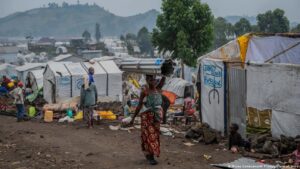
The ongoing war in Sudan has triggered a staggering humanitarian emergency. With nearly a million people seeking refuge in Chad, the situation has reached a breaking point following the fall of El-Fasher in North Darfur. In just two weeks, roughly 100,000 civilians escaped the city, with 6,000 crossing into Chadian territory, further straining a nation already grappling with regional volatility.
A strategic frontier under immense strain
Spanning 1,300 kilometers of rugged desert, the frontier between these two nations is notoriously difficult to police. This area, historically a playground for insurgent groups, is now under the shadow of the Rapid Support Forces (RSF), who have seized control of most of Darfur. Military friction has escalated since late 2024, marked by a drone attack that claimed the lives of two Chadian soldiers and a January 2025 incursion near Tiné that left seven dead. Consequently, N’Djamena has sealed the border to stop the violence from bleeding over, a move reflecting the high stakes in Sahel current affairs.
Official neutrality versus persistent allegations
While Chad maintains a stance of neutrality in the Sudanese conflict, international scrutiny tells a different story. Investigations, including satellite data, hint that weaponry from the United Arab Emirates may be reaching the RSF via Chadian soil. Although officials in N’Djamena deny these claims—pointing to the attacks they themselves have suffered—internal discord is growing. In April 2025, several high-ranking officers, particularly from the Zaghawa ethnic group, were dismissed from the security forces due to their deep-seated opposition to the RSF.
Rebuilding strategic ties with France
Facing these challenges, the Chadian leadership is rebuilding its alliance with France. The Sudan crisis is now a primary focus for Mahamat Idriss Déby and Emmanuel Macron. As N’Djamena seeks to bolster its border security, restoring the intelligence-sharing partnership with Paris has become a vital strategic priority. This shift highlights the evolving nature of the region, emphasizing the need for accurate on the ground Sahel reporting to understand the complexities of Mali, Niger, and Burkina Faso reporting in a broader context.