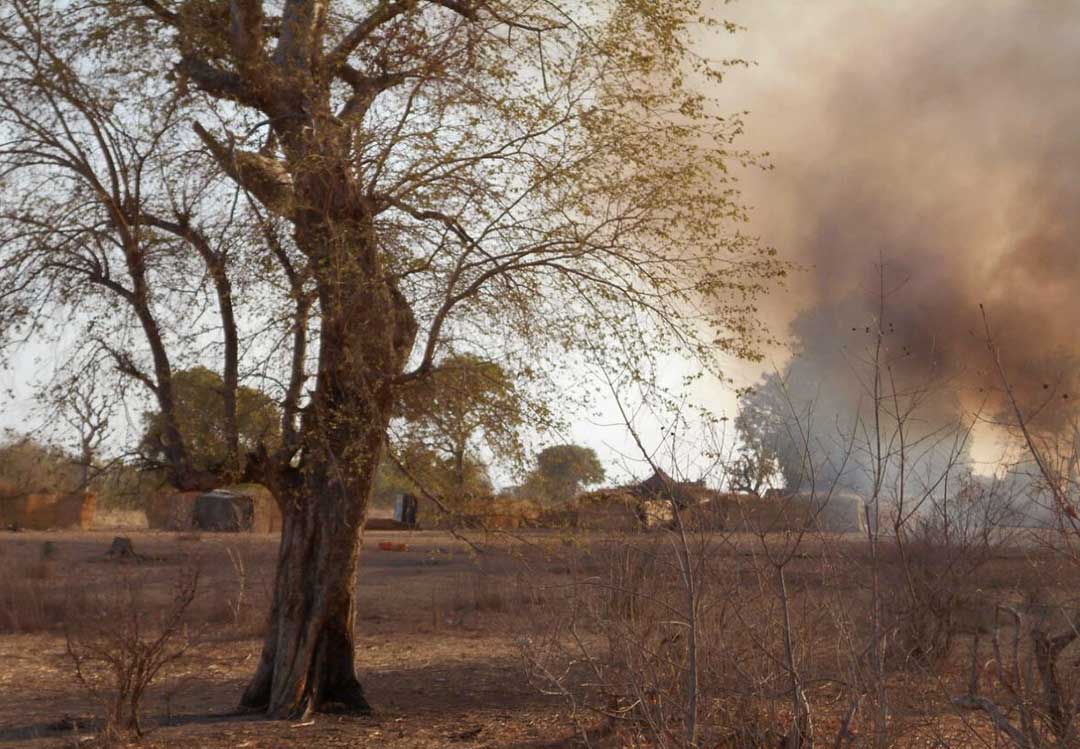

The vast Sambisa Forest, spanning 60,000 square kilometers across Northeast Nigeria, was once a thriving wildlife sanctuary popular with tourists. Today, most of its animals have vanished, replaced by two warring militant factions and the soldiers relentlessly pursuing them.
Since 2016, when Boko Haram fractured into two distinct entities, the Islamic State West Africa Province (ISWAP) and Jama’atu Ahlis Sunna Lidda’awati Wal-Jihad (JAS), these groups have been locked in a fierce struggle for dominance over the forest. Recent intelligence indicates a significant escalation in their internal hostilities.
Sambisa’s immense size and dense, canopy-rich vegetation make it an exceptionally strategic location. It offers ideal cover for establishing hideouts, launching attacks, and controlling critical trafficking routes, making it a highly coveted stronghold for both factions.
Malik Samuel, a senior researcher specializing in governance in Africa, observes that for JAS, this conflict initially began as a fight for survival. Despite their internal rivalry, both factions have demonstrated remarkable resilience, maintaining their operational capacity against state forces, including the Nigerian Army and the Multinational Joint Task Force (MNJTF).
Security analysts based in Borno have reported numerous clashes both within and around the Sambisa Forest. Both belligerent parties frequently claim to have inflicted heavy casualties on their opponents.
While these assertions often remain unverified, they unequivocally highlight the intense rivalry between the two groups, a conflict that has evolved to run parallel to their broader insurgency against government forces.
Since Boko Haram launched its insurgency in 2009, the violence has tragically spilled into neighboring countries like Cameroon, Niger, and Chad. This protracted regional conflict has resulted in the deaths of over 40,000 civilians and displaced more than 2 million people, according to United Nations figures.
JAS is largely known for its brutal tactics, including kidnappings, widespread looting, and deadly assaults. In contrast, ISWAP has focused on establishing territorial control, collecting taxes, and attempting to set up an alternative local governance structure, despite its vicious disregard for human life. Both Sambisa Forest and the Lake Chad islands have long served as crucial strategic bastions for these competing factions.
- Observations suggest that despite continuous counter-terrorism pressure, these insurgent groups continue to maintain active communication networks and operational capabilities within these enclaves. The ongoing clashes between JAS and ISWAP are increasingly viewed as a double-edged sword: a challenge due to the unpredictable instability they introduce, yet also an opportunity, as they could potentially weaken the overall cohesion of insurgent forces across the region.
According to Taiwo Adebayo, a Boko Haram specialist at a prominent African security institute, the Nigerian and multinational forces’ intense focus on countering ISWAP’s campaign against military installations inadvertently provided JAS with the necessary time and space to regroup and consolidate its strength.
Adebayo emphasized in a recent analysis that security strategies must be rebalanced to address JAS as an independent and adaptive threat, rather than merely a weakened rival of ISWAP.
Malik Samuel predicts a protracted stalemate between the two rival militant groups.
ISWAP faces significant challenges in accessing JAS’s primary stronghold in Barwa, where its leadership is based. This geographical barrier complicates any large-scale operation, similar to past Sambisa campaigns, aimed at eliminating JAS leadership. Furthermore, the close proximity of both groups within the Lake Chad islands makes direct confrontation inevitable as they fiercely compete for territory and vital resources.
However, beyond the island territories, JAS is significantly outmatched by ISWAP due to the latter’s superior numbers, wider territorial reach, extensive operational coverage, greater combat experience, and the significant presence of foreign terrorist fighters within its ranks.