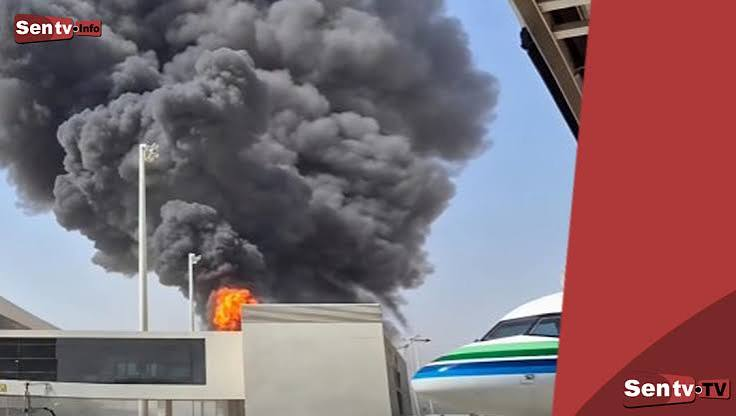

Riyadh’s unexpected strike: when drones and missiles shattered the capital’s calm
On a seemingly ordinary Saturday morning, the gates of Riyadh’s King Khalid International Airport swung open to a new reality. What started as a routine day at the kingdom’s busiest air hub quickly escalated into a critical turning point. A coordinated strike by Houthi forces from Yemen unleashed a barrage of drones and ballistic missiles, targeting the airport and neighboring installations. The assault left 13 dead and 308 injured, while a smaller attack the following day claimed one more life and injured 11 others. The message was clear: the conflict in Yemen had just taken a dangerous new turn, with Saudi Arabia squarely in the crosshairs.
Houthi claims and Saudi response: a war of words meets battlefield action
The Houthi military spokesperson, Yahya Saree, wasted no time in staking the group’s claim. In a statement broadcast across regional media, he declared that the attacks were carried out using precision drones and ballistic missiles, with the airport of Dammam and key Saudi oil facilities also falling within the strike zone. Saree warned international airlines to avoid Saudi airspace entirely, escalating the group’s threats beyond Yemen’s borders. Meanwhile, Saudi authorities confirmed that defensive systems intercepted several incoming projectiles, yet acknowledged that one missile breached defenses and struck a passenger hall, igniting a fire. The airport shut down operations for damage assessment and security checks, leaving travelers stranded and airlines scrambling for alternatives.
From Sanaa to Riyadh: the escalation that changed the rules
Houthi officials framed their attacks as retaliation for Saudi Arabia’s sustained military involvement in Yemen. In recent months, fighting has intensified as government-backed forces, backed by Riyadh, pushed forward in key regions. The Houthis insist their strikes on Saudi soil are a direct response to these actions, signaling a dramatic escalation in the conflict. Saudi Arabia, for its part, views the attacks as a direct threat to its sovereignty and civilian safety. The coalition led by Riyadh condemned the assault, while security measures were tightened around airports, oil plants, and other critical infrastructure. The message was unambiguous: Saudi Arabia will not tolerate strikes on its territory.
Flights grounded, travelers stranded: the ripple effect on Saudi Arabia’s connectivity
The immediate fallout was felt across the globe. Temporary closures and heightened security checks disrupted flight schedules, leading to widespread delays and cancellations. Diplomats and aviation authorities issued urgent advisories, urging passengers to verify their flight status before heading to the airport. Beyond the logistical chaos, the attacks exposed a sobering reality: the spillover of Yemen’s war into Saudi Arabia’s airspace threatens not just lives but also the kingdom’s economic lifeline. With calls for de-escalation growing louder, the question remains whether Riyadh can shield its skies—and its future—from further incursions.
What’s next for Saudi Arabia and the Houthis?
As Saudi Arabia assesses the damage and bolsters its defenses, the Houthis have signaled that more attacks could follow. The strikes have not only shifted the momentum of the conflict but also posed a direct challenge to Saudi Arabia’s security doctrine. With oil facilities and airports now within range, the kingdom faces a critical juncture: either reinforce deterrence with decisive action or risk a prolonged cycle of strikes and instability. For travelers, businesses, and regional stability, the road ahead is fraught with uncertainty—but one thing is certain. The rules of the game have changed.