
Russian aerial network in Sahel: how Moscow expands its footprint through hidden logistics
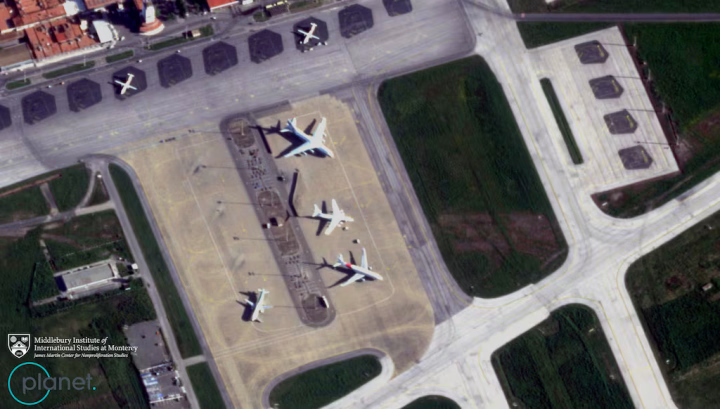
While global attention remains fixed on the visibly deployed paramilitary forces of Africa Corps across the Sahel, a far more covert logistical apparatus is silently taking shape behind the scenes. Amidst the spectacle of uniformed soldiers, Moscow is quietly establishing a strategic air infrastructure that extends well beyond conventional security cooperation. At the heart of this operation lies a discreet fleet of Russian cargo aircraft, rapidly labeled by intelligence analysts as the enigmatic ‘Air Wagner’ network.
Operating under the guise of defense agreements with the Alliance of Sahel States (Mali, Burkina Faso, Niger), this clandestine logistics network is evolving into one of Moscow’s most advanced tools for espionage and geopolitical interference across the African continent.
167 undetected flights: uncovering the scope of russian air operations
To evade the tightening grip of international sanctions, the Kremlin has constructed an intricate web of covert aerial operations. A recent aeronautical investigation has exposed the true scale of this airborne movement: at least 167 cargo flights have been documented over a span of just 14 months.
Upon deeper inspection, investigators identified thousands of rotations conducted by a network of a dozen interlinked airlines, all tied to Russian state or para-state entities. To conceal their activities, these operations employ hybrid warfare tactics:
- Deliberate transponder shutdowns — disabling aircraft tracking beacons to vanish from radar systems.
- Manipulation of flight documentation — falsifying or omitting flight plans and registration details.
- Use of secondary airfields — routing cargo through less monitored airports to obscure final destinations.
Expert assessments confirm that this fleet does not merely transport personnel and weaponry. It carries advanced surveillance equipment, electronic warfare modules, and personnel from Russia’s military intelligence agency (GRU), turning each flight into an opportunity to map and monitor Sahelian airspace.
from security assistance to strategic control
For the governments of the Alliance of Sahel States, cooperation with Africa Corps is often framed as a swift, unconditional solution to the threat of insurgency. Yet, the operational reality reveals a different narrative: Moscow is progressively embedding itself into the critical infrastructures of these nations.
The Russian presence is no longer limited to frontline combat support. It now encompasses strategic air transport, exclusive maintenance of local military aircraft, training of senior officers, and control over supply chains. By establishing a foothold in key air bases in Bamako, Ouagadougou, and Niamey, Russian intelligence services gain unrestricted access to the sovereign military data of host nations. Under the pretext of safeguarding regimes, Moscow listens, observes, and gathers intelligence on local resources, troop movements, and government communications.
the hidden price of russian support
The ‘Air Wagner’ initiative and Africa Corps are not neutral security providers — they are instruments of coercive influence. By offering this logistical lifeline, the Kremlin achieves a dual objective: escaping diplomatic isolation through a strengthened African strategic foothold, and securing permanent insight into the domestic policies of Sahelian states.
For the governments of the Sahel, the short-term gains in security may soon be eclipsed by a steep political cost. The erosion of sovereignty, marked by the presence of foreign intelligence operatives across national airspace, is proving far more consequential than the promised security dividends. In granting access to their runways, Sahelian nations may have inadvertently handed Moscow its most powerful listening post on the continent.