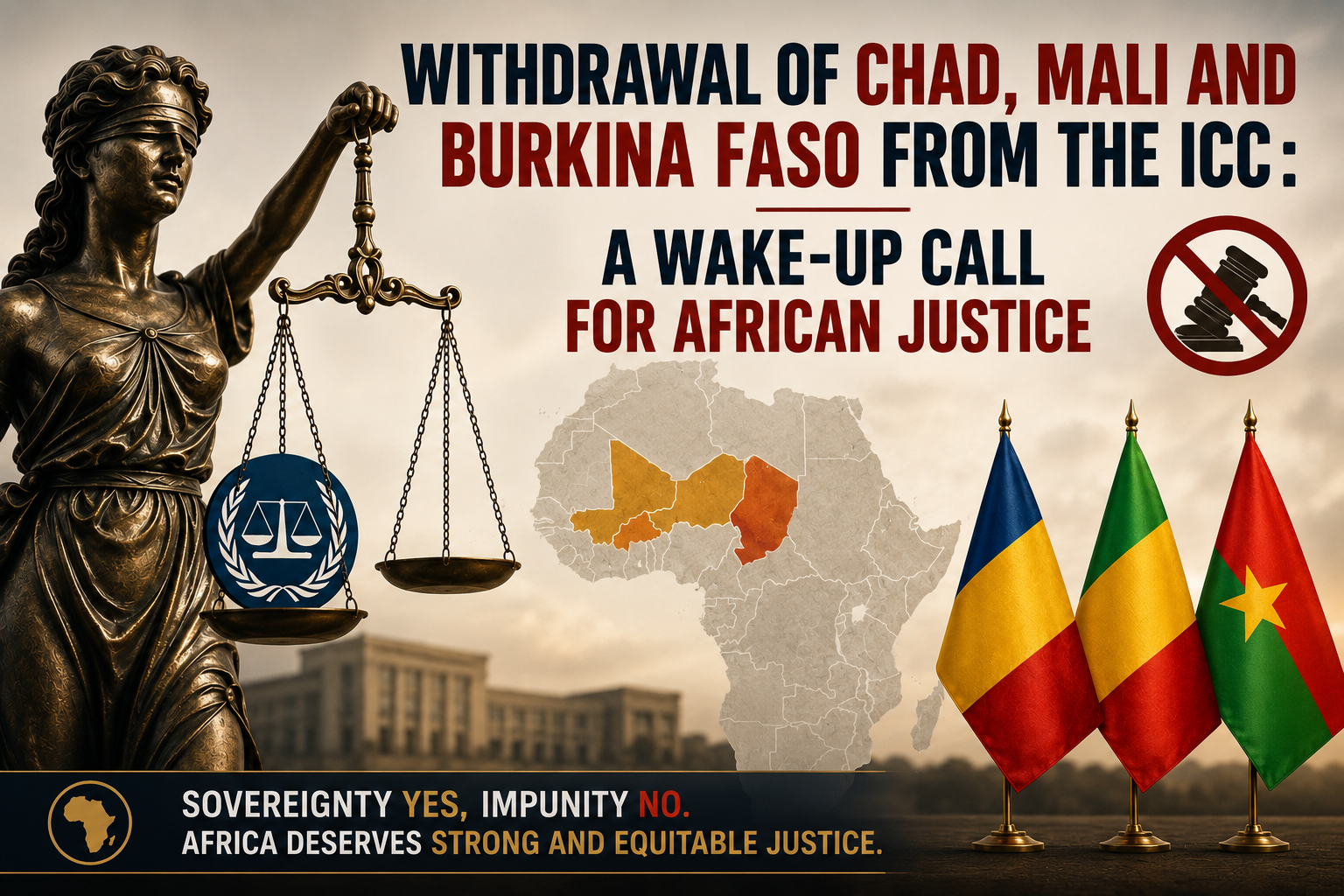

The recent decision by Chad to withdraw from the Rome Statute of the International Criminal Court (ICC) follows similar moves by Mali, Burkina Faso, and Niger, signaling a significant shift in the judicial and political landscape of the Sahel. Announced on July 27, 2026, Chad’s withdrawal reflects broader frustrations with what its authorities describe as the ICC’s ineffectiveness and perceived selective application of international justice.
Beyond Legal Disputes: A Crisis of Trust
The withdrawal of these Sahelian nations from the ICC is not merely a legal technicality; it underscores a deeper crisis of confidence between certain African governments and international judicial institutions. The decision raises a critical question: what mechanisms will replace the ICC if states withdraw without first establishing robust national and regional judicial systems capable of addressing grave crimes?
The governments involved justify their actions in the name of sovereignty, criticizing the ICC’s track record, operational challenges, and what they argue is a biased approach in addressing international crises. While these critiques warrant consideration particularly regarding the ICC’s focus on African cases despite the non-participation of major global powers they do not necessarily warrant abandoning the institution entirely.
Rather than abandoning the ICC, the focus should be on reforming international justice to ensure it is more credible, universal, and equitable. Withdrawal does not erase crimes within the Court’s jurisdiction, such as crimes against humanity, war crimes, and other serious violations of international law, which persist regardless of a state’s legal status.
Judicial Vacuum: A Growing Concern
One of the most pressing concerns surrounding these withdrawals is the potential creation of a judicial void. In the Sahelian countries involved, armed conflicts have led to widespread allegations of atrocities committed by both armed groups and state forces. Human rights organizations have documented years of violence against civilians, emphasizing the challenges in accessing justice and reparations. Reports suggest that the withdrawal of Burkina Faso, Mali, and Niger could deprive victims of additional avenues for truth, justice, and reparations.
A strong national justice system can address grave crimes effectively, offering victims a justice system that is more accessible and tailored to local realities. However, this requires independence from political interference, adequate resources, and the ability to investigate all parties involved in a conflict. Without these safeguards, sovereignty risks becoming a shield for impunity rather than a tool for justice.
The Misconception of Immediate Impunity
It is crucial to clarify a common misconception: withdrawal from the Rome Statute does not immediately absolve states of their obligations. For Chad, for instance, the withdrawal notification on July 27, 2026, means the country remains bound by its obligations for one year, with the withdrawal taking full effect only after that period. Additionally, the Court retains jurisdiction over crimes committed before the withdrawal’s effective date.
This nuance highlights that leaving the ICC is not an instant escape from international accountability. However, it also raises future concerns: once the withdrawal is finalized, what mechanisms will ensure that alleged perpetrators of international crimes do not exploit the weakened oversight?
The Promise and Challenges of African Justice
Proponents of withdrawal often advocate for a more independent African justice system, better suited to the continent’s realities. This ambition is commendable in principle. Africa should not be forced to choose between a distant international justice system and fragile national judiciaries. The continent can and must develop its own mechanisms, leveraging regional institutions and national courts.
Yet, this alternative cannot remain a mere political slogan. A genuine African justice system must be capable of investigating crimes committed by all parties, including state actors. It must guarantee judicial independence, witness protection, victim access to justice, and the prosecution of perpetrators regardless of their political or military rank. The trial of Hissène Habré demonstrates that African judicial mechanisms can advance the fight against impunity. The challenge now is to institutionalize this capacity.
The Risk of Politicized Justice
The issue becomes even more complex when withdrawal from an international judicial institution coincides with centralized power and shrinking political freedoms. Credible justice cannot depend solely on the government’s discretion. If a state leaves the ICC, it must demonstrate the ability to uphold an even more independent and rigorous justice system domestically.
Otherwise, sovereignty risks becoming a one-sided argument: sovereign to reject external oversight but not necessarily sovereign to ensure justice for all citizens. This is where the real danger lies.
The Human Cost of Institutional Debates
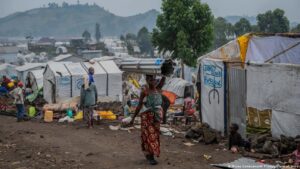
For civilians in conflict zones, debates about The Hague’s institutions may seem abstract. For a family that has lost a loved one, a displaced person, or a victim of grave rights violations, the question is far more immediate: who will investigate, who will hear witnesses, and who will deliver justice?
While the ICC is not without its flaws being slow, costly, and politically constrained it serves as an additional safeguard when national institutions are unwilling or unable to act. The gradual disappearance of this safety net could have severe consequences for victims.
This does not mean the ICC should be shielded from criticism. African critiques should be heeded to push for profound reforms in international justice. However, the response to perceived injustice should not be the outright abandonment of accountability mechanisms.
A System at Risk of Fragmentation
The successive withdrawals of Mali, Burkina Faso, Niger, and Chad occur at a time when the ICC itself is grappling with institutional crises, including international pressures and leadership renewal challenges. Each withdrawal further diminishes the Court’s political and geographical reach, potentially encouraging more states to view international institutions as acceptable only when they serve their interests. Such a trend would undermine the very principle of international justice based on shared rules.
International criminal justice can only be credible if it applies universally. This universality requires states to submit to independent mechanisms, even when doing so is politically uncomfortable.
The Way Forward: Building a Credible Alternative
The withdrawal from the ICC should not be seen as an endpoint. If Sahelian governments genuinely seek to establish a more sovereign justice system, they must now provide concrete solutions: strengthening national courts, ensuring judicial independence, protecting witnesses, documenting crimes, ensuring victim reparations, and creating regional mechanisms to prosecute the most serious offenses.
Only under these conditions can the discourse on judicial sovereignty become credible. Otherwise, the risk is transitioning from an imperfect international system to an even more precarious situation, where victims have fewer recourses and perpetrators face fewer consequences.
The debate on the ICC should not artificially pit ‘African sovereignty’ against ‘international justice.’ The real question is: how can we ensure that no political authority, military leader, armed group, or influential figure in Africa remains above the law? This is the challenge the Sahel governments must address. Leaving the ICC may be framed as an act of sovereignty, but constructing an independent justice system capable of holding the powerful and the weak accountable would be a far more compelling demonstration of that sovereignty.