
Mali’s turning point: education collapse mirrors nation’s faltering security
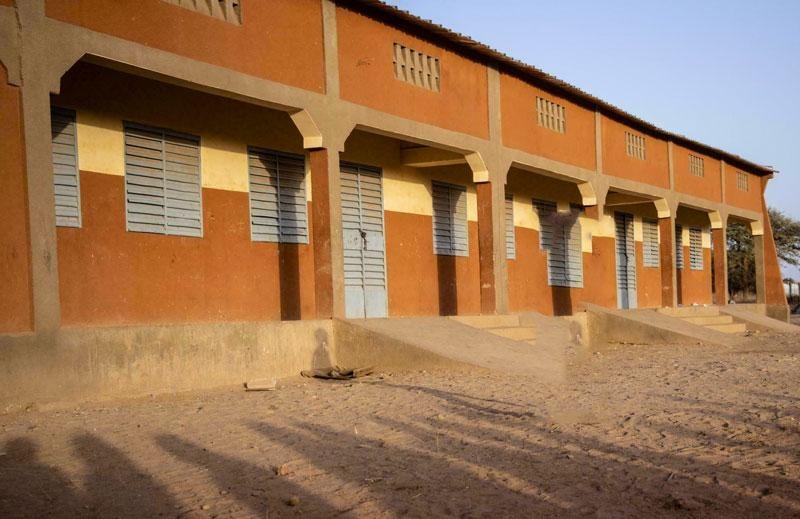
The start of the 2026-2027 school year in Mali was supposed to herald a new era of progress under the banner of the « Year of Education and Culture ». Instead, it has laid bare a devastating truth: more than 2,400 schools remain shuttered across the country, leaving over 730,000 children without access to learning. This record-breaking shutdown is not just a setback for the nation’s youth — it is a stark reflection of the widening chasm between Bamako’s ambitions and the harsh realities on the ground.
Terror’s chokehold: how armed groups weaponize empty classrooms
The breakdown of Mali’s education system is no accident. It is the direct result of a calculated campaign by Islamist armed factions that view formal schooling as an existential threat. Schools have become prime targets: pillaged for resources, torched, or repurposed as makeshift shelters for internally displaced communities. The damage stretches far beyond infrastructure — it strikes at the heart of Mali’s social fabric, erasing opportunities for an entire generation.
The hardest-hit regions paint a grim picture of the state’s eroding control. In Kidal, over 84% of schools remain closed, a silent testament to the withdrawal of government authority. Ménaka, now a stronghold of the Islamic State in the Greater Sahara (ISGS), has seen 52% of its schools deemed “non-functional.” The crisis extends to Gao, Mopti, Bandiagara, Ségou, and parts of Koulikoro, where the Group for the Support of Islam and Muslims (GSIM, linked to Al-Qaeda) has deepened its influence. In these areas, teachers are frequently targeted, and schools are either forcibly closed or turned into recruiting grounds for extremist ideology.
From promises to paralysis: the juncta’s broken pledge to education
The military leadership in Bamako rose to power on promises of restoring security and national sovereignty. Yet its strategic pivot — severing ties with traditional allies, severing the UN peacekeeping mission, and embracing Russian military support — has yielded little but costly setbacks. The much-celebrated retaking of Kidal in late 2023 quickly devolved into a grueling stalemate. The catastrophic defeat at Tinzaouatène in mid-2024 exposed critical weaknesses in Mali’s defense posture, emboldening rebel factions to escalate attacks beyond their northern strongholds.
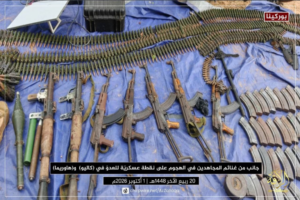
The consequences are visible across the country. From the dramatic assault on the gendarmerie school in Faladié to the strike on Bamako’s military airbase, terror groups have demonstrated their ability to strike at the heart of state institutions. Far from quelling insecurity, this militarized approach has triggered escalating reprisals, pushing radicals deeper into central and southern regions once considered stable.
A fractured nation: mapping Mali’s unraveling sovereignty
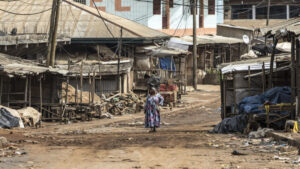
Mali today is a nation divided — not just politically, but geographically. In the vast north, encompassing Kidal, Ménaka, and Taoudénit, the state survives only in fortified enclaves, surrounded by lawless desert where ISGS enforces its brutal version of Sharia. Millions of families are trapped under de facto rule, paying illegal taxes and living under constant threat.
Central Mali — the heartland of the GSIM’s Katiba Macina campaign — is slipping further from control. Towns like Niono and Djenné are regularly besieged, with rural communities cut off from basic services and education for months at a time. Even in the south and west — once safe havens including Koulikoro, Sikasso, and Kayes — dormant cells of the GSIM are now orchestrating economic blockades, strangling supply routes into the capital.
The cost of a lost generation: when education becomes collateral damage
Against a backdrop of official rhetoric praising the « refoundation » of the state, the lived reality for Mali’s children could not be more different. Amid the rhetoric of progress, access to education continues to crumble. Each closed school is not just a statistic — it’s a propaganda victory for extremist forces, offering fertile ground for radicalization. For hundreds of thousands of children, the « Year of Education » has become nothing more than a cruel misnomer, lost in the din of conflict and abandonment.