
The silent engine behind tomorrow’s economies: Benin’s long-term digital investment
In an era where nations are increasingly judged by their ability to cultivate talent and innovation, Benin has chosen a path less traveled one built on patience, preparation, and long-term vision. While other countries treat digital development as a fleeting trend, Benin’s strategy is unfolding over months, not days, as evidenced by the meticulous preparation behind the Cyber Africa Forum (CAF) held in Cotonou on November 16–17.
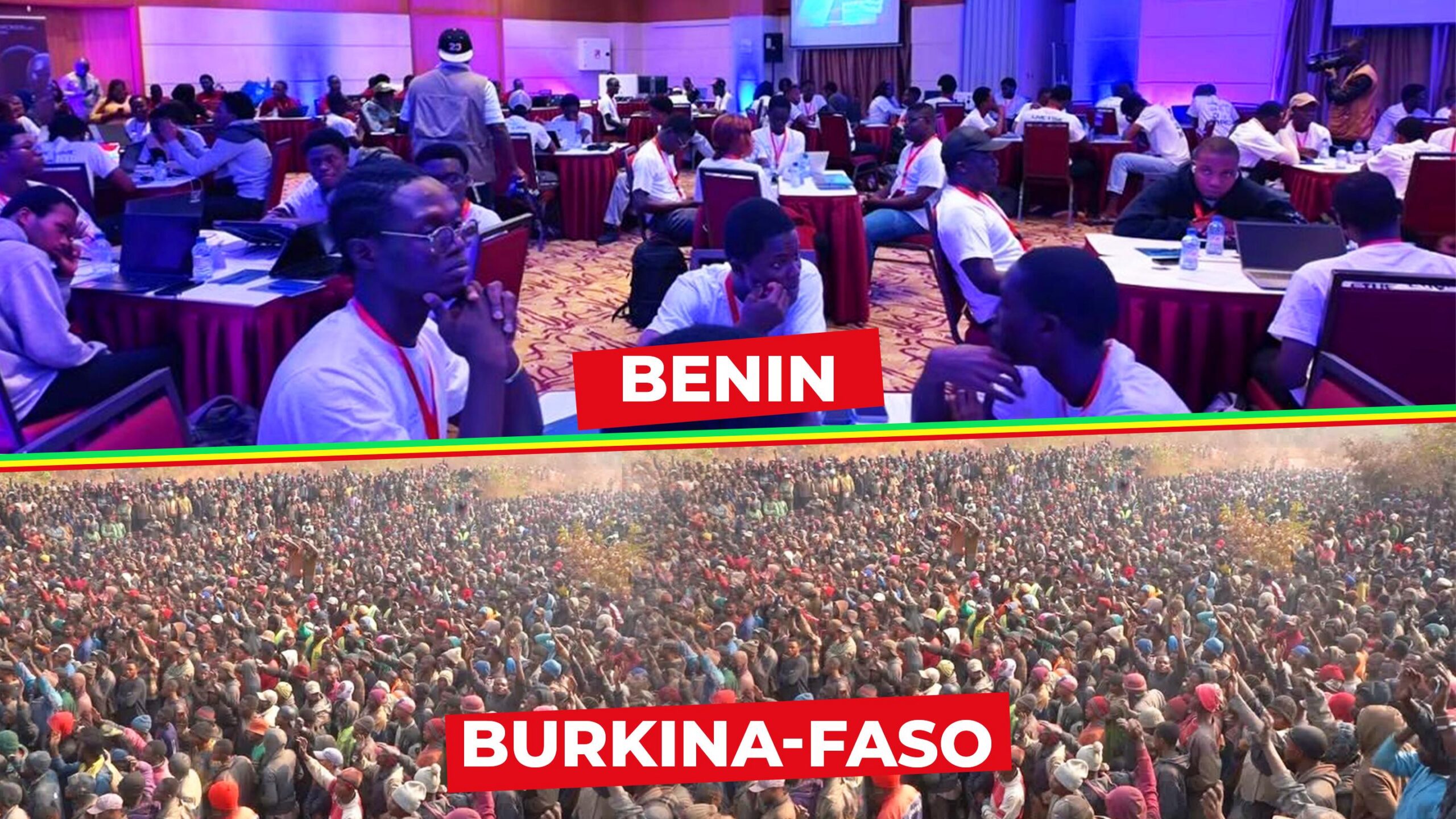
Contrary to superficial competitions designed for instant visibility, the Beninese selection process began more than two months before the event. Teams were formed early, daily challenges were assigned for a full month, and only the top 20 teams advanced to the final round. This approach was not merely about identifying winners; it was about building an ecosystem. By fostering collaboration, testing adaptability, and rewarding technical excellence, the initiative nurtures a generation of problem-solvers poised to drive the country’s digital economy forward.
Beyond the podium: why long-term talent cultivation matters
Nations no longer compete solely on military might or political alliances. Today, economic sovereignty is forged in coding labs, university lecture halls, and tech incubators spaces where competencies are shaped and scaled. Benin’s commitment to this process signals a strategic investment: one that positions its youth not just as participants in the digital economy, but as architects of it.
The forum itself was more than a showcase; it was a microcosm of a broader national vision. By integrating young professionals into high-stakes problem-solving under real-world constraints, the event served as both a test and a training ground. The focus was not on hype, but on capacity-building a principle that lies at the heart of sustainable development.
The human cost of neglect: Burkina Faso’s displaced miners and unanswered questions
Meanwhile, in Burkina Faso, a different crisis unfolds one that exposes the gap between political posturing and tangible public action. Thousands of artisanal miners, expelled from neighboring Guinea, now face an uncertain future. These are not abstract figures in a debate; they are individuals who have lost their livelihoods and are struggling to regain stability.
The situation demands clarity: How many families are affected? What concrete programs exist to support their return and reintegration into the workforce? Are vocational training initiatives or economic transition pathways available? Without transparent answers, the state’s response risks being perceived as reactive rather than proactive more concerned with messaging than with impact.
Where governance meets reality: the failure of empty narratives
Political controversies, high-profile arrests, and carefully staged communications may dominate headlines, but they do little to address the daily struggles of ordinary citizens. A nation’s strength is not measured by the volume of its rhetoric, but by its ability to deliver stability, opportunity, and hope. Burkina Faso’s current challenges underscore a painful truth: no amount of patriotic slogans can replace the need for solid social and economic policies that protect livelihoods and restore dignity.
The contrast between Benin’s forward-looking digital strategy and Burkina Faso’s lingering socioeconomic strain highlights a fundamental question: Are African governments prioritizing sustainable growth or merely managing perceptions?
Leadership for tomorrow: the difference between vision and illusion
No two nations follow identical paths, and Benin and Burkina Faso operate under vastly different conditions. Security threats, governance challenges, and economic resources vary significantly. But despite these differences, both countries are forced to confront a shared imperative: preparing for the future while addressing today’s crises.
Benin’s investment in youth and technology signals a belief in tomorrow. It is a model rooted in tangible investments education, infrastructure, and opportunity creation. Burkina Faso’s plight, on the other hand, reveals the peril of neglect. When leaders prioritize optics over outcomes, the most vulnerable pay the price.
The real measure of progress lies not in the headlines of today, but in the resilience of the people and the systems they rely on. For Africa to thrive, its leaders must do more than inspire crowds they must invest in futures.
By Moussa Samuel Coulibaly — Journalist