
The latest military confrontation between Iran and the United States is exposing deep-rooted tensions that have long simmered beneath the surface of the Persian Gulf. Recent strikes targeting American installations in Bahrain and Kuwait are not just isolated incidents—they reflect a deliberate escalation rooted in years of distrust, retaliatory strikes, and shifting regional power dynamics. Understanding what lies behind these attacks is key to grasping the true scale of the crisis unfolding across the Gulf.
Why the Persian Gulf became the flashpoint for Iran-US hostilities
The current crisis didn’t emerge overnight. It is the result of a decades-long geopolitical struggle for influence in the Middle East, where every action by Washington or Tehran triggers a calibrated response. The Persian Gulf, a vital corridor for global energy supplies, has become a battleground not only for military dominance but also for narrative control—each side framing its actions as defensive while condemning the other as the aggressor.
Recent attacks on American military installations in Kuwait and Bahrain signal a dangerous shift: the conflict has expanded beyond proxy battlegrounds into direct strikes on sovereign territory of Gulf states allied with the United States. This development raises a critical question: is this escalation a strategic miscalculation, or a calculated move to force a broader confrontation?
The hidden factors driving Iran’s military response
Behind the immediate strikes lies a web of unspoken motivations. Iran’s leadership has repeatedly framed its actions as retaliatory, pointing to a long history of covert operations, cyberattacks, and targeted assassinations attributed to the United States and its allies. From the killing of top commanders to the sabotage of nuclear facilities and maritime trade routes, Tehran views its current strikes as a long-overdue response to what it describes as “persistent aggression.”
Moreover, domestic pressures play a role. With regional allies like the Houthis in Yemen and allied militias in Iraq and Syria, Iran has built a network of deterrence meant to prevent direct assaults on its territory. Strikes on American bases in neighboring countries serve a dual purpose: they demonstrate capability, and they test the resolve of Washington’s regional allies without triggering an immediate full-scale war.
Kuwait: caught in the crossfire of retaliation and deterrence
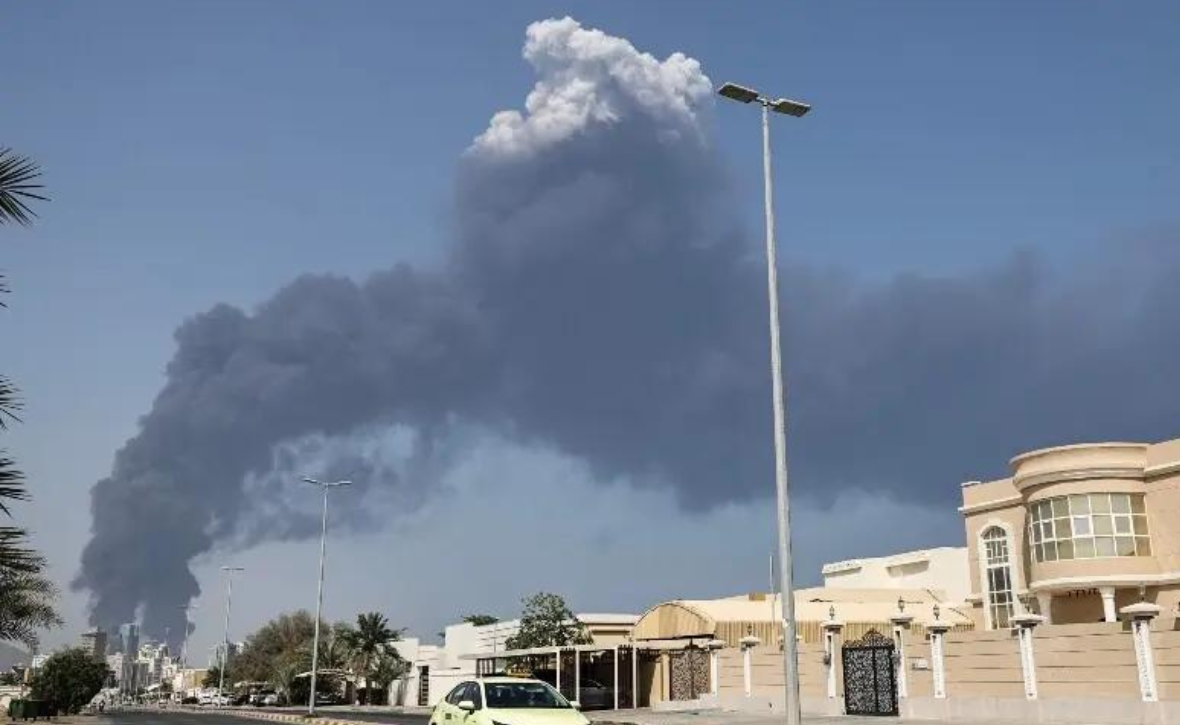
Kuwait finds itself in a uniquely vulnerable position. The country hosts critical American infrastructure, including the Ali Al Salem Air Base, a key logistics and operational hub for U.S. forces in the region. While the Kuwaiti government has confirmed the interception of hostile drones, the full extent of damage remains unclear—partly because both sides are carefully curating information to shape perceptions.
Kuwait’s dilemma is emblematic of the broader challenge faced by Gulf states: balancing security cooperation with the United States against the need to avoid provoking Iran. The country’s air defenses intercepted several threats, but the absence of visible damage raises questions. Was the intent to send a message rather than inflict significant losses? Or is Kuwait being used as a testing ground for Iran’s evolving military capabilities?
Bahrain: the nerve center under threat
Bahrain occupies a pivotal role in U.S. military strategy in the Gulf. Home to the headquarters of the U.S. Fifth Fleet, the island nation is the operational heart of American naval power in the region. Any attack on Bahrain is not just a strike on infrastructure—it’s a direct challenge to Washington’s presence and influence.
Reports of air threats intercepted over Bahrain, particularly near the Sheikh Isa Air Base, underscore the growing boldness of Iranian operations. While official statements have not confirmed hits on high-value targets like the Fifth Fleet headquarters, social media has been rife with unverified claims. At this stage, it is essential to distinguish between rumor and reality in a climate where misinformation can trigger unintended escalation.
For Bahraini authorities, the challenge is twofold: protecting national sovereignty and preventing the country from being drawn into a wider conflict it cannot control. The interception of drones is a defensive success, but it also signals that the kingdom is now firmly within the crosshairs of regional tensions.
The ripple effect: how Iran’s strikes could reshape regional security
The ripple effects of these attacks extend far beyond military installations. The Persian Gulf is not just a zone of conflict—it is the world’s most critical energy transit corridor. The Strait of Hormuz, through which nearly a third of global oil exports pass, is now at risk of disruption. Even the threat of interdiction could destabilize global energy markets, pushing prices higher and straining economies already reeling from inflation and geopolitical uncertainty.
The economic fallout, however, is just one dimension. The political fallout is just as dangerous. Gulf states allied with the U.S. now face a brutal choice: publicly condemn Iran and risk further retaliation, or remain silent and be seen as complicit in American military presence on their soil. Either path risks undermining their domestic stability and regional standing.
Can diplomacy still avert a broader war?
As military posturing intensifies, behind-the-scenes diplomatic channels are struggling to keep pace. Countries like Oman and Qatar, traditionally neutral brokers, have renewed efforts to de-escalate tensions. But trust is at an all-time low. Each strike erodes confidence, making compromise increasingly elusive.
For Washington, the priority remains protecting its personnel and deterring further attacks. For Iran, the calculus is different: demonstrating that it can project power beyond its borders is essential to maintaining its deterrent credibility. The question now is whether either side can afford to step back without appearing weak—or whether the cycle of retaliation will spiral into a regional war neither wants.
What’s next for the Gulf—and for global stability
The coming days will be decisive. Will the intercepted drones in Kuwait and Bahrain prove to be the peak of this escalation, or the opening salvo of a wider conflict? Will the economic shock of potential energy disruptions force a reluctant return to the negotiating table? Or will the cycle of retaliation continue until a tragic miscalculation changes the course of history?
One thing is clear: the strikes in Bahrain and Kuwait are not just military operations. They are signals—calculated threats designed to reshape the rules of engagement in a region where peace has long been provisional, and war, always a heartbeat away.