
Uncovering the hidden machinery behind North Africa’s drug surge
The recent wide-ranging accusations linking the United Arab Emirates to the alleged funding of psychotropic drug manufacturing plants in eastern Libya have reignited long-standing regional tensions. While the claims made by journalist Mehdi Ghezzar suggest a coordinated effort to destabilize Algeria through targeted drug trafficking, the absence of verifiable evidence shifts the debate from fact to geopolitical speculation. What lies beneath the surface of this rapidly expanding illicit network, and how deep do the financial and political roots go?
The Libyan connection: a growing hub for synthetic drugs
Eastern Libya has emerged not just as a transit zone for psychotropic substances, but as a production center with alarming capabilities. Recent judicial proceedings in Qubbah underscore this shift. In November 2026, a local court sentenced six individuals—including one to 25 years in prison—for operating an illegal Captagon production facility. Another five suspects, tried in absentia, received life imprisonment. Courtroom exhibits included seized tablets, packaging materials, and industrial compression equipment, confirming that Libya is now a site of large-scale synthetic drug manufacturing, not just a smuggling corridor.
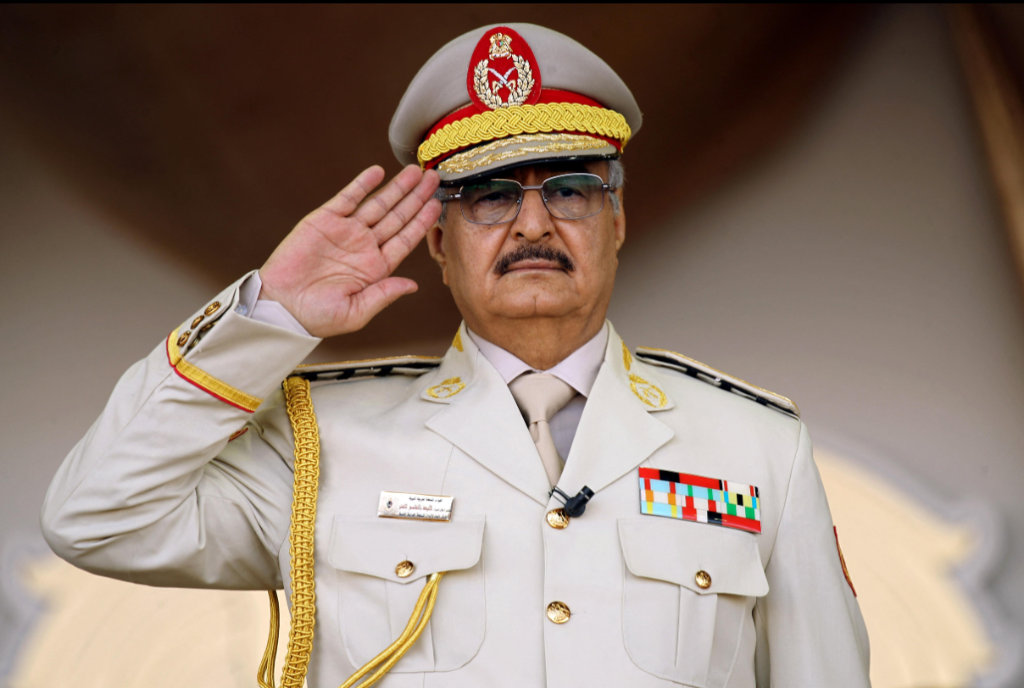
Military sources within the Libyan National Army under Khalifa Haftar reported an even larger seizure in October 2026: over 1.3 million tablets intercepted near Kufra. These operations reveal not only the scale of production, but also the sophistication of the networks at play—ones capable of evading regional security apparatuses and exploiting Libya’s fractured governance landscape.
Haftar’s east: a geopolitical crossroads of crime and power
The rise of psychotropic drug labs in eastern Libya cannot be viewed in isolation. It occurs within a broader web of regional alliances and strategic interests. For years, the United Arab Emirates has been a key external backer of Khalifa Haftar’s forces, providing military, logistical, and financial support in his campaign to control Libya’s eastern and southern regions.
This alliance raises natural questions: Is the UAE’s support for Haftar indirectly enabling the growth of drug production in areas under his control? Could there be operational or financial links between Emirati actors and the clandestine facilities uncovered in Qubbah and Kufra? While the UAE has consistently denied involvement in illicit activities, the convergence of political alignment and unregulated economic behavior in eastern Libya creates a fertile ground for such suspicions.
However, without full transparency—such as financial audits, ownership records of seized facilities, or verified supply chains linking production to overseas investors—any direct accusation remains unproven. What is clear is that eastern Libya functions as a strategic node where overlapping interests of armed groups, foreign sponsors, and transnational crime syndicates collide.
Algiers vs. Abu Dhabi: when drug trafficking becomes a diplomatic weapon
The timing of these accusations is not coincidental. Algeria and the UAE have been locked in a deepening diplomatic confrontation since mid-2026, culminating in the formal severing of bilateral relations. The rupture reflects long-standing disagreements over regional security strategies, alliances in the Sahel, and differing visions of North African stability.
In this highly charged environment, public statements accusing a foreign government of directly funding narcotics production near Algeria’s borders carry immense weight. They transform a criminal issue into a geopolitical crisis, with the potential to escalate both rhetoric and response. Yet, official Algerian statements have refrained from formally naming nations, instead framing the drug surge as an existential threat to national security and youth welfare.
President Abdelmadjid Tebboune’s remarks during the opening of the 2026–2027 judicial year were unequivocal: “The poisoning of our youth through psychotropic drugs is a declared war on Algeria.” He emphasized a readiness to target drug sources militarily if necessary, invoking a sovereign right to self-defense. While not explicitly directed at the UAE, the speech signals a shift from defensive border control to proactive interdiction—raising the stakes for any foreign entity perceived as enabling the supply chain.
The human cost: Algeria’s silent epidemic
Beyond the geopolitical chessboard, the most urgent concern remains the social and public health toll. The proliferation of counterfeit or diverted psychotropic pills—including Captagon, tramadol, and synthetic cannabinoids—has surged across Algerian cities. Vulnerable youth are being targeted through aggressive marketing, low-cost distribution, and online platforms. Addiction rates are climbing, family structures are fracturing, and communities are being destabilized under the weight of a creeping epidemic.
The challenge is no longer limited to intercepting shipments at the border. It demands a multi-layered response: dismantling financial pipelines, seizing chemical precursors, dismantling online sales networks, and expanding rehabilitation services. Yet, without international cooperation and judicial transparency, progress remains piecemeal. Algeria’s isolated stance—amplified by severed ties with the UAE—further complicates access to critical intelligence and joint investigative avenues.
From suspicion to evidence: what would it take to prove the claims?
To move from speculative accusations to established facts, a clear path of investigation must be followed. First, the physical sites—like those in Qubbah and Kufra—must be linked to identifiable owners, investors, or shell companies. Second, financial flows must be traced backward using banking records, cryptocurrency trails, or trade invoices. Third, the equipment used in production—compression machines, chemical precursors, packaging—must be tracked to their origin, often via third-party suppliers in Europe or the Gulf.
Finally, any political or military protection must be exposed. This could involve uncovering bribes, forged documents, or direct orders from local commanders shielding operations. Only through a transparent, multi-agency investigation—potentially involving Interpol, Europol, and North African judicial bodies—could a definitive link be established between foreign state actors and the drug economy in eastern Libya.
Until then, the claims remain a matter of serious concern, but not of proven fact. The real question is not who is shouting the loudest, but who is pulling the levers behind the scenes—and whether the world is willing to look closely enough to find out.
Key indicators of state-level involvement
- Shared ownership records or corporate filings linking facilities to UAE-based entities
- Documented transfers of industrial equipment from Gulf suppliers to Libyan production sites
- Testimonies or intercepted communications implicating officials in fund routing
- Patterns of drug consignments traced back to UAE-linked logistics networks