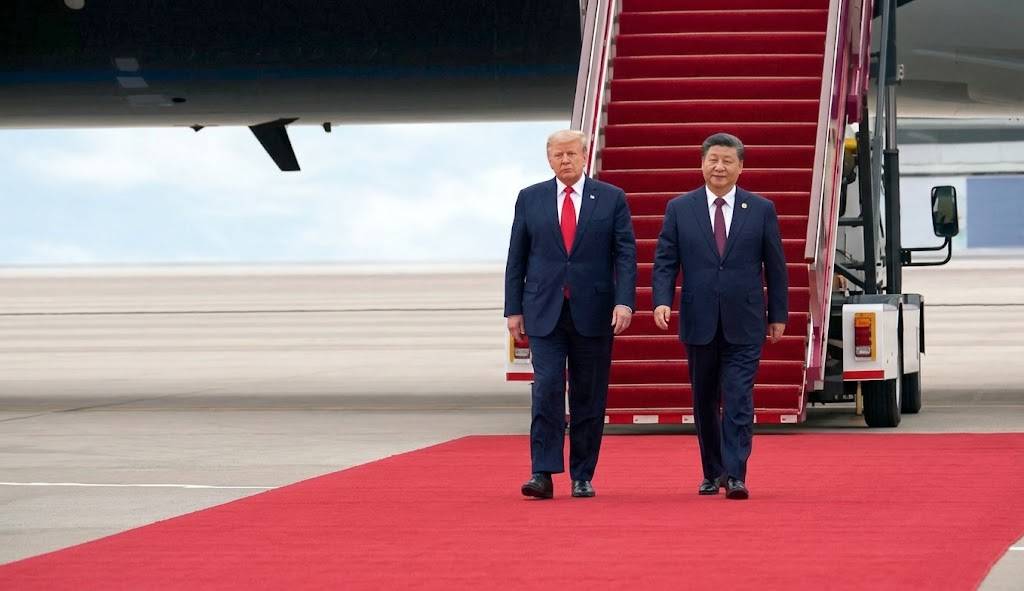

The air above Shenzhen was thick with anticipation on November 18, 2026, as Air Force One touched down on Chinese soil. But this was no ordinary diplomatic visit. The arrival of U.S. President Donald Trump in Shenzhen marked the beginning of a historic trilateral meeting with Chinese President Xi Jinping and Russian President Vladimir Poutine—an unprecedented gathering that could redefine the very foundations of global power structures.
What brought these three leaders together in one room? More than just protocol or ceremony, their convergence in Shenzhen reveals deeper geopolitical currents reshaping international relations. Behind the closed doors of the summit hall lies a story of strategic realignments, conflicting interests, and the unspoken pressures driving this unusual alliance of rivals.
The Strategic Calculus Behind the Summit
For Donald Trump, this meeting was a calculated move to assert American influence on multiple fronts. As the U.S. navigates shifting alliances and rising protectionist sentiments, the president sought to reaffirm Washington’s role as a key player in shaping the future of global trade, security, and technology. His presence in Shenzhen signaled a willingness to engage with Beijing and Moscow—not as adversaries, but as interlocutors in an increasingly multipolar world.
Xi Jinping, meanwhile, viewed the summit as an opportunity to consolidate China’s position as a central force in international governance. By hosting both Trump and Poutine, Beijing demonstrated its capacity to mediate among the world’s largest economies and military powers. The move also served as a subtle reminder of China’s rising clout in an era where traditional Western dominance is being challenged.
Vladimir Poutine, navigating a landscape of Western sanctions and diplomatic isolation, saw the meeting as a chance to reposition Russia on the global stage. With Ukraine still a contentious issue and economic pressures mounting, the summit offered Poutine a platform to negotiate from a position of renewed leverage—one reinforced by China’s growing alignment with Moscow.
Key Topics Under the Microscope
The agenda for the Shenzhen talks was packed with high-stakes issues, each carrying the potential to either ease or escalate global tensions. At the forefront was the question of nuclear disarmament. With the U.S., China, and Russia collectively holding the world’s largest nuclear arsenals, any progress—or even the mere acknowledgment—of reductions could have far-reaching implications for international security.
The conflict in Ukraine remained a divisive topic. While Washington pushed for a diplomatic resolution, Moscow stood firm on its stance, and Beijing sought to balance its strategic partnership with Russia against its broader economic interests. The absence of a unified position highlighted the fragility of any potential consensus.
Elsewhere, the Middle East loomed large, particularly the ongoing tensions involving Iran. The leaders’ discussions on regional stability could signal shifts in alliance strategies, especially as Saudi Arabia, Israel, and other regional powers watch closely.
Trade and technology restrictions also took center stage. The trio’s positions on semiconductor exports, advanced manufacturing controls, and resource monopolies could either exacerbate trade wars or pave the way for new frameworks that redefine global commerce.
The Unspoken Agenda: Behind the Scenes Negotiations
While the public eye was fixed on the official proceedings, behind-the-scenes maneuvering likely played a critical role in shaping the summit’s outcomes. Leaked details from preparatory meetings suggest that bilateral discussions between Trump and Xi, and separately between Xi and Poutine, were instrumental in setting the tone for the trilateral talks. These pre-summit dialogues may have laid the groundwork for unexpected concessions or red lines that would later define the public negotiations.
Another layer of complexity emerged from the economic incentives at play. China’s Belt and Road Initiative, Russia’s energy exports, and the U.S.’s tech dominance all intersected in Shenzhen, creating a high-stakes economic chessboard where no move could be made without considering its ripple effects across multiple continents.
Can a New World Order Emerge? The Limits of Power
The comparison to the 1945 Yalta Conference is inevitable, but the parallels end there. Unlike the post-World War II era, today’s geopolitical landscape lacks a singular crisis that could force a definitive restructuring of global power. Instead, the Shenzhen summit reflects a fragmented world where alliances are fluid, and no single power—or trio of powers—can unilaterally dictate the rules.
Europe, already grappling with its own internal divisions, will be watching closely to see whether this trilateral dialogue leads to tangible progress or remains a symbolic gesture. Ukraine, caught in the crossfire of great-power politics, holds its breath for any signs of de-escalation. Meanwhile, Asian nations and emerging economies are left to assess how this shifting dynamic could impact their own strategic autonomy.
The most pressing question, however, is whether the leaders in Shenzhen can translate their dialogue into concrete commitments. The world has seen countless summits conclude with handshakes and photo opportunities—only for the status quo to persist. This time, the stakes are too high for empty rhetoric. The decisions made—or not made—over the next few days could either stabilize or further destabilize a global order already under unprecedented strain.
What’s Next? The Aftermath of Shenzhen
The true test of the Shenzhen summit’s significance will come in the weeks and months following the meeting. Will the leaders follow up with binding agreements, or will the momentum fade into diplomatic footnotes? Analysts are already weighing the potential outcomes: a temporary easing of tensions, a prolonged stalemate, or—most optimistically—a new framework for cooperation that could address nuclear proliferation, trade imbalances, and regional conflicts.
One thing is certain: the world is watching, and the consequences of these discussions will resonate far beyond the boardrooms of Shenzhen. For billions of people, the fate of international peace, economic stability, and technological progress now hinges on the choices of three men in a single room.