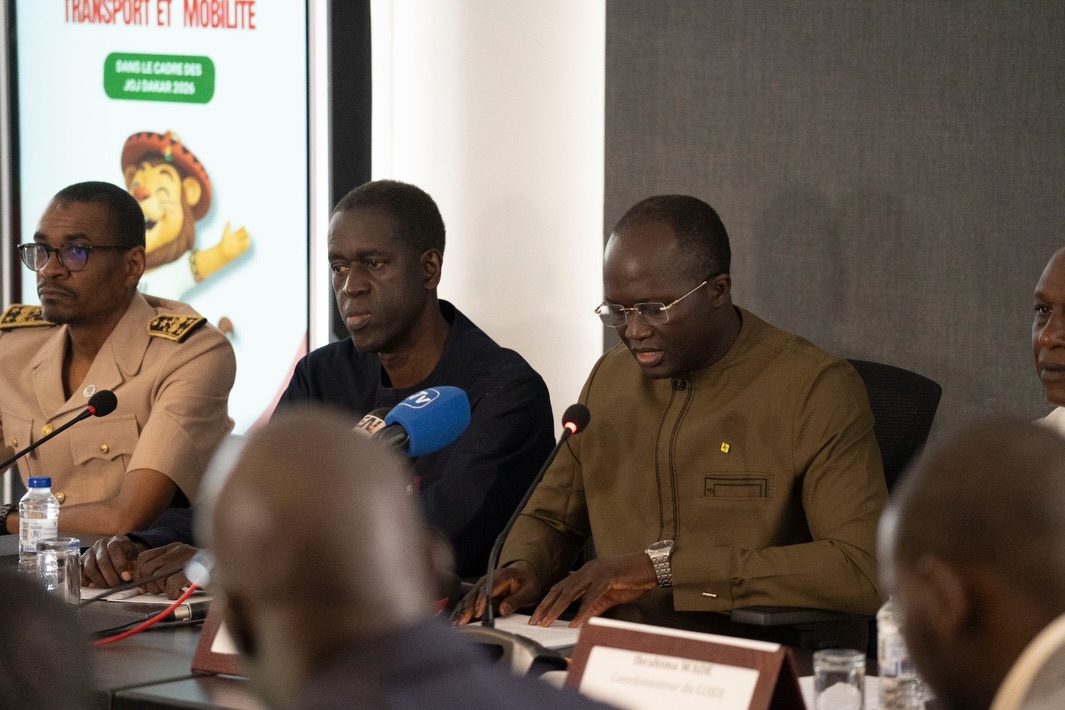

In a bold move to host Africa’s first ever Youth Olympic Games, Senegal has launched a structured transport and mobility strategy centered on Dakar, Diamniadio and Saly/Mbour. The initiative, unveiled during the first steering committee meeting chaired by Transport Minister Yankhoba Diémé, is designed to handle the unprecedented logistical challenge of welcoming 2,700 athletes from 206 National Olympic Committees alongside officials, volunteers and spectators.
The multi-layered organization features three key pillars: the Steering Committee (COPIL) under Minister Diémé’s leadership, the Technical Committee “Mobility JOJ 2026” coordinated by the CETUD, and the Operations Committee AIBD which will manage flows at the Blaise Diagne International Airport.
Rail transport has been identified as the backbone of the mobility plan, ensuring rapid connections between Dakar, Diamniadio, AIBD and Thiès. The government is now accelerating the operational phase with full-scale simulations to validate transport and security protocols. The goal is clear: to deliver a flawless mobility experience that showcases Senegalese expertise while leaving a lasting legacy in transport governance.
logistics and security take center stage
The minister emphasized that seamless mobility is not just a logistical necessity but a cornerstone of both operational success and safety during the event. By focusing on integrated transport solutions, Senegal is positioning itself to set new benchmarks for hosting major international competitions on the continent.
testing and refinement underway
With the countdown to Dakar 2026 underway, authorities are prioritizing rigorous testing phases. These simulations will assess the efficiency of transport networks, crowd management strategies and emergency response systems across the three key zones. The outcome will not only determine the smooth functioning of the Games but also help refine long-term infrastructure plans for Senegal’s growing urban mobility needs.



