
Senegal’s political upheaval: president faye dismisses prime minister sonko amid deepening crisis
A significant political shift is underway in Senegal as President Bassirou Diomaye Faye has parted ways with his highly popular Prime Minister, Ousmane Sonko. This unexpected rift intensifies the political uncertainty gripping the West African nation, just months after the duo swept to power on a wave of enthusiasm and promises of transformative change.
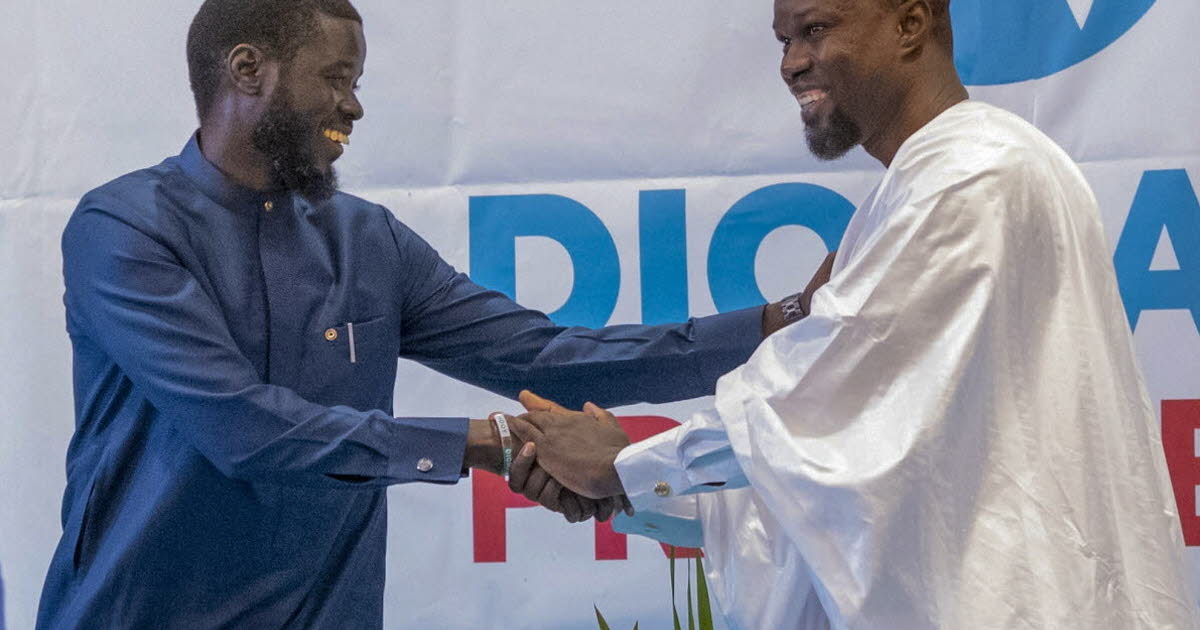
Following months of escalating tensions, the political partnership that once symbolized profound hope for Senegal’s future has officially dissolved. President Bassirou Diomaye Faye, on Friday, dismissed his influential Prime Minister, Ousmane Sonko, whose strained relationship with the head of state had become increasingly apparent. President Faye’s decisive first-round victory in March 2024, securing 54% of the votes, was largely attributed to the robust backing of his former mentor. Sonko, the charismatic figurehead of Pastef—the very party President Faye belongs to—was barred from contesting the presidency due to a defamation conviction rendering him ineligible.
Initially, the two leaders projected an image of strong unity, encapsulated by the popular slogan, “Diomaye moy Sonko, Sonko doy Diomaye” (“Diomaye is Sonko, Sonko is Diomaye”), which resonated deeply with the public. Their ascent to power, occurring merely ten days after their release from prison, ignited widespread excitement among Senegalese citizens eager to move past a protracted period of political and social unrest. This pledge to break away from the established political system and combat corruption granted Pastef officials an initial period of public goodwill, an era that has now undeniably concluded.
However, the alliance at the helm of the nation quickly fractured. Ousmane Sonko’s prominent stature often overshadowed his former protégé, President Faye. The burgeoning rivalry between the two, particularly with an eye towards the 2029 presidential election, significantly hampered the progress of reforms promised to the electorate. A key point of contention between President Faye and his Prime Minister revolved around strategies to alleviate Senegal’s substantial national debt. The nation currently holds the unenviable position as the second most indebted country in Sub-Saharan Africa, with inherited debt from previous administrations reaching a staggering 132% of its Gross Domestic Product (GDP).
Political implications for 2029 presidential election
The dismissal of Ousmane Sonko ushers in an unprecedented political crisis for Senegal. President Bassirou Diomaye Faye now faces the challenge of governing without the direct support of the party still unequivocally led by his former Prime Minister. Pastef, under Sonko’s continued leadership, commands a formidable majority in the National Assembly, holding 130 out of 165 seats. Despite his removal from the premiership, Ousmane Sonko is widely perceived as the true architect of the 2024 presidential election victory.
Ousmane Sonko maintains a powerful connection with the youth and champions a clear vision of national sovereignty, contrasting with the patterns of corruption or forceful power seizures observed in other African nations. Observers note that Sonko embodies a genuine hope for Senegal, despite the significant structural and financial hurdles the country faces. Furthermore, contrary to some prevailing narratives, he is not considered anti-French; rather, he advocates for Senegal’s inherent sovereignty and encourages a re-evaluation of its international relationships on new foundational terms.