
Togo education system ends sms result fees amid billions cfa scandal
Government terminates controversial SMS result delivery system following financial irregularities
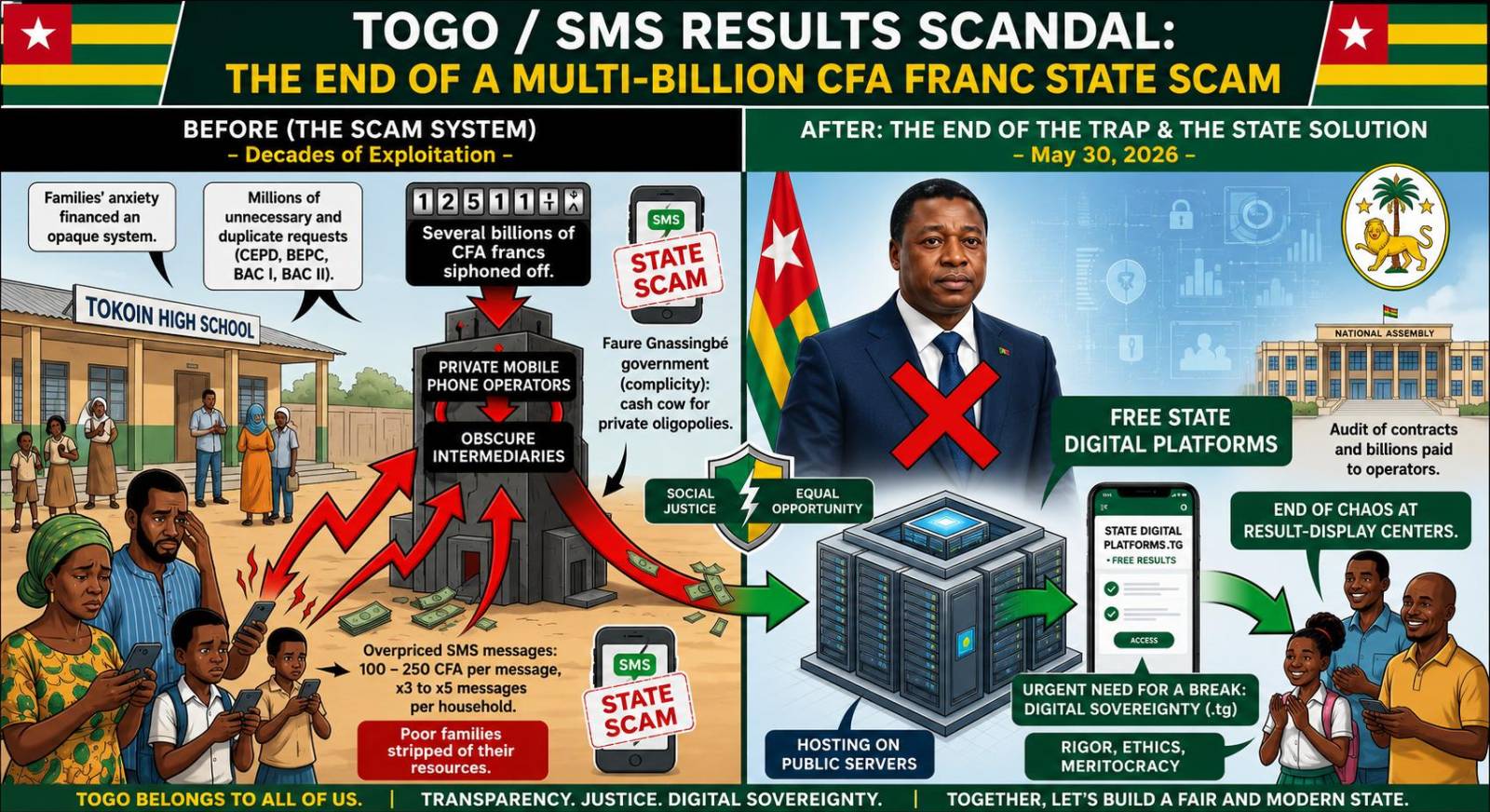
For years, Togo’s education system operated a lucrative yet clandestine revenue stream that drained financial resources from vulnerable households. The abrupt announcement by Education Minister Mama Omorou to abolish SMS-based examination result delivery has exposed a long-standing financial malpractice embedded within the system under former President Faure Gnassingbé’s administration.
An examination system exploited by families and intermediaries
During an unannounced inspection on May 30, 2026, at marking centers for the first-year baccalaureate exams in Lomé’s Tokoin and Agoè districts, Minister Omorou condemned the SMS consultation mechanism as a deliberate financial trap. The system relied on exploiting parents’ anxiety during examination periods.
The process unfolded predictably: candidates and their families, desperate for timely results, would send multiple identical SMS queries (each costing between 100 and 250 West African CFA francs) to several recipients simultaneously. This redundant messaging generated millions in inflated revenue, disproportionately burdening low-income households.
Financial losses estimated at billions of francs CFA over two decades
While official audits remain pending, calculations based on demographic data reveal staggering losses. With hundreds of thousands of candidates sitting national exams annually in Togo, and each household often sending three to five duplicate messages, the total volume of SMS queries reached tens of millions per session.
Extrapolating these figures over 15 to 20 years of systematic exploitation suggests billions of francs CFA were systematically diverted from families to private telecom operators and unidentified intermediaries. These entities operated under state-granted concessions that evaded scrutiny until now, representing a blatant transfer of public wealth into private hands with tacit state approval.
Moving toward transparent digital alternatives
Minister Omorou’s decision to halt SMS-based result delivery is a critical first step, but it introduces the urgent need for a sustainable replacement. Reverting to physical notice boards would merely reintroduce chaos—crowds, disorder, and heightened stress for families awaiting results.
Togo, which has promoted digital integration policies through its Ministry of Digital Economy, must now prioritize the development of state-run, free, and secure digital platforms for result dissemination. Key requirements include:
- National data sovereignty: Results must be hosted on government-controlled servers under the .tg domain.
- Public funding: Access must remain entirely free, financed through the national education budget to ensure equitable access.
- Modern delivery systems: Results should be published in batches via email or lightweight web portals optimized for mobile devices—a cost-effective and widely available solution.
Reinforcing ethical standards in education
During the inspection, the minister also reaffirmed the importance of ethical conduct among examiners, emphasizing that rigor, integrity, and meritocracy must guide Togo’s educational system. This declaration signals a fundamental ideological shift—one that protects families from institutionalized exploitation and restores trust in public education.
The next critical phase will require political courage: conducting a comprehensive audit of past contracts with telecom operators to trace the misappropriated funds and ensure accountability. Only through full transparency can the government reclaim the stolen resources and redirect them toward improving educational infrastructure for Togo’s youth.