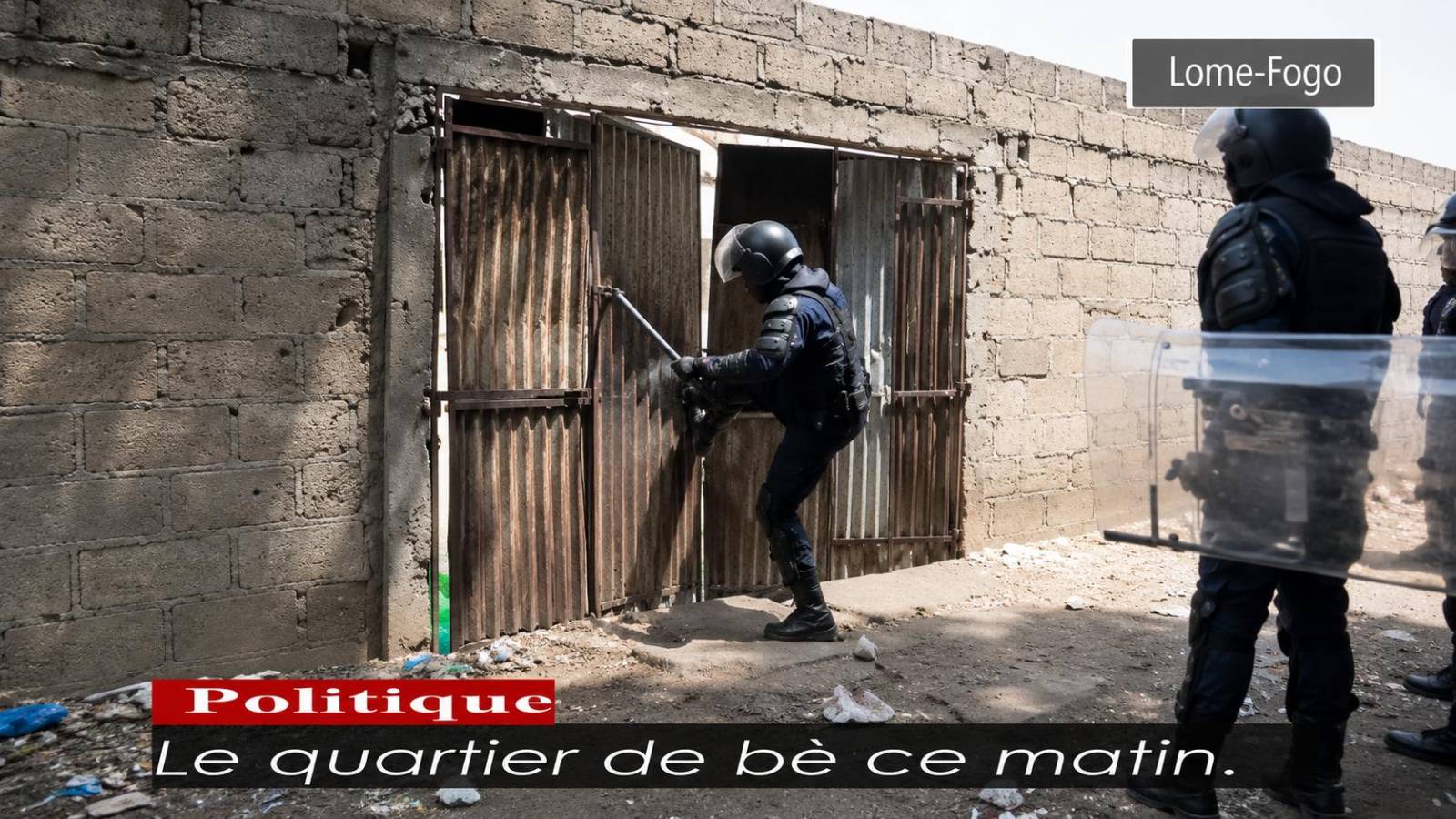

In Togo, the role of the military is clear: protect borders and ensure national security. Yet too often, this mission is overshadowed by a disturbing reality—soldiers breaking into homes to assault unarmed civilians.
When a home becomes a battleground
A house should be a sanctuary, a place of safety and comfort. But in Togo, that sense of security is shattered when armed soldiers force their way inside without warrants, using violence as a form of punishment. This isn’t security—it’s intimidation.
From Lomé to Sokodé, these raids have become all too common. Families are humiliated, young men are beaten in their own courtyards, and no one is held accountable. The bravery claimed by these soldiers is nothing more than unchecked brutality.
Where does the chain of command fail?
The violence isn’t just the work of a few ‘bad apples.’ It reflects a deeper failure—a leadership that tolerates abuse or weaponizes fear as a control tactic.
- Broken trust: When civilians are attacked by those sworn to protect them, faith in the state erodes.
- Sown resentment: Treating citizens like enemies doesn’t earn respect—it fuels anger and fuels dissent.
- Violating the law: Beating civilians in their homes is illegal. No military code or Togolese law permits such conduct.
Soldiers aren’t police officers
The confusion between military and police duties is dangerous. Soldiers are trained for combat, not community policing. When neighborhoods turn into war zones, neighbors become targets—and violence becomes the default response.
“An army feared by its own people is no longer a national force—it’s an occupying power.”
A path back to honor
True military honor isn’t about dominating the defenseless. It’s about upholding the law and safeguarding every citizen, regardless of their beliefs.
Change begins when impunity ends. Until soldiers who act as tormentors face consequences, the divide between the people and the army will widen. Togo doesn’t need fear to thrive—it needs justice and mutual respect.