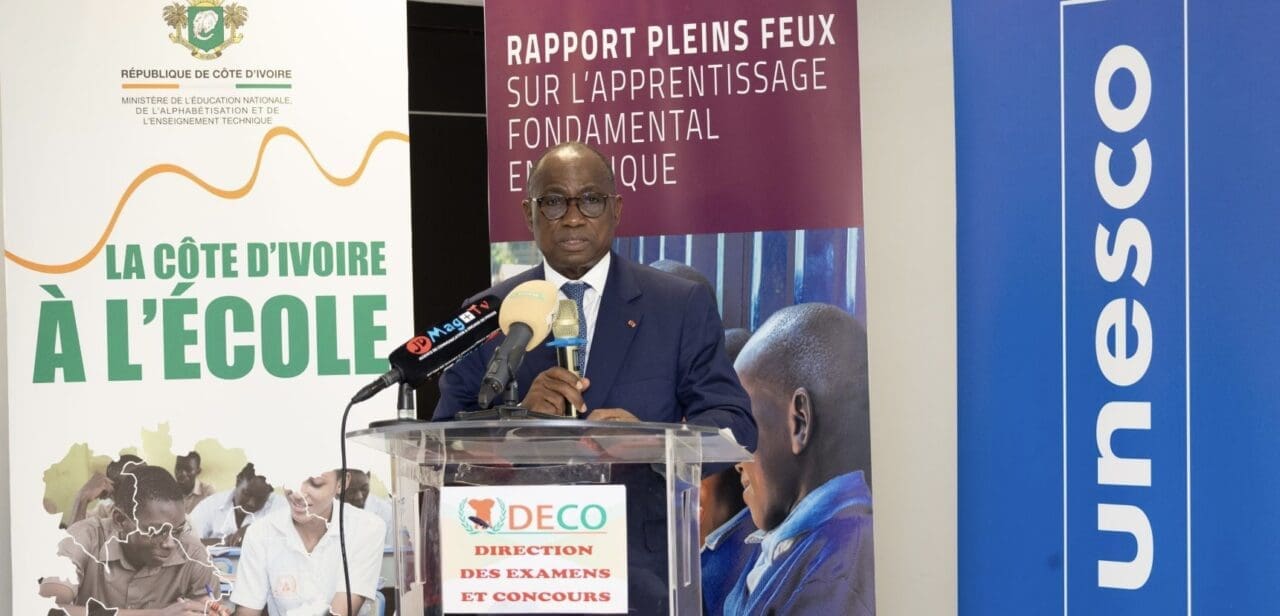

The Pleins Feux initiative, unveiled in April 2026 in Abidjan, represents a bold step in Côte d’Ivoire’s ongoing education transformation drive led by President Alassane Ouattara. Supported by international partners, this project focuses on enhancing educational governance and optimizing public policy implementation to drive sustainable improvements in learning standards.
Côte d’Ivoire faces a growing educational challenge as its population of over 30 million continues to expand, with a particularly young demographic. Each year, hundreds of thousands more students enroll in schools, placing immense pressure on the system, especially in rural regions. Education remains a cornerstone of President Ouattara’s agenda, aligning with the United Nations Sustainable Development Goal 4 (SDG 4) and the 2030 Agenda. For more than a decade, Ivorian authorities have implemented sweeping reforms to expand access and elevate teaching quality across the country.

Scaling education: recruiting teachers, building schools, and connecting communities
Since 2011, Côte d’Ivoire has significantly expanded its teaching workforce, recruiting over 69,000 primary school teachers and more than 30,000 secondary school educators. Recent efforts have prioritized science education, with 1,800 additional teachers deployed in mathematics and physics to meet labor market demands and support the country’s economic transformation goals.
The government has also accelerated investments in school infrastructure, particularly in underserved rural areas. New facilities have been built nationwide to bring education closer to students, reduce travel distances, and minimize dropout rates. Notable examples include the opening of the CAFOP in Boundiali, in the northern region, and high demand for teacher training programs, with nearly 68,000 applicants competing for 7,000 spots in 2026—a clear indicator of the structured push to strengthen the teaching profession.
Fostering an inclusive, supportive learning environment
Improving teaching conditions is now a central pillar of Ivorian education policy. Between 2011 and 2025, starting salaries for primary school teachers rose by over 30%, while secondary school salaries increased by up to 15%. These raises have bolstered the profession’s appeal and helped stabilize teaching staff nationwide.
Efforts to create a more inclusive school environment have also gained momentum. The integration of specialized learning materials for students with disabilities marks a significant step forward. Complementary initiatives include awareness campaigns targeting school-related pregnancies, aimed at reducing disruptions in students’ educational journeys and promoting retention within the system.
Strengthening education governance with ‘Pleins Feux’
Launched on April 12, 2026, in Abidjan, Pleins Feux reinforces the government’s commitment to educational reform by focusing not on infrastructure or enrollment numbers, but on improving system governance and the effective execution of public policies. The program, developed in collaboration with UNESCO, the African Union, and the Global Education Monitoring Report (GEM), results from two years of collaborative work in Côte d’Ivoire, Ghana, and Ethiopia.
The initiative aims to empower policymakers and educational leaders with the tools and knowledge needed to drive better learning outcomes on the ground. International partners have praised Côte d’Ivoire’s progress in fundamental learning, and the government continues to leverage a diverse network of support—spanning global, regional, and private sectors—to advance its educational transformation vision.



